


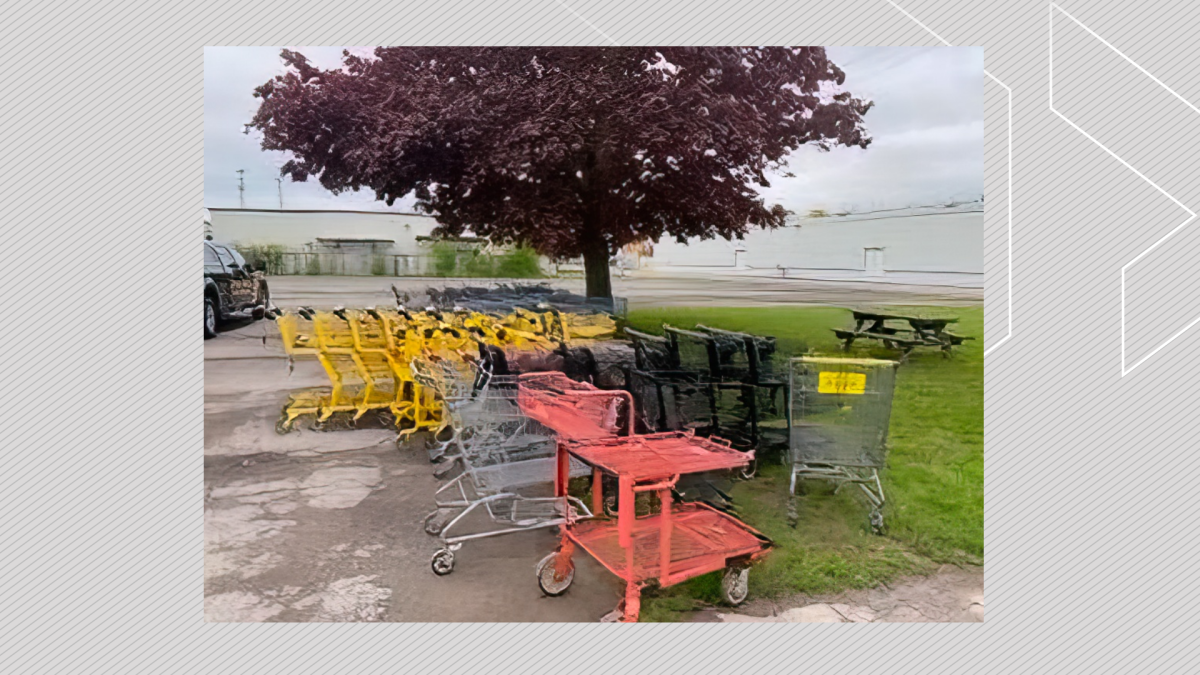
An Ontario city is opting against mandating geo-locking technology on shopping carts as it looks to address a growing issue with abandoned buggies.

In Brampton, council decided on April 15 to remove the geo-locking mandate after reviewing a staff report that examined its feasibility for retailers.
This comes after council noted that the city was receiving an increasing number of complaints from residents about carts being left on municipal property.
The original motion noted that abandoned carts can pose hazards for pedestrians, cyclists and motorists, impede accessibility and create risks to public safety.
Officials said the carts also pose risks to wildlife and contribute to environmental pollution.

Get daily National news
In an effort to tackle the growing problem, the city is sticking to a recently approved approach aimed at recovering costs tied to carts left on municipal property.
Brampton introduced a $100 fee in its 2026 budget, charged to retailers when city staff retrieve and return abandoned shopping carts.
A previous report stated that the measure is meant to offset staff time and resources.
Geo-locking systems use radio frequencies to lock a cart’s wheels once it leaves a designated perimeter, preventing it from being removed from store property.


But city staff said mandating the technology across Brampton would be difficult to implement.
“While such technology may be effective in certain retail environments, site ownership structures, operational differences among retailers and existing cart management practices present considerations for implementing a uniform citywide requirement,” the report said.
Staff pointed to key challenges, including the fact that many retailers operate as tenants in multi-use plazas where they do not control parking lots or surrounding land needed to install the systems.
They also flagged equity concerns, noting a blanket requirement could impose unnecessary costs on businesses that already manage carts effectively.
City staff estimate Brampton collects and returns roughly 400 to 500 abandoned shopping carts each year.


This reminds me of when a city wanted to set fines for littering, not for the litterers, but for the business the litter came from.
Someone steals a shopping cart, so Brampton thinks it is ok to fine the store? Amazing. You cannot make this stuff up…
Fine the people who steal the shopping carts. There is video surveillance, and police. Do their jobs….
Geo-locking does not work. It causes more problems than it solves. our store was having to rescue people locked down in the middle of the store so often, they abandoned the tech.
How about the city fining those that steal the carts away from the property? Oh ya, forgot, it is easier to fine the business.
Of course, the businesses just tack the fines on operating overhead and crank up prices a few points more.