


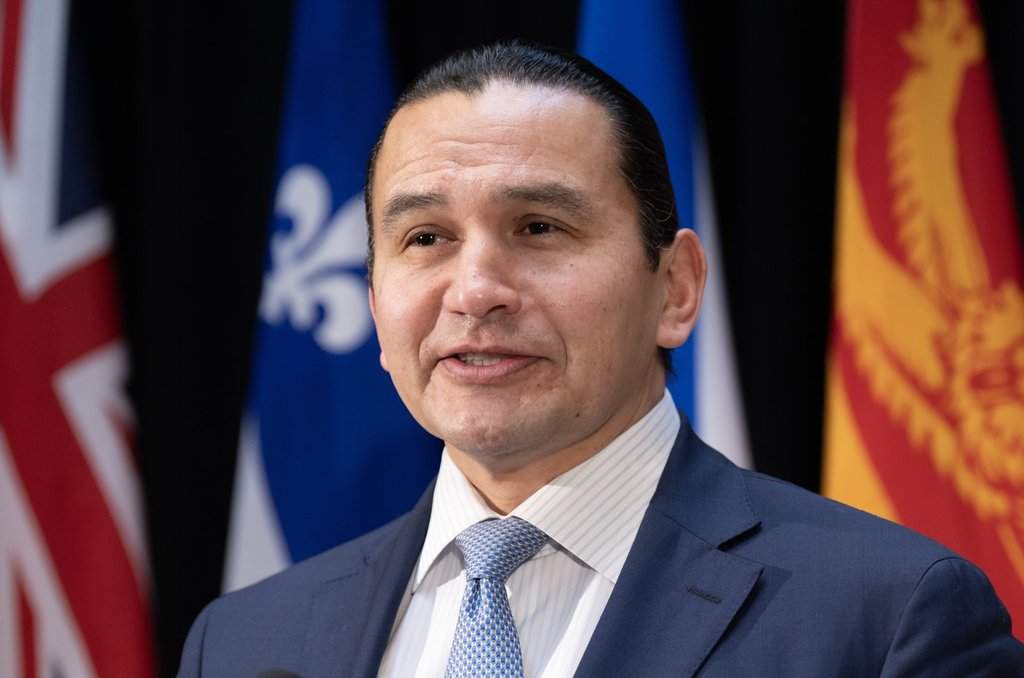
Manitoba Premier Wab Kinew says Ottawa has hinted that it wants liquefied natural gas shipping out of Churchill by 2030 or federal support for an expansion of a port in the community could be off the table.

Kinew met with Prime Minister Mark Carney this week in Ottawa to discuss, among other things, a plan to expand the Port of Churchill as part of a trade corridor through northern Manitoba.
The premier says Carney presented an “aggressive” timeline of getting LNG flowing out of the town within the next four years through an energy corridor that Kinew has said could include a pipeline to ship energy from Western Canada.
The federal government has set a goal to increase the country’s LNG production to 50 million tonnes per year by 2030, and says it is working with provincial, territorial and Indigenous partners.
The project to upgrade the Port of Churchill was among several shortlisted last year by the federal government as “transformative” projects, although major improvements would be needed to rail, port and other infrastructure.

Get breaking National news
Kinew says he interpreted Carney’s comments as an ultimatum that if the province wants the Churchill project to move forward, it has to be done in the next four years.
“The federal government has made it very clear, they want to build big things and they want to build things fast,” Kinew told reporters at an unrelated event on Friday.
“If it gets bogged down and doesn’t move forward in that timeline, then the ship will probably sail and Manitoba won’t see that benefit, the Western Canadian economy, the Canadian economy won’t see that benefit.”
- Alberta to detail ‘million-barrel-per-day’ pipeline to West Coast Thursday
- New B.C. Conservative leader Findlay fills leadership team with loyalists
- Ontario applies new transparency law to Premier Doug Ford’s cellphone, denies access
- Inuit leaders to meet Carney, ministers amid growing tensions over Arctic


Manitoba has long touted Churchill, a town of 900 people on the shore of Hudson Bay, as a port with huge potential to ship goods via the Arctic Ocean to Europe and elsewhere.
The ongoing trade dispute with the United States, and growing calls to find new ways to ship energy from Western Canada, has renewed interest in the idea.
Studies are underway to gauge private-sector interest and examine the use of icebreakers to extend the port’s short shipping season.
Carney’s office referred questions to federal Energy Minister Tim Hodgson.
Hodgson’s office said they are working with the province and prospective proponents on all elements of this project, including potential for energy exports. It did not respond to questions on whether a timeline is in place.


Wabby better get that MOU signed as we all know how ironclad that is with Carney.
Ha! By 2030? Canada can’t even approve planning for large projects in 15 years. Then there is the fight with foreign funded indigenous groups that want to keep Canadian petroleum off the world markets. Then there is the problem that Canada has no ice rated ships for natural gas. The government must really think Canadian’s stew pid.
“The port is iced in for much of the year and is accessible only between late July and early November.” – so open less than 1/2 the year. LNG needs to be available year round. Winter is the highest demand period.
Lovely plan ‘B’. However, what is Carney doing to eliminate the tanker and native issues preventing shipping to the west coast (or even trans Canada pipeline to east coast)?
Why are there indigenous partners? Is the pipeline going to go through reserves, or are they bringing their investment money. No… the Liberals are just giving them ownership for no reason.
Canada built the port with Taxpayer funds. The rail line was built with private funds (backed by Canadian taxpayer). The natives got it donated to them…
Enough of the free-bees. If Canada is putting more money into the port, then it should belong to all Canadians.