


Calgary’s 1.6 million residents and those in surrounding municipalities are once again free to flush and take longer showers, as water restrictions imposed due to a broken water main were lifted Friday.

“I’m damn excited,” Mayor Jeromy Farkas told reporters at a news conference.

He said while it’s a relief the Bearspaw South Feeder Main has returned to service, the real hard work is just beginning.
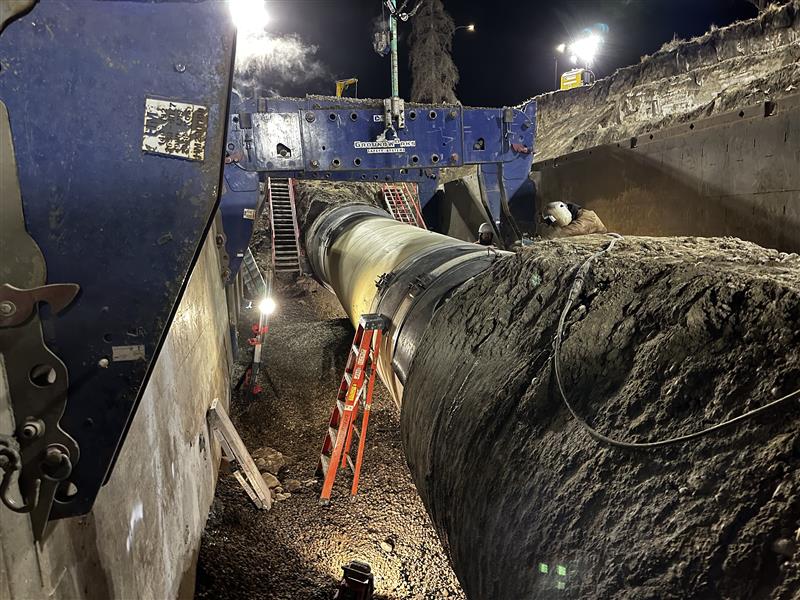
The pipe — which has now broken twice in less than two years — has been deemed terminally defective and needs replacing.
“We are now in a race against the clock,” Farkas said. “It’s not a matter of if, but when (the line) fails again.”
He said the repair work will be fast tracked and urged Calgarians to rally behind the project as Americans did with the Apollo rocket program in the 1960s.
“This has to become our moon shot,” Farkas said.
“For the next 365 days, this has to be our civic mission. From the people in the field, to the people behind the scenes, from the janitor to city council, and mayor to the city manager, we will all have a part to play.”
He added that the city has “done big things fast before.”

Get breaking National news
“We got ready for the Olympics in five years,” he said. “We built Calgary’s (light-rail transit) first phase in four. We built the Saddledome (arena) in about two.
“And we have to do this in one year.”
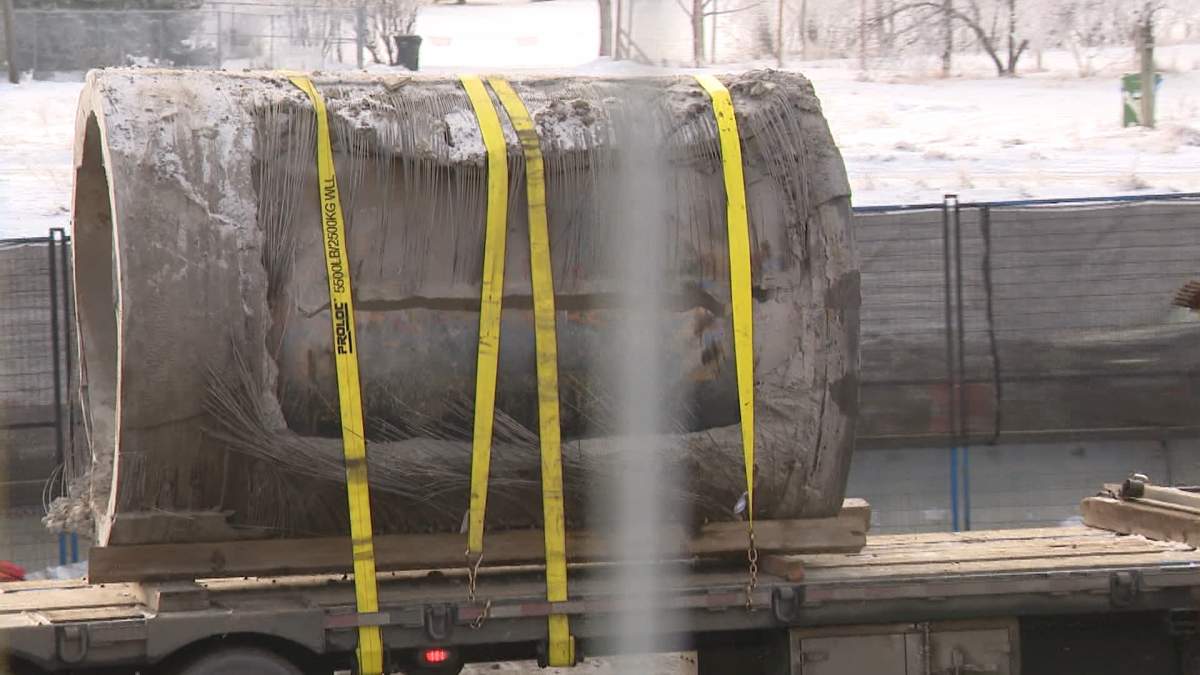
The Bearspaw main broke late last month, spilling a torrent of frigid water onto a city commuter road and stranding some evening drivers.
The pipe handles 60 per cent of the city’s treated water.
For more than two weeks, Calgarians and those in surrounding municipalities were urged to reduce shower times, toilet flushes, laundry and dish loads.
The city also cut back on water use at swimming pools and ice rinks.
The pipe closure put the city in a bind, as it was forced to rely on water reserves in its Glenmore Reservoir. Those reserves can’t be refilled until the spring runoff.
Residents cut back on some water but, for the most part, used more than could be replaced, potentially putting the city at risk if there was an emergency, such as a massive fire.
Earlier this week, the city’s infrastructure services general manager, Michael Thompson, warned the system could safely accommodate just two more pipe breakages ahead of the spring thaw.
In June 2024, the same water main broke and Calgarians were forced to cut back on their water.
Earlier this month, city council received an independent panel report on that break. It broadly blamed the failure on two decades of underinvestment, lack of communication and co-ordination, as well as insufficient knowledge of the risk of pipe failures.
The pipe has also moved into the political arena, with Premier Danielle Smith recently targeting former mayor Calgary Naheed Nenshi. Nenshi was mayor during part of the time when, the report says, projects to inspect and perform maintenance on the line were deferred for other priorities.
Nenshi, head of the Opposition NDP, is currently Smith’s main provincial political.
“The seeds of the problem today, make no mistake, began under previous administrations,” Smith told reporters earlier this month. Smith said severe floods caused by heavy rainfall in 2013 should have led the city to do widespread investigations of its water system.
“And you have to ask the question, well, ‘Who was the mayor after the floods of 2013 until he decided to retire?’ And that was Naheed Nenshi,” Smith said.
Nenshi called Smith’s accusations “total garbage.”
Earlier this week, Municipal Affairs Minister Dan Williams announced the province will review what happened with the pipe and demanded city documents dating back two decades.




Comments
Want to discuss? Please read our Commenting Policy first.