


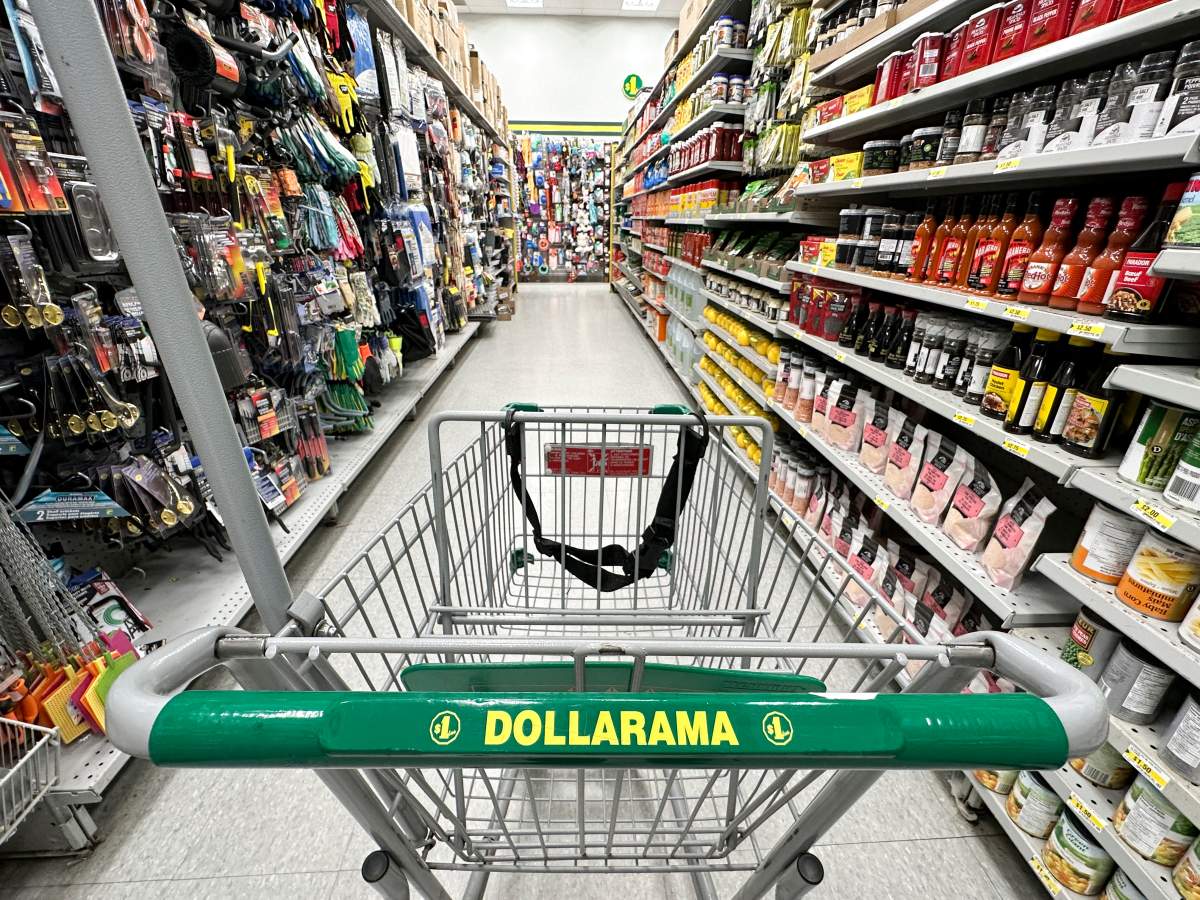
As Canadians continue to struggle with the high cost of living, Dollarama is seeing sales jump by more than 20 per cent.

The Canadian budget retail store announced its earnings for the third quarter of the fiscal year, with sales increasing 22.2 per cent to $1.9 billion, compared with $1.5 billion during the same period in the previous year.
Dollarama also increased its footprint with 19 new stores in Canada in this period and six new stores in Australia.
The company’s business model has shown “resilience” in what is an “unpredictable” economic environment, Dollarama CEO Neil Rossy said in a statement.
The company said the spike in sales was primarily driven by sustained demand for “consumables,” the company said.

Consumables can be anything from food items to goods like shampoos, soap and fast-moving consumer goods.
Discount-seeking behaviour from price-sensitive consumers is becoming more prevalent, University of Guelph economist Mike von Massow said.
“It’s a tough economy, and we’ve seen inflation across the board, not just in food, but in many products,” he said.

Get breaking National news
This came as Empire, one of Canada’s largest traditional grocers and the company that owns Sobey’s, FreshCo and Farm Boy, among other brands, saw profits declining compared with the same period last year.
Empire Co. Ltd. said Thursday that it earned $159 million in its latest quarter, down from $173 million in the same quarter last year.
The company behind Sobeys says its profit amounted to 69 cents per diluted share for the quarter ended Nov. 1 compared with a profit of 73 cents per diluted share a year earlier.
Sales for what was the company’s second quarter totalled $8 billion, up from $7.8 billion in the same quarter last year.
However, the overall picture looks “reasonably good” for the Empire Group, von Massow said, adding that food sales were up for the grocery chain.

“Most of the impact on their profit was an increase in depreciation and some other things that weren’t part of the day-to-day revenue stream or cost stream,” he said.


During Dollarama’s earnings call in August, Rossy said customers have been focused on finding good deals for “base needs.”
“Walmart, Loblaws, everybody understands how competitive the environment is at this point in time with the instability and customers’ focus on consumables and their base needs,” Rossy added.
Big grocers, too, are trying to cash in on customers looking for discount deals.
“We’re also hearing from these stores that the priority for growth for them is in their discount brands,” von Massow said, adding that customers will likely see more special offers at full-service grocery stores in the weeks and months ahead.
“The big (grocery) companies with discount banner have been increasing their sales. And some stores that are smaller that have gotten into less perishable food products have seen increases in sales in those things.”

While Dollarama does not stock fresh produce, it has increased its offerings when it comes to shelf-stable products, von Massow said.
With the economy under a cloud of uncertainty, he said people are not averse to store-hopping to save a few extra bucks.
“When it’s close by, we’re seeing: shop at a regular grocery store for some things, but there’ll be some very specific items, like bread or canned goods, that they’ll be able to get cheaper at Dollarama,” von Massow said.
Having shelf-stable products also lets Dollarama cut down on waste, which traditional grocers deal with, he said.
— with files from The Canadian Press


Comments
Want to discuss? Please read our Commenting Policy first.