

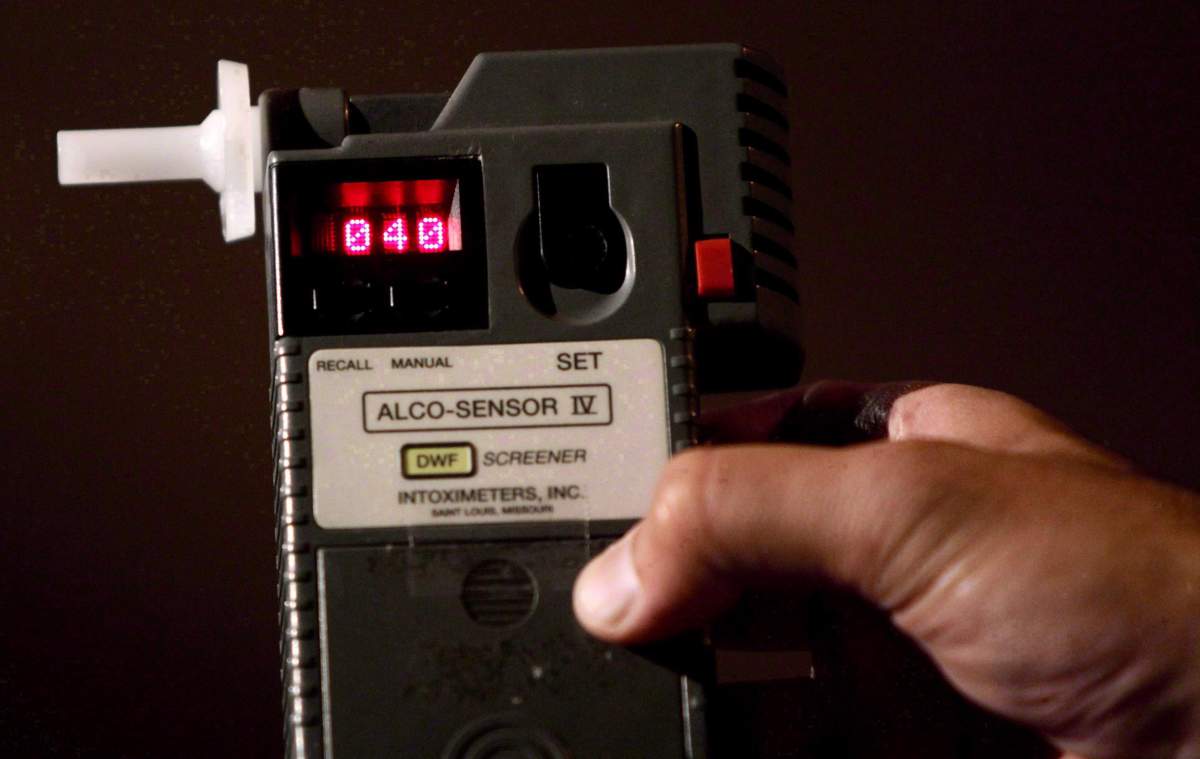
The Supreme Court of Canada has upheld impaired driving conditions in two cases, saying criminal law amendments enacted in 2018 were intended to streamline prosecutions based on breath test results.

The related decisions from the top court Thursday clarified the evidentiary scheme for proving blood alcohol concentration in impaired driving cases under the Criminal Code.

In each case, the Supreme Court looked at whether the New Brunswick Court of Appeal erred in interpreting what the Crown must prove to satisfy a presumption that breath test results are accurate.
The law requires a breath machine calibration check, the result of which must fall within a particular range.

- Alberta moves to implement interprovincial pact to ease trade rules on consumer goods
- Waiting for Toronto’s cherry blossoms? What to expect as bloom season approaches
- Price surge from Trans Mountain expansion highlights need for new pipelines: MEI
- New federal election bill seeks to crack down on deepfakes, long ballots


In one case, the Supreme Court examined the evidence needed to prove a breath machine has successfully gone through a calibration check.
In the other case, the court considered what must be established to use the results of a breath test in court.


Comments
Want to discuss? Please read our Commenting Policy first.