


From barely clinging to life after a traumatic car crash to walking a runway at Paris Fashion Week, a 17-year-old Nova Scotia girl hopes telling her story will spare other teens from sharing her difficult road to recovery.

“Just young and stupid” is how Corrine Cameron described herself when, two years ago, she stepped into a friend’s vehicle after a party in Pictou County, N.S., and didn’t put on a seatbelt.
It was late at night and the car was speeding, she says, when it crashed — ejecting her and her friends.
Cameron was thrown from the vehicle and landed on a driveway. A man came running out after hearing the accident.
“He saw me and he thought I was dead, but I was speaking and talking, and I said, ‘Sir, will you please hold my hand?’ And he did.”
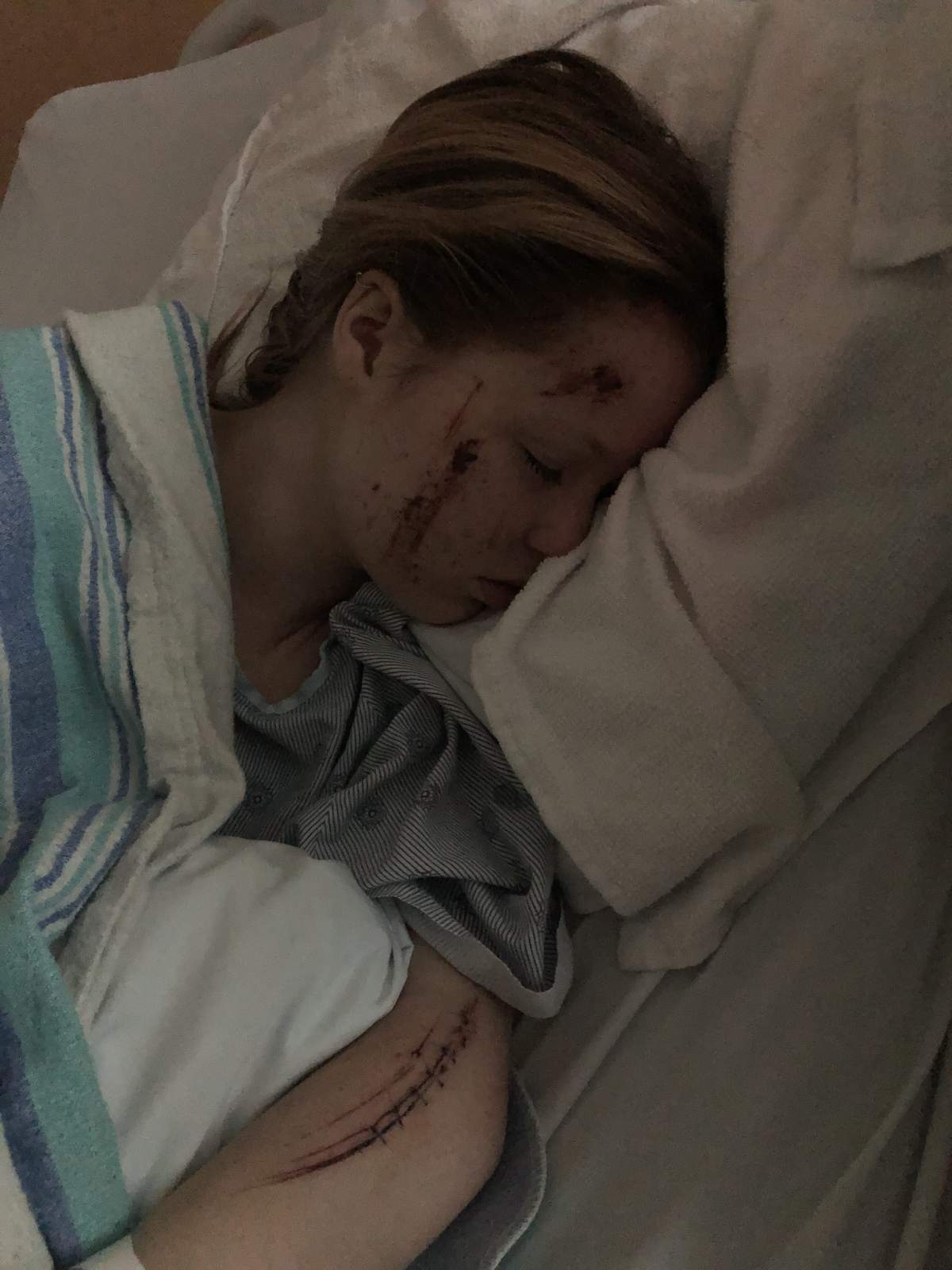
En route to the hospital in the ambulance, Cameron suffered a stroke. Doctors later told her she had broken her pelvis, clavicle and tailbone in addition to the stroke that permanently affected the left side of her brain.
RCMP Sgt. John White, who was in the collision reconstruction unit at the time, remembers being called to the scene that August night.
“It was a severe crash, high in the severity level. It was probably the only crash that I went to where there was multiple youths involved and ejected,” he said.
“It’s amazing that she survived this because it was a horrific crash.”
Two years later, Cameron is determined to recover and to help others.

Get daily National news
She’s become an advocate for road safety and seatbelts, taking part in presentations at schools and in the media. This week, she addressed high school students virtually as part of Canadian Youth Road Safety Week.
It’s a job she takes seriously.
“I can’t force people to wear their seatbelts, but I can maybe say something that would impact them.”
‘She had a major stroke’
Cameron’s mother, Julie MacPhee, recalls two RCMP officers knocking on her door that 2023 night with the devastating news. When she was told her daughter had been ejected from the vehicle, she initially couldn’t believe it.


“Just that day, six hours before the accident, I had sent her a text (…) she was going to the beach and I said, ‘Wear your seatbelt,'” said MacPhee.
“So I really didn’t believe that she was ejected until I went to the hospital and saw her, and she was completely covered in mud, and then I knew that she was.”
MacPhee admits it wasn’t clear if Cameron would recover or ever be able to speak again.
“Six days after the accident, we heard the results were not what we expected. She had a major stroke. So it was just a really terrible time in our life,” said MacPhee.
Cameron spent three months in hospital. Even when she was allowed to return home and attend school, she wasn’t able to take part in extracurricular activities due to her fragile recovery.
It took time for her to regain her speech, which added to the feeling of isolation.
“I think no one was really sure if my speech was going to be better,” she said. “It’s just really like a lonely time for a while, and it was really hard.”
After extensive speech therapy and rehab, Cameron says she’s doing much better, but the effects of that night’s accident remain. She finds she has difficulty cognitively and physically.
“It’s super frustrating. It was hard when a lot of people went to college and I was thinking (…) I can’t do that. I can’t go to college if I can’t read and spell,” she said.


But she has a passion for modelling, and decided to persevere. She signed with an agent, who sent her photos to a designer who invited her to walk at Paris Fashion Week earlier this month.
“My hand and my foot is completely numb, so that can be hard for runway and dancing or pageants,” she said.
Still, the teen says the surreal experience has given her hope.
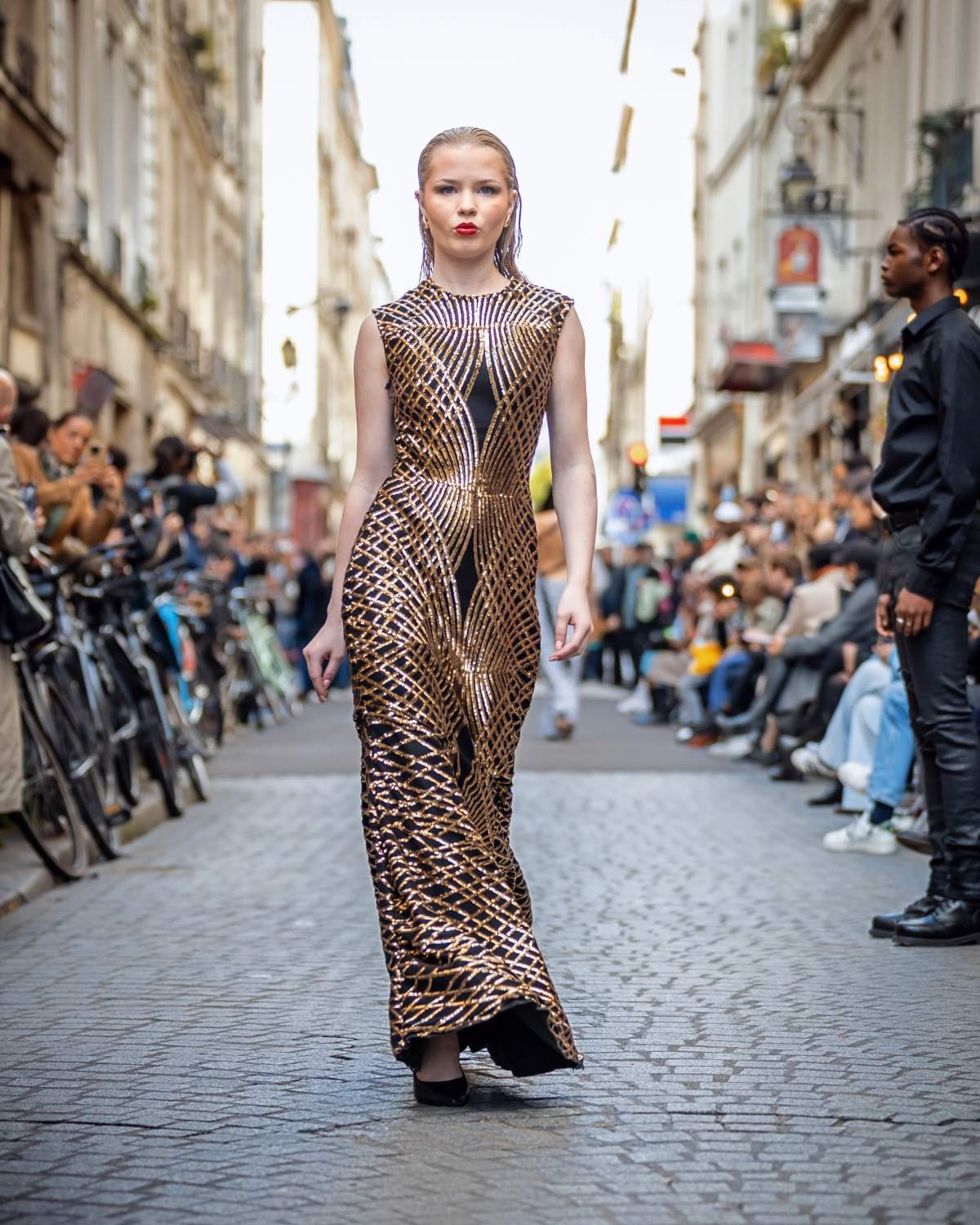
“I’m just so happy that I could like do all these things that I’ve always wanted to do,” she said.
It’s something that mere months ago didn’t seem possible.
“Being able to watch her live out her passion and her dream was incredible,” her mother added.
A message for parents as well
Cameron’s modelling career is taking her back to Paris in the spring.
In the meantime, she continues her work as an advocate for road safety. She says the idea of putting on a seatbelt never even occurred to her on the night of the accident, and she knows other teens feel the same.
“I just never even thought of it (…) how dangerous this could be and really change my life and how easy it would be to put it on,” she said.
“I always knew drinking and driving was bad and wrong, and I think a lot of people know that. But I think people don’t really think of seatbelts and how terrible and awful it can really be with not wearing it.”
Her mother says their family’s experience underscores the importance of parents and caregivers to take part in the conversation too.
“I know what teenagers are like, I know what Corinne was like. She didn’t think it would ever happen to her,” said MacPhee. “Kids need to hear that message, they need to hear her story and know it can happen to you.”
— With files from Angela Capobianco and Heidi Petracek
Comments