

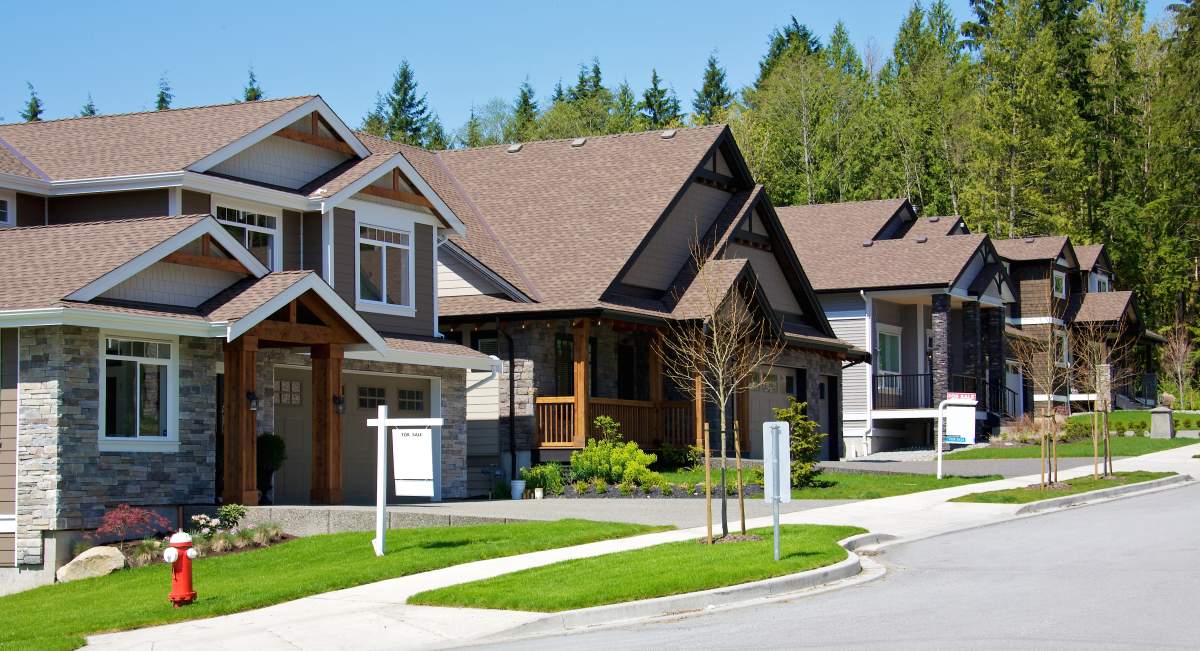

You did it: in today’s difficult housing market, you landed yourself a lovely starter home. But now comes the time for some financial choices — like selecting a fixed-rate mortgage or a variable-rate one.

Variable rates for mortgages are very low right now. But is that type of mortgage always the best choice? In this primer, Nick Da Silva, acting president of Northwood Mortgage Limited in Markham, Ont., walks through the concept of a variable-rate mortgage and shows how it stacks up against a fixed-rate mortgage.
READ MORE: Looking for your first home? 5 steps to take before you buy, according to a mortgage broker
How is a fixed-rate mortgage different from a variable-rate mortgage?
“A fixed-rate mortgage is when the rate of interest charged on a mortgage is set at the outset of the mortgage and it remains fixed for the whole term of that mortgage,” Da Silva says. “You know what your payments are and what your rate is for the next whatever number of years you’ve taken as a term.”
A variable-rate mortgage is as it sounds, meaning the rate can change up or down depending on if prime moves up or down.
“It’s a fluctuating interest rate usually based on the bank’s prime lending rate at a discount or premium to prime,” Da Silva explains. For example, the bank might offer prime less 1 per cent on variable-rate mortgages. That means if the prime rate is 2.45 per cent currently, your rate is going to be 1.45 per cent.

Get breaking National news
How to choose between fixed-rate and variable-rate mortgages
“The old school of thought is this: when rates are low, lock your mortgage in. If rates are high, then float your mortgage until they come down and then lock it in,” Da Silva says.
What do the two different types of mortgages mean for your monthly payment? Da Silva offers the example of a rate of 2 per cent on a five-year fixed-rate mortgage. “On a $100,000 mortgage using a 25-year amortization, 2 per cent is a monthly payment of $423.45,” he says.
The variable rate being offered right now by most lenders is prime less 1.1 per cent. That means you could get a five-year variable-rate mortgage at 1.35 per cent — a 0.65 per cent difference from the rate on a fixed-rate mortgage.
“At a 1.35 per cent rate, your payment would be $392,” Da Silva says. That means the payment on the fixed-rate mortgage is $31 per month more on a $100,000 mortgage. If you go up to a $600,000 mortgage, that becomes a difference of $184 per month.
“As a consumer, you have to make a strategic decision. Do you see rates staying this low forever or do you see them going up?” Da Silva explains. “Then you’d have to follow where prime has been. In 2018, prime got as high as 3.95 per cent.”
The prime rate, however, depends on a number of factors; these currently include the overall effect of COVID-19 on the economy. “The gamble is, how long can rates stay down at 2.45 per cent for prime? When will it go back up?” Da Silva says.
It also depends on inflation, he adds, explaining that rising inflation usually leads to an increase in lending rates to deter people from borrowing. Some economists from Canada’s major banks believe the Bank of Canada will change interest rates in 2022 to try to control inflation, given that inflation is at three per cent and the annual pace of inflation increased this year.
But for many of Da Silva’s clients, the choice comes down to personal comfort levels with risk. “And most people tend to be conservative with risk,” he says.
Changing your choice of mortgage
Should you opt for a variable-rate mortgage, there are a few outs. Most lenders allow borrowers to convert to a fixed-rate term equal to or longer than your current mortgage.
If you took a five-year variable-rate term, for example, and decide to lock it into a fixed-rate mortgage after three years, you can do so for a two-year or longer term. “But you’re not getting the rate when the mortgage first started,” Da Silva warns.
You should also consider how your lender responds to a rate change on a variable-rate mortgage. “Some institutions adjust your mortgage payments accordingly, and some leave them the way they are because they’re collecting a combination of principal and interest,” Da Silva says. “Not only can your rate go up, but your payment can go up as well. But if rates go down, the bank usually doesn’t call and say, ‘Hey, let’s lower your mortgage payment.’”
Instead, if rates go down, the payment is usually kept the same, but the breakdown of principal and interest on that payment changes: you’ll pay less in interest and more toward the principal.
READ MORE: How first-time homebuyers can change strategies to react to new mortgage stress test rules
To learn more about fixed-rate and variable-rate mortgages or to get help figuring out which is right for you, visit Northwood Mortgage.