


Editor’s note: A section on the background of the case has been removed. Read about the original case here.

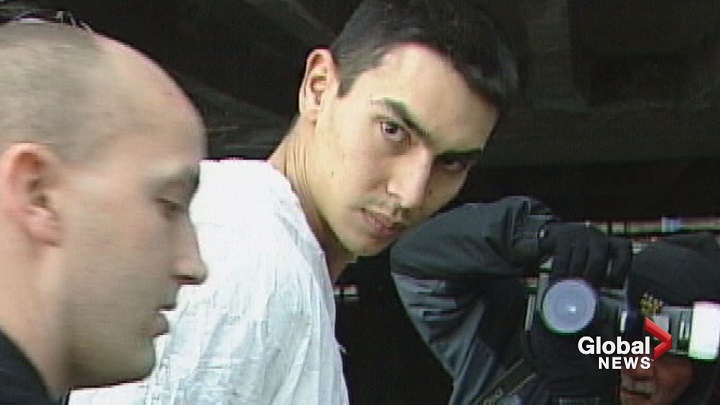
A 30-year-old man serving a life sentence has been granted a short leave from prison so he can get his photo taken to update his Indian Status Card.
When asked why a prisoner would need an up-to-date Indian Status Card, Canada’s Indigenous and Northern Affairs department said it’s to access health benefits. Though it’s not connected to band membership, it’s also widely accepted for identification purposes, a spokesperson said.
The department said to renew the status card, two identical passport-style photographs that meet Passport Canada specifications are required. Those specifications include: photos taken in person by a commercial photographer within the last six months against a plain or light-coloured background with the name of the photographer and date the photo was taken on the back. Read the full list of specifications here.
Christopher James Watcheston was convicted of first-degree murder of Arcelie Laoagan in 2010 after the woman was stalked, raped and killed near a northeast Calgary CTrain station in January 2008.
Watcheston was sentenced to life in prison with no chance of parole for 25 years.
READ MORE: Watcheston found guilty of first degree murder


In a Parole Board of Canada decision obtained by Global News, Watcheston’s application for an escorted temporary absence (ETA) from prison was granted Sept. 28, 2016. The request was made to allow Watcheston to go to a store to get a passport photo taken so he could renew his Indian Status card.

Get breaking National news
When asked why a prisoner would be let out rather than bringing a photographer in the facility, Corrections Services Canada said its institutions are not able to take photos that meet the status card standards.
“CSC institutions are not equipped to take photographs which meet the standards for a Certificate of Indian Status and it would be operationally difficult to manage this,” CSC regional communications manager Jeff Campbell told Global News in a Thursday email. “Inmate photos for Certificates of Indian Status are not frequently requested.”
The Parole Board decision considers a number of factors, including Watcheston’s previous criminal history, his behaviour while in prison and potential factors leading up to the crime(s) for which he was most recently convicted of.
In its decision, the Parole Board alluded to Watcheston’s suspected involvement in an assault while in prison, however, it also stated there was no information to substantiate that claim.


The decision also suggests negative childhood experiences may have contributed to Watcheston’s entire criminal history as well as his substance abuse. It also gives him credit for participating in programs to address the risk factors which led him to commit the crimes that he did.
That being said, the Parole Board of Canada “finds (Watcheston) clearly capable of extreme violence” and as such, plans to use restraint equipment while Watcheston is out of prison accompanied by correctional officers. They anticipate the ETA will take one hour for Watcheston to get his photo taken.
The Parole Board said Watcheston has “been assessed as presenting a moderate risk for future offending” but determined ETAs like this one “contribute to your overall integration to the community.” The decision also says Watcheston’s prior criminal history proves he “had a history of difficulty complying with the expectations of release.”
WATCH BELOW: Surveillance video of Watcheston following Laoagan at the Franklin LRT station

With files from Erika Tucker
Editor’s note: This article was originally published Oct. 11 and has been updated twice since receiving responses from Canada’s Indigenous and Northern Affairs department and Corrections Services Canada.
Comments