


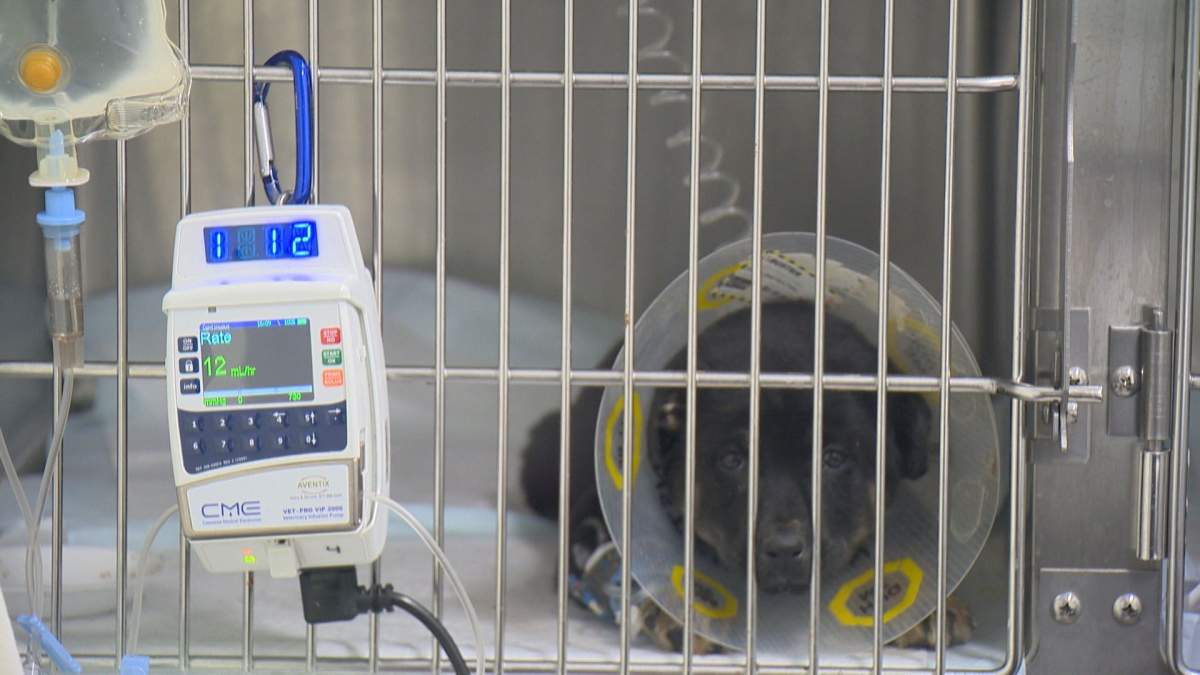
New Hope Dog Rescue is non-profit and foster-based organization that rescues and re-homes dogs in need.

But not only are they finding fur-ever homes for dogs but also warning pet-owners about canine parvovirus (CPV), a virus that is highly infectious in unvaccinated puppies and dogs that causes diarrhea, severe vomiting, and loss of appetite, among other symptoms.
Sandra Archibald, of New Hope Dog Rescue, says they are one of many organizations who have been affected by CPV.
“Last month, we actually had two different litters, two different homes with parvovirus, which means extended stays at the University hospital,” said Archibald. “There has been mortality with it and it’s very dangerous. It’s a gastrointestinal virus, so those poor animals don’t want to eat, they don’t want to drink. They’re just … sick.”

Get daily National news
According to the Saskatchewan Society for the Prevention of Cruelty to Animals website, CPV is spread either by direct contact with an infected dog, by fecal-oral transmission, or by contact with objects or environments contaminated with the virus.
“The virus can survive in the environment for up to 10 months and is resistant to heat, cold, drying, and humidity,” the website read. “It is also resistant to many disinfectants.”
Although there is no treatment that targets CPV, the best prevention against the virus is appropriate vaccinations.
“I know we all want to socialize them, especially when they’re this age and they’re so impressionable, but I find it’s just really beneficial to have a friend or family member who has a fully-vaccinated dog (to) come over and visit or take them to visit,” said Archibald.
- Expert says bus model involved in deadly Calgary crash considered ‘extremely safe’
- 2 seriously hurt, 11 others injured in B.C. crash that shut down Highway 99
- Quebec author abandons effort to document novel’s origins amid AI allegations
- Backstreet Boys’ 12-show Toronto run offers millennials a ticket to simpler times


The vaccination should be updated every one to three years, depending on vet protocol.
— with files from Brooke Kruger



Comments
Want to discuss? Please read our Commenting Policy first.