




Warning: This story deals with disturbing subject matter that may upset and trigger some readers. Discretion is advised.

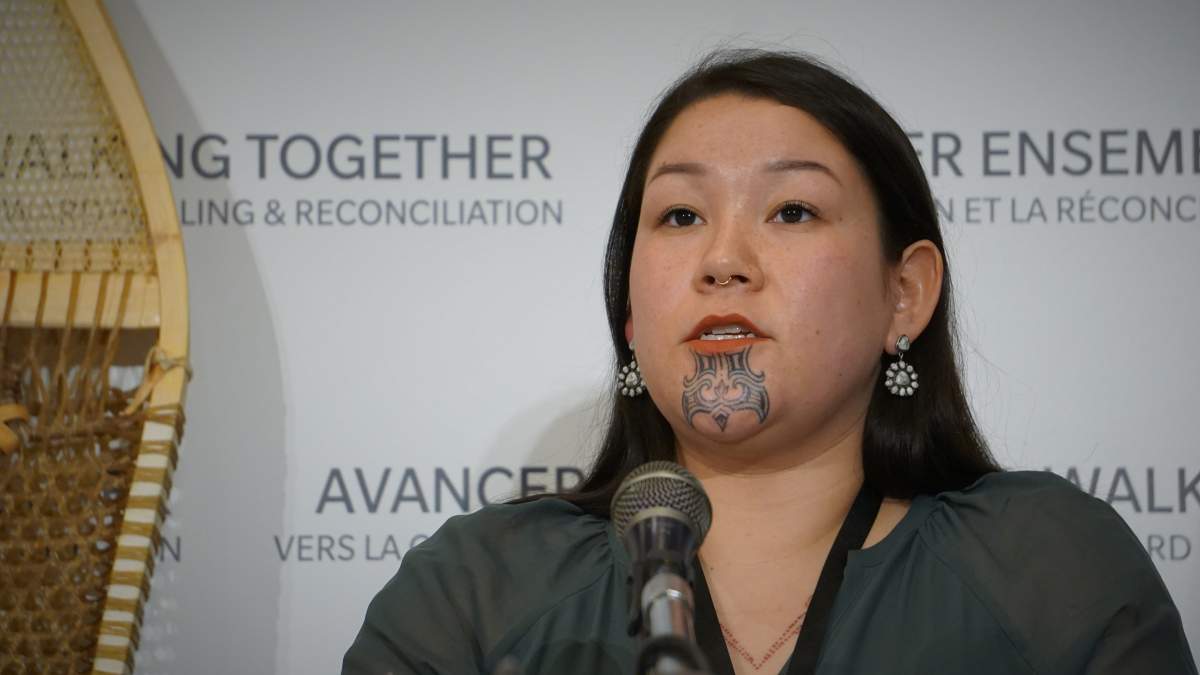
Like many Indigenous visitors to Rome on Friday, Rosalie LaBillois said she may need more time to process the latest development from the Vatican.
In the minutes before St. Peter’s Square erupted in song and dance that afternoon, the New Brunswick delegate said what has now been described as a “historic” papal apology, at first, did not strike her as an apology at all.
“In that moment, it was nice to feel seen and acknowledged, but I think there has to be more actionable items behind words,” the Eel River Bar First Nation member told Global News.
“I don’t know if it means more, (the Pope) coming back to our homelands … being here is just not enough. This is not reflective of all of our communities, especially all of our young people.”
More than 25 years after the last residential school closed in Canada, Pope Francis has said he’s sorry for the grave and lasting harm caused by some clergy members who operated the church- and state-sponsored residential school system.
In a livestreamed audience with more than 190 Indigenous survivors, elders, knowledge keepers, youth and leaders, the Pope said he was “deeply grieved” by the stories of abuse, hardship and discrimination shared by survivors throughout the week.
“All this made me feel two things very strongly — indignation and shame,” the Pope said to the crowd seated in an ornate, well-lit room inside the Vatican. “Indignation, because it is not right to accept evil, and even worse to grow accustomed to evil as if it were an inevitable part of the historical process.
“All these things are contrary to the gospel of Jesus Christ. For the deplorable conduct of these members of the Catholic Church — I ask for God’s forgiveness and I want to say to you with all my heart, I am very sorry.”

The 45-minute meeting at Sala Clementina, one of the halls of the Apostolic Palace, closed a historic, week-long delegation of Indigenous peoples from Canada to Rome.
Participants, many dressed in bright, ribboned and jingling regalia, listened intently as the Pope lauded the richness of their culture, spirituality and languages. He praised their sense of community, deep familial roots and great care of the land.
He spoke slowly in Italian, reading off of sheets of paper into a microphone, and joined his “brothers” — in the room, six members of the Canadian Conference of Catholic Bishops — in asking for the forgiveness of Indigenous peoples.
“I also feel shame – sorrow and shame – for the role that a number of Catholics, particularly those with educational responsibilities, have had in all these things that wounded you, in the abuses you suffered, and in the lack of respect shown for your identity, your culture and even your spiritual values.”

The words were enough to bring Métis elder and residential school survivor Angie Crerar to tears. A prominent face in the delegation all week, she later said her heart is “so full I can barely speak.”
Read more: ‘What drove me is the children’: Longest-serving chief in Canada presses Pope for justice
The final audience included prayers in Indigenous languages, fiddlers, drumming and dance. The Pope’s feet tapped to the music beneath his robes.

Get daily National news
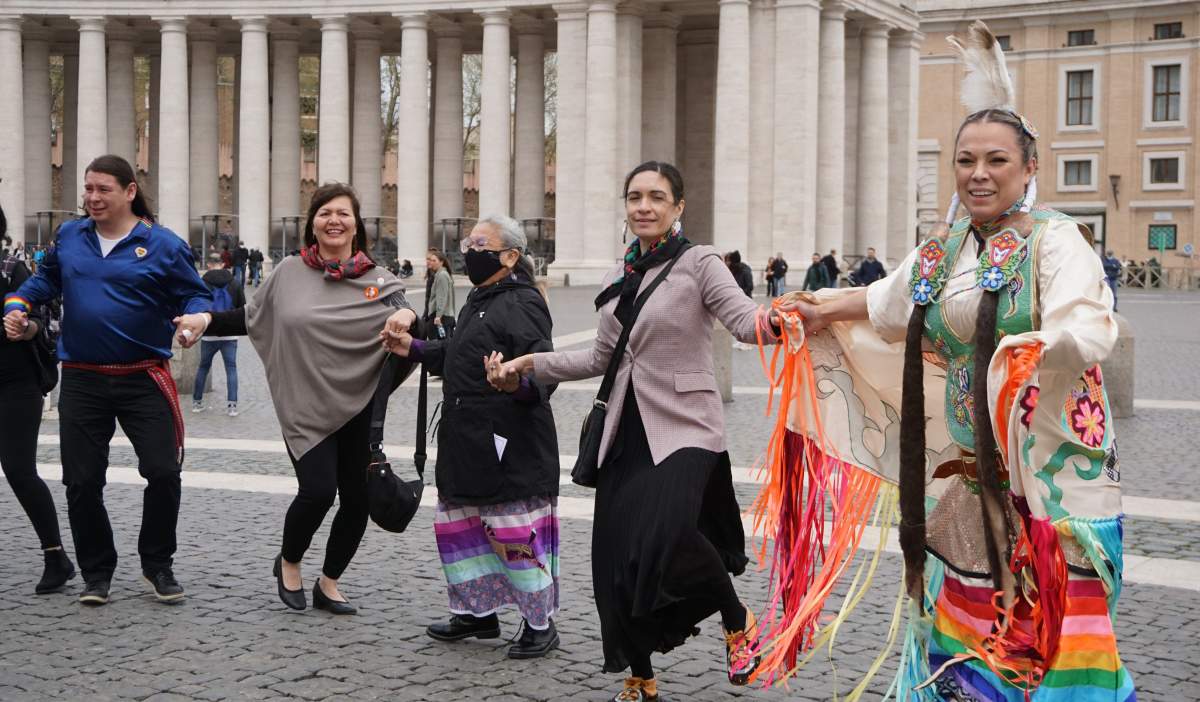
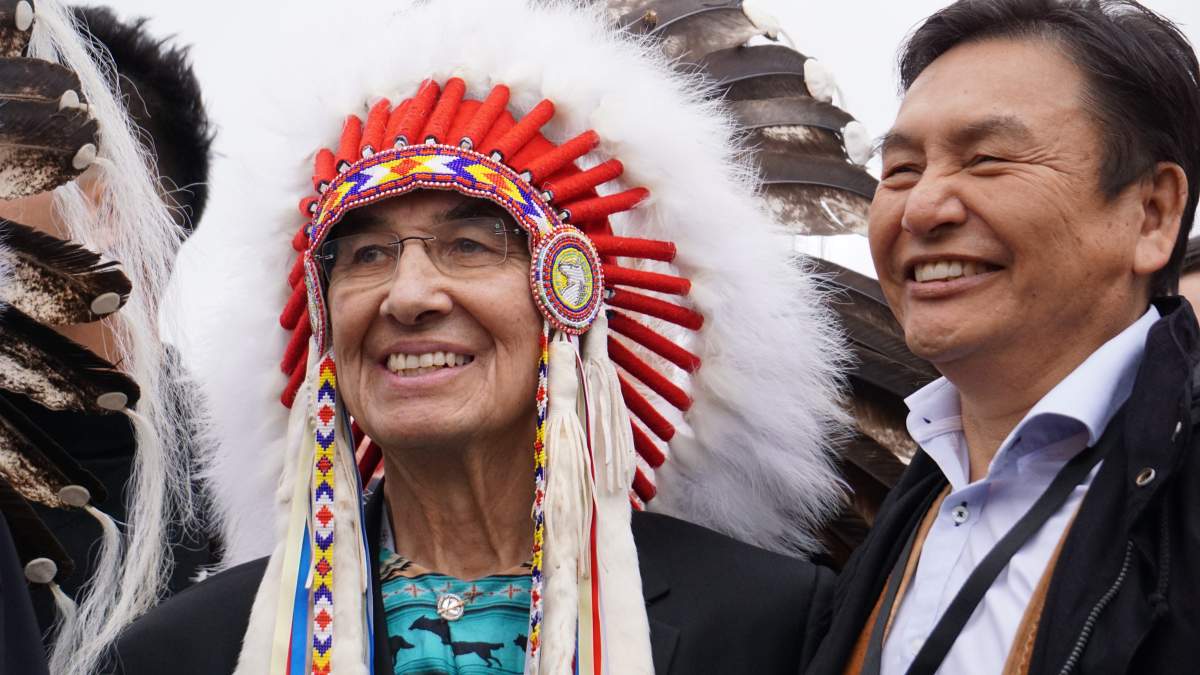
Outside St. Peter’s Basilica, First Nations, Inuit and Métis peoples from across Canada celebrated the delegation’s achievements in a jubilant round dance around the Vatican Obelisk. Church officials, tourists and Italians joined them hand-in-hand as they took part in customs that were once forbidden – a powerful act of resistance on Vatican soil.
LaBillois and other Mi’kmaq delegates sang the sacred Mi’kmaq Honour Song.
Canada’s residential school system locked away more than 150,000 Indigenous children, ripping them from their families and culture in an effort to destroy Indigenous identities. Thousands died from abuse, disease and malnutrition, and countless more were subjected to sickening physical and sexual violence by priests and nuns.
In press conferences from Rome, survivors rarely divulged the gratuitous details of their experiences, focusing instead on their campaign for truth and reconciliation – including calls for a papal apology on Canadian soil.
Reactions were mixed to that atonement being delivered at the Vatican, but many delegates expressed hope and optimism.
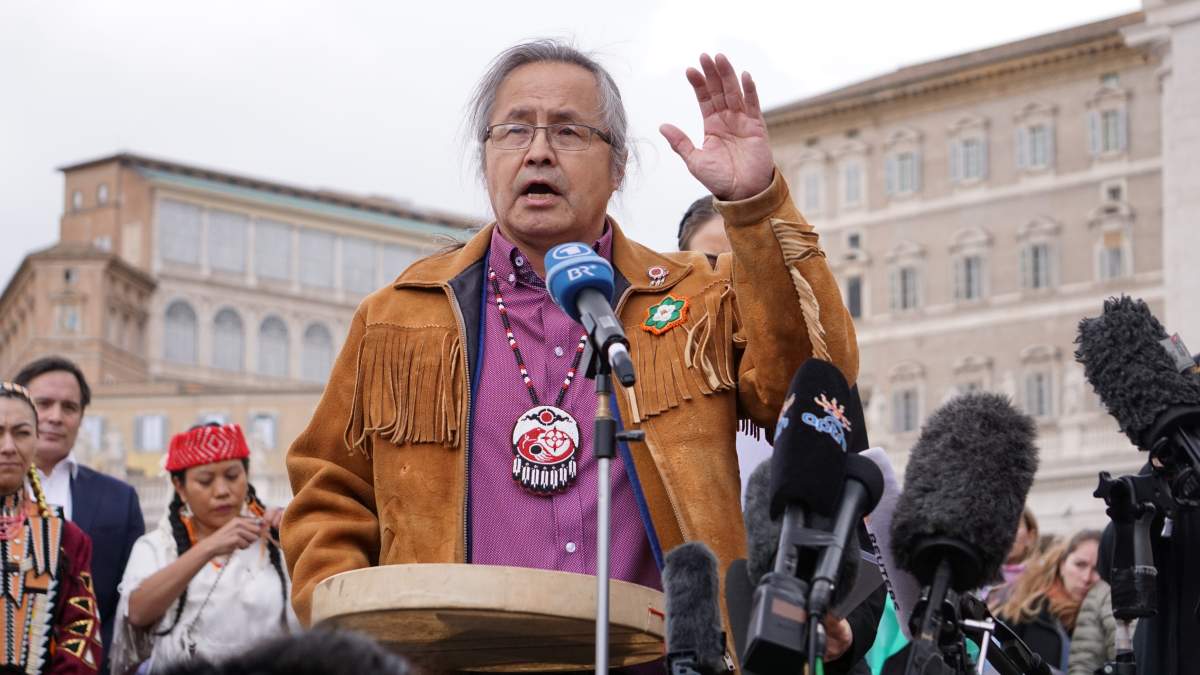
Dene National Chief Gerald Antoine said he took the Pope’s words as a sign of “good faith,” but still expects him to apologize on Turtle Island to all their families. It’s very much a beginning, and not an end, he told a sea of reporters near St. Peter’s Square.
“The moment is like when you’re going out there in the snow and you see fresh moose tracks. That’s the feeling that I have because there’s a possibility,” Antoine explained. “However … you still need to do work, you still need to go tracking that moose.”
Métis National Council president Cassidy Caron, who met Pope Francis on Monday, said she was “deeply moved” by his apology, knowing how important it is to survivors back home.
“The Pope’s words today were historic, to be sure. They were necessary and I appreciate them deeply,” she said. “I now look forward to the Pope’s visit to Canada, where he can offer those sincere words of apology directly to our survivors and their families, whose acceptance and healing ultimately matters the most.”
Read more: ‘Now I’m able to forgive’: Alberta residential school survivors speak out on Pope apology
Pope Francis has been described by delegates as a genuine and sincere man whose love and caring is translated easily through his eyes, warm handshakes and occasional hugs.
In his speech, he committed to visiting Indigenous families in Canada, but did not indicate whether he would apologize again in their homeland. Instead, the Pope said he looked forward to being able to “better express to you my closeness.”
Pope Francis has yet to reveal his inclinations on a number of other priorities shared with him this week. He has not, for example, addressed calls to revoke racist, centuries-old papal decrees that permitted the displacement and destruction of non-Christian peoples.
The CCCB said the Holy See is taking time to ponder and understand that request. Meanwhile, Canadian dioceses and the Vatican secretaries of state have vowed their support in turning over all documents pertaining to residential schools – none of which are housed, bishops claimed, directly in Vatican City.
-
![]() ‘It’s hard’: Wainwright mayor reacts after deadly fire, explosion at Canadian military base
‘It’s hard’: Wainwright mayor reacts after deadly fire, explosion at Canadian military base -
![]() Canada is in ‘mourning’ following deadly explosion, fire at CFB Wainwright: Carney
Canada is in ‘mourning’ following deadly explosion, fire at CFB Wainwright: Carney -
![]() Business News: Canadian home sales drop in September
Business News: Canadian home sales drop in September -
![]() Massive emergency response to deadly explosion and fire at CFB Wainwright
Massive emergency response to deadly explosion and fire at CFB Wainwright


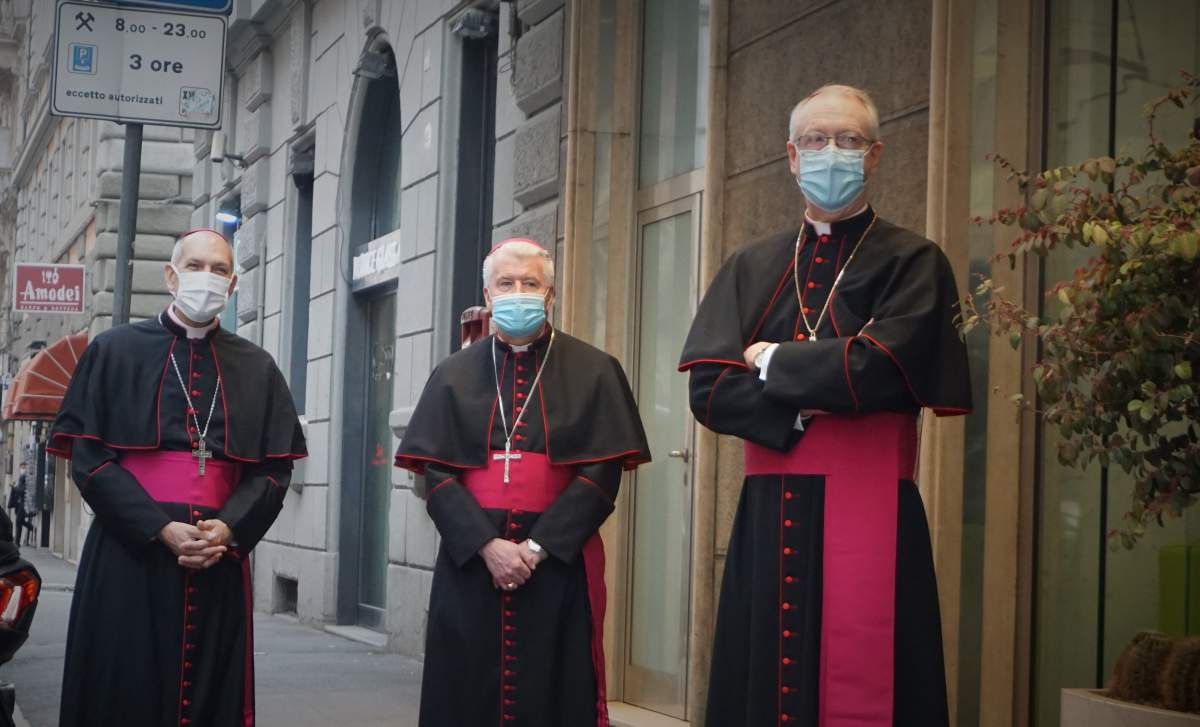
In a sit-down interview with Global News, Edmonton Archbishop Richard Smith and Calgary Bishop William McGratten expressed the Catholic Church’s deep desire to walk together with Indigenous peoples. They said they have inherited both pain and accountability for residential schools, but the church’s legacy of abuse has not impacted their faith or belief in its mission.
“I think we have to be very, very careful that we don’t judge a particular faith by people who are not living it. Anyone who abuses another is not living the Catholic faith,” said Smith, sitting on an armchair in their hotel lounge.
“I think at the same time, it’s fair to say that like so many others, I have felt embarrassment, I felt sadness, I felt shame at what has been unfolded by some people who claim to be Catholic.”
As part of the landmark Indian Residential Schools Settlement Agreement in 2006, Roman Catholic entities in Canada committed to raising $25 million for reconciliation initiatives. Only $3.9 million was delivered.
Through the settlement agreement, the church also promised $29 million in cash for survivors. Last year, documents obtained by CBC revealed it spent millions of that pot on lawyers, administration, a private fundraising company and unapproved loans.
“We can always look back and sort of see that maybe there were certain mistakes,” said McGratten, vice-president of the Canadian Conference of Catholic Bishops.
“I think we all have to have a collective sense that maybe, there was a way in which we realized that we could have done this in a way that was much more successful.”
The six Canadian bishops accompanying delegates in Rome have kept their comments brief in press conferences with Indigenous leaders – often restricting them to descriptions of the Pope’s tone and behaviour in private meetings. They have been seen at times, through an open doorway, having their own private conversations with survivors in the downtime between scheduled events.
Delegates repeatedly thanked the bishops for their partnership and support throughout the week. Pope Francis, meanwhile, was given a new name for his involvement – White Feather, to commemorate the eagle that watches over Indigenous peoples and now flies with the Christian white dove toward peace and harmony.
The pontiff was also given a cradleboard – a symbol of every child forced to endure the horrors of residential school – and tasked with caring for it overnight. He gave it back to delegates, as requested, on Friday to indicate his commitment to reconciliation.

As he listened to the Pope’s final remarks, Inuit Tapiriit Kanatami president Natan Obed said he “couldn’t help thinking how individuals can change the world.”
Wilton Littlechild, a survivor, said it was “incredible” to hear a papal apology on his birthday. Birthdays were not observed in residential school, he added, and his first celebration took place when he turned 28.
“Thousands of survivors wanted to hear ‘I am sorry,’ but His Holiness the Pope went beyond that – he said, ‘I am very sorry,’” said the Alberta delegate and commissioner of the Truth and Reconciliation Commission.
“The attention now – it’s not about coming down, but going up, and starting to work on reconciliation. We need to start to work on healing our relationships.”
In the square, LaBillois said Indigenous communities must be able to guide new relationships with the Catholic Church and determine how incoming reconciliation funds are spent.
“It’s really important that we have the jurisdiction and authority when it comes to making these decisions for our people, because we know what’s best for us.”
Last year, as First Nations throughout Canada detected close to 2,000 unmarked burial sites on former residential school grounds, the CCCB released an unequivocal apology for the harms of the schools and promised $30 million over five years would be put toward reconciliation.
McGratten confirmed the church will not pay funds it had previously agreed upon and failed to deliver, but is starting anew with that commitment. He told Global News that making good on it is “one of the most important signs” the Church can send that indicates its commitment to walking together in reconciliation.
The Indian Residential Schools Crisis Line (1-866-925-4419) is available 24 hours a day for anyone experiencing pain or distress as a result of their residential school experience.


Comments
Comments closed.
Due to the sensitive and/or legal subject matter of some of the content on globalnews.ca, we reserve the ability to disable comments from time to time.
Please see our Commenting Policy for more.