


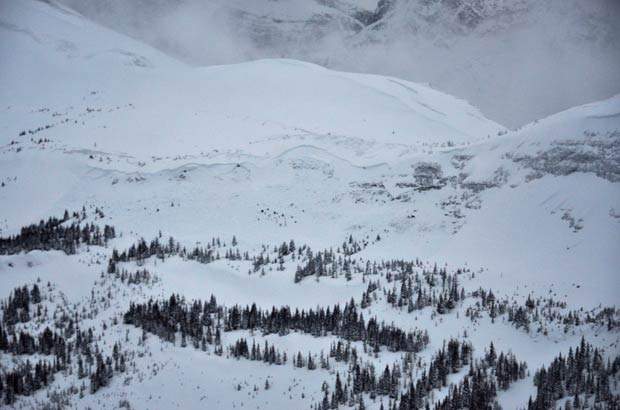
With avalanches and the threat of snow slides holding up the rescue of a group of skiers in B.C., our thoughts turn to one of the greatest winter hazards – and what you can do to survive it.
What you should do if you’re caught in an avalanche:
What to do if you’re caught in an avalanche
Move off the slab of snow at a 45 degree angle before the slab breaks up and falling snow sends you for a tumble.
If the sliding snow knocks you off your feet, keep your feet pointed downhill and attempt to burrow into the surface of the snow, letting as much debris as possible pass over year.
To do this, you will have to use the same motion as you would swimming the front crawl and you’ll have to fight hard against the snow.
When the snow stops sliding, clear some space in front of your face so you can breathe.
Move your hand as high up as you can, towards the surface and, though this is challenging, try to remain calm.
How to survive overnight if you have been caught in an avalanche
The key is to build a snow cave. Such a cave, heated with the candle from your survival kit, will enable you to spend long hours in relative comfort.
How to build a snow cave:
Find a safe spot away from potential avalanche slopes and places where blowing snow could clog or seal your cave’s air vent.
Dig your cave into a small slope or bank with snow at least six feet deep. This is much easier than digging a cave on a flat surface.
Try to stay dry by wearing your hard shell lining and as few inner layers as possible while digging. That way, when you’re done you will be able to put your dry inner layers back on. Work slowly to avoid excessive sweating.
Dig an entryway tunnel about three feet into the slope and then begin digging upwards to create an expanded dwelling space.
Remember, the cave ceiling must be at least a foot thick to prevent it from collapsing. The ceiling and walls should be smooth so melting snow water runs down the walls and doesn’t drip on your or other cave occupants.
The cave floor should be constructed above the top of the entry tunnel so the warmer air will be trapped inside.
Cover the entrance will a trap or snow block and punch a ventilation hole through the ceiling with a ski pole.
Put on all your extra clothes, wrap up your emergency blanket, sit on your pack or foam pad, fire up your stove or light your candle and try to relax.
A faster but less warm option is to dig a trench and then cover it with a tarp propped up by ski poles or tree branches.
Also, you might be able to find shelter in a tree well beneath thick tree branches.
What to do if your partner is buried in an avalanche
The first thing you should know is, you don’t time to go for help. If you do, your partner will likely be dead by the time you return.
You have about a 15-minute window in which to save your partner’s life so start moving.
Remember the last point at which you saw your partner before he or she disappeared in the snow.
Gather the other people in your group in a safe location and get organized. Pick a team leader. Move forward, being particularly weary of the portion of the slab of snow that remains above and adjacent to the crown of the avalanche.
Conduct a beach search and check the surface for clues such as gloves, helmets and skis.
Once you have decided on the place your partner is most likely buried, starting digging downhill so that you have some place to throw the snow. Ideally, you should tunnel your way toward the victim rather than digging a hole and standing on tome of him or her.
Once you find the victim, perform first aid if necessary. That means checking to see if the airways, breath and pulse. Also check for other injuries and provide treatment where possible. Make a full assessment of your partner’s injuries before getting help.
With files from USFS National Avalanche Center



Comments
Want to discuss? Please read our Commenting Policy first.