

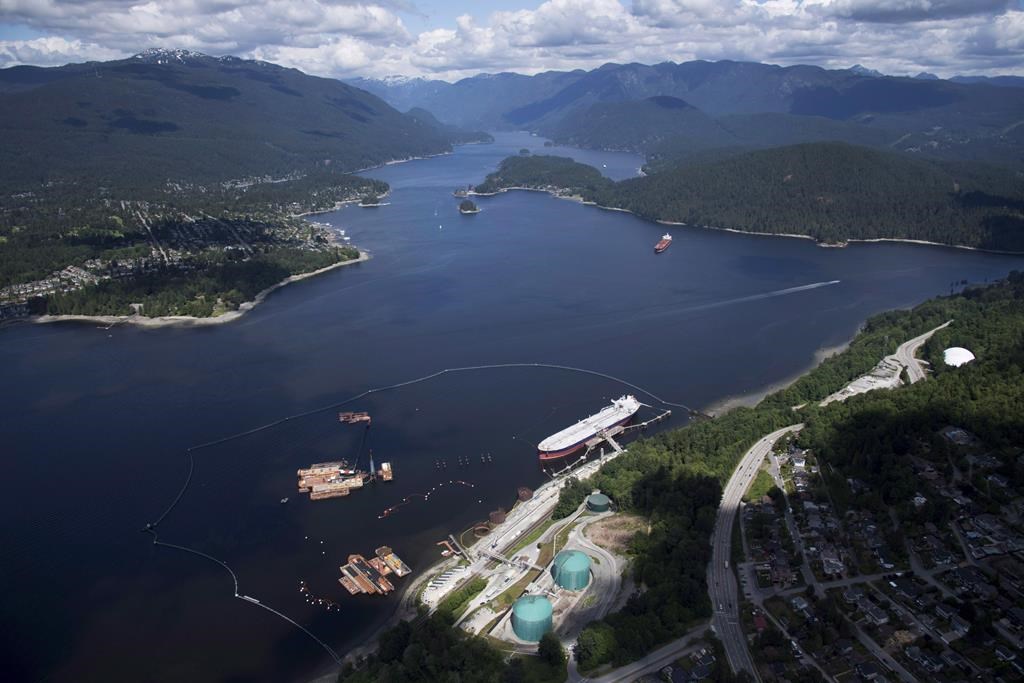
VANCOUVER – A British Columbia Court of Appeal hearing on proposed provincial legislation that would impact the Trans Mountain pipeline expansion has concluded and a panel of five judges has reserved its decision.

B.C. filed the reference case to ask the court whether it can create a permitting system for companies that wish to increase the amount of heavy oil they are transporting through the province.
WATCH: ‘This is BC vs. Canada’: Alberta has spent $23M on Keep Canada Working campaign
_848x480_1431615555937.jpg?w=1040&quality=70&strip=all)
The system would allow a provincial public servant to impose conditions on permits, which B.C. says would help it protect its environment and ensure that companies agree to pay for accident cleanup.


Canada says the proposed amendments to B.C.’s Environmental Management Act are unconstitutional because Ottawa – not the provinces – has jurisdiction over inter-provincial infrastructure.
Federal government lawyer Jan Brongers told court the amendments are clearly intended to impede additional oil shipments through B.C. because they only target heavy-oil transporters that want to increase capacity.
Joseph Arvay, lawyer for B.C., said in his reply on Friday that the goal of the legislation is not to block Trans Mountain and the court should not presume the law would be used inappropriately in the future.


Comments
Want to discuss? Please read our Commenting Policy first.