

Editor’s note: The headline on this story has been updated to reflect that troops are being sent to Gabon, not Congo.

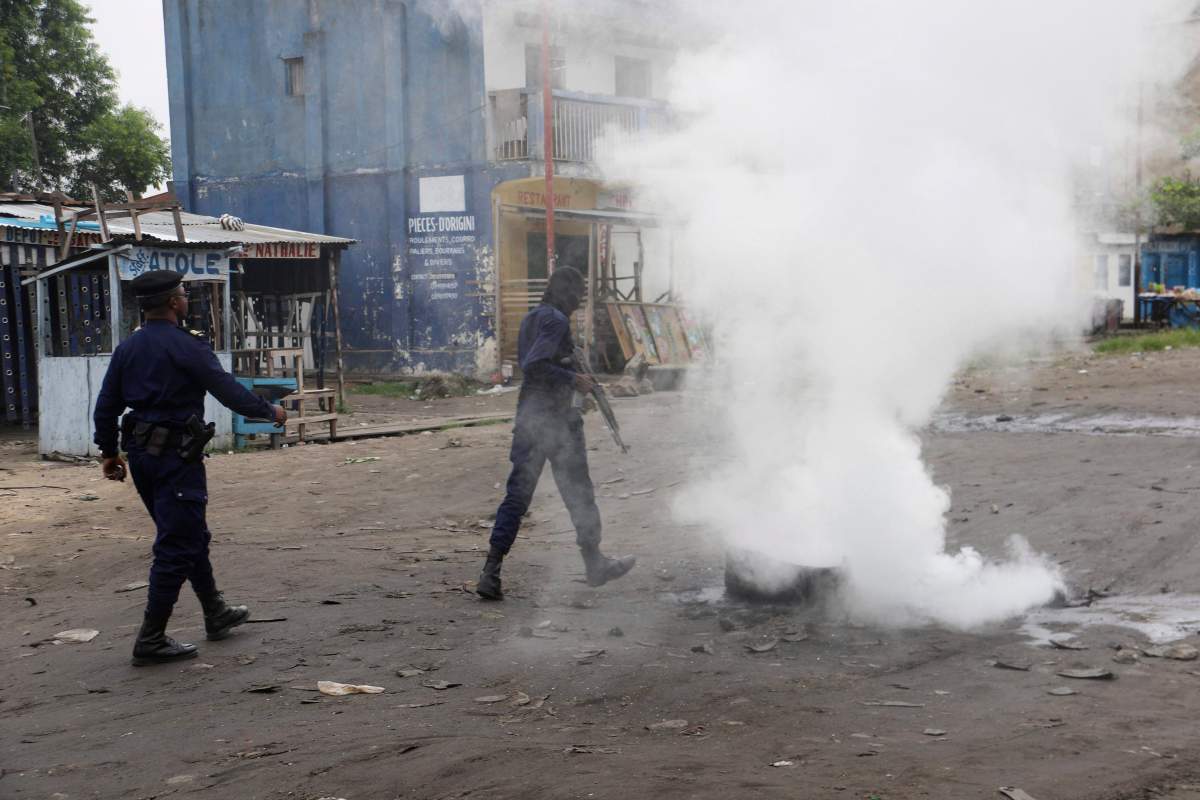
U.S. President Donald Trump said on Friday that U.S. military personnel had deployed to Gabon in response to possible violent demonstrations in the Democratic Republic of Congo after a presidential election there.
In a letter to congressional leaders, Trump said the first of about 80 military personnel arrived in Gabon on Wednesday in case they are needed to protect U.S. citizens and diplomatic facilities in Congo’s capital Kinshasa.
He said they “will remain in the region until the security situation in the Democratic Republic of the Congo becomes such that their presence is no longer needed.”
Trump said additional forces may deploy to Gabon “if necessary.”

Get breaking National news
WATCH: Residents, workers frustrated after Congo shuts down internet after election

- Pope Leo will leave the hospital Saturday following lung cancer surgery, Vatican says
- Zelenskyy urges support for new U.S. sanctions on Russia after Trump puts them on hold
- Scuffles break out as protesters rally across France, joining students
- Prince Harry and Meghan Markle make 1st joint appearance after U.K. return


Congo’s electoral commission is scheduled to release provisional results of the presidential election on Sunday, but it has said there could be delays because of the slow arrival of tally sheets.
Observers and the opposition say the election was marred by serious irregularities. Congo’s government says the election was fair and went smoothly.
President Joseph Kabila’s ruling coalition is backing his hand-picked successor Emmanuel Ramazani Shadary.
The international community has raised concerns that a disputed result could cause unrest, as was the case after the 2006 and 2011 elections.
On Thursday, the U.S. State Department called on the electoral commission to ensure votes were accurately counted and threatened to impose sanctions against those who undermined the process or threatened peace and stability in the country.


Comments
Want to discuss? Please read our Commenting Policy first.