


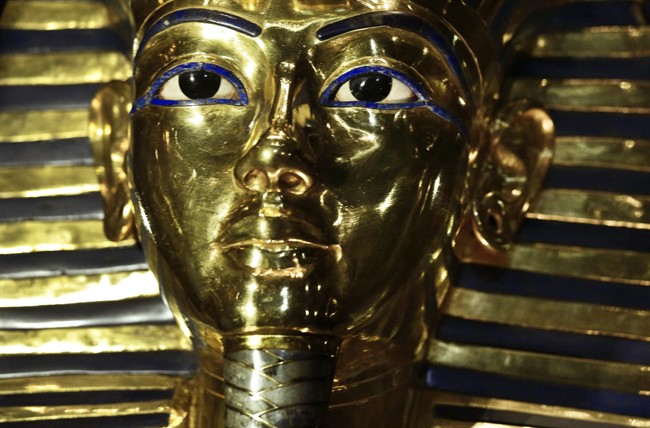
A new study has found that a blade found in the tomb of King Tut was made out of a meteorite.

King Tutankhamun was an ancient Egyptian pharoah of the 18th dynasty who died at the age of 19 after ruling from 1332 to 1323 BCE. The world became fascinated with him when his tomb was uncovered in 1922 by Howard Carter.
Daniela Comelli and his team from the Polytechnic University of Milan in Italy analyzed the blade — discovered in 1925 — using a special form of spectroscopy. Using this method, they compared several metallic meteorites of similar composition to that of the blade.
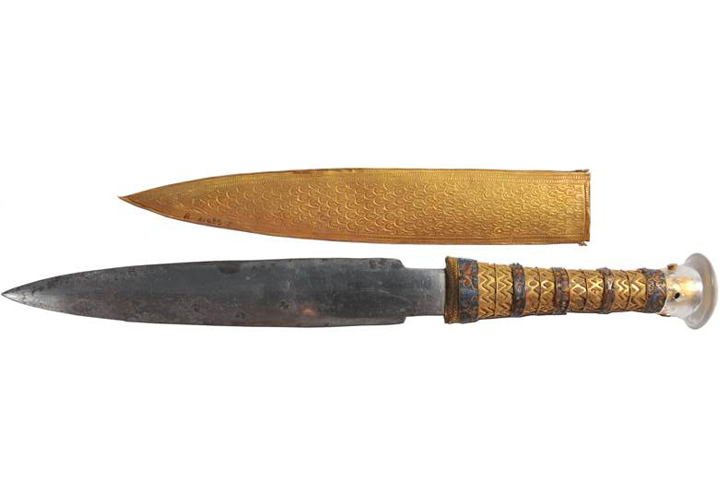


The dagger’s blade contained iron as well as 10 per cent nickel and 0.6 per cent cobalt.
“We show that the composition of the blade … accurately determined through portable X-ray fluorescence spectrometry, strongly supports its meteoritic origin,” the authors wrote in the study.

Get daily National news
The researchers also concluded that ancient Egyptians showed high craftsmanship when it came to crafting tools out of meteorites.
“As the only two valuable iron artifacts from ancient Egypt so far accurately analyzed are of meteoritic origin, we suggest that ancient Egyptian attributed great value to meteoritic iron for the production of fine ornamental or ceremonial objects up until the 14th C. BCE,” the authors wrote.


Comments
Want to discuss? Please read our Commenting Policy first.