

PEMBROKE, Ont. – Blasting off into space may never look the same if one Canadian company has its way.

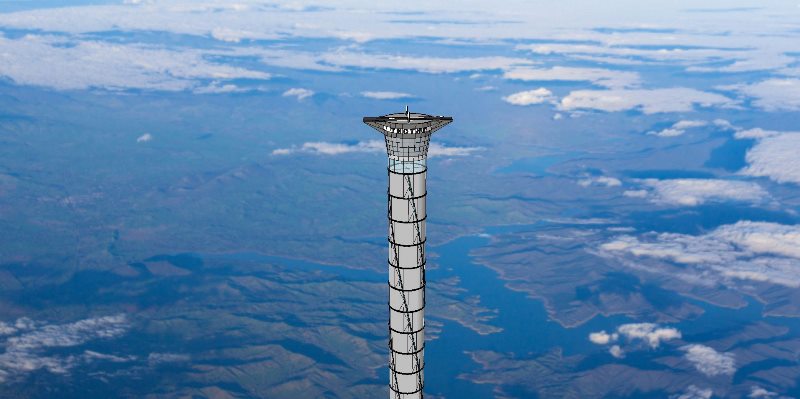
Thoth Technology of Pembroke, Ont., is developing a 20-kilometre-high free-standing space elevator that would allow astronauts to launch into space from a platform high above the Earth.
In July, Thoth was granted a U.S. patent for the technology.
“From the top of the structure you would be able to launch using a single stage space plane directly into low Earth orbit, and the return to the top of the structure and you wouldn’t need any expendable rockets that would come off during the flight,” inventor Dr. Brendan Quine said from the Algonquin Radio Observatory in Pembroke, Ont.
“The whole thing would be like a passenger jet.”
Quine says the structure would be pneumatically pressurized and guided over its base to allow it to stand freely.
“The centre of the patent is how to control such a huge and slender structure,” Quine said. “We basically null out the external forces on the tower using pneumatic pressure and actually lean the tower, actively guide the centre of gravity towards things like hurricanes so that the tower won’t fall down.”

Get daily National news
READ MORE: Young Jupiter-like planet discovered around star
He said the company intends to use pneumatic cells composed of materials like polyethylene and kevlar and leverage the power of gas pressure to create a strong, rigid structure capable of holding up the immense mass.
The advantages of launching into space from the elevator are numerous, according to Quine. But most significantly, launching into space vertically would not be necessary, saving more than 30 per cent of the fuel of a conventional rocket.


“You don’t have to go through the vertical ascent phase. Most rockets fly vertically upwards for 15 kilometres and then they bank in order to gain the kinetic energy of low-Earth orbit,” Quine said. “But the ascent phase is extremely energy intensive and very inefficient.”
READ MORE: NASA tells Congress agency needs to pay Russians $490 million to get astronauts to ISS
Quine says the next step is to build a demonstration tower approximately 1.5 kilometres tall to test the concept. He says the company wants to license the technology “to a wide range of interested companies” in order to make the space elevator a reality as soon as possible.
In addition to space flight, the company says the space elevator could be used for wind-energy generation, communications and tourism.
Quine says the project will cost between US$5 billion and US10 billion and could take three to five years to complete the demonstration tower, and another three years to finish the full version.
About a dozen people have been working on the concept since February 2007, Quine said.


Comments
Want to discuss? Please read our Commenting Policy first.