

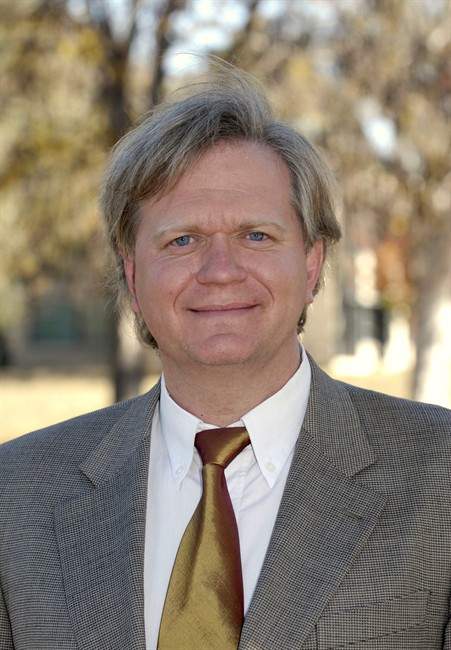
NEW YORK, N.Y. – Three U.S.-born scientists won the Nobel Prize in physics Tuesday for discovering that the universe is expanding at an accelerating pace, a stunning revelation that suggests the cosmos could be headed for a colder, bleaker future, nearly devoid of light.

In 1998, Saul Perlmutter, Brian Schmidt and Adam Riess presented findings that overturned the conventional idea that the expansion was slowing down 13.7 billion years after the big bang.
Their discovery raised a fundamental question: What is pushing the universe apart? Scientists have labeled it “dark energy,” but nobody knows what it is.
It’s “an enigma, perhaps the greatest in physics today,” the Nobel committee said.
Perlmutter, 52, of the Lawrence Berkeley National Laboratory and University of California, Berkeley, will receive half the $1.5 million prize. The other half will go to Schmidt, 44, at the Australian National University in Weston Creek, Australia, and Riess, 41, an astronomy professor at Johns Hopkins University and Space Telescope Science Institute in Baltimore.
Working in two teams, with Perlmutter heading one, they had raced to measure the universe’s expansion by analyzing light from dozens of exploding stars called supernovas. They found the light was weaker than expected, signalling that the expansion of the universe was accelerating.
“(It was) one of the truly great discoveries in the history of science, and one whose implications are not fully understood,” said Paul Steinhardt, a physics professor at Princeton University.
One consequence of the finding is that in a trillion years, galaxies will be spread apart from each other by more than the current size of the universe, he said. And the ever-greater expansion rate means the light from one galaxy will no longer be visible from another as it is today, he said.

Get daily National news
“It’s like changing from New York City to suddenly where everyone is spread out across some huge desert and there’s nothing around to view,” Steinhardt said.
The rapid expansion also implies that the universe will get increasingly colder as matter spreads across ever-vaster distances in space, said Lars Bergstrom, secretary of the Nobel physics committee.
The committee, citing the Robert Frost poem that pondered the world ending in fire or ice, suggested that “if the expansion will continue to speed up, the universe will end in ice.”
But Robert Kirshner, a Harvard astronomer who was part of the team that included his former students Schmidt and Riess, said scientists don’t know enough about dark energy to predict what will happen to the universe hundreds of billions of years from now.
One possibility is that the expansion will continue to accelerate, he said, “sort of like compound interest gone mad.” It could even speed up so much that not only will galaxies fly apart from each other, but “stuff will really rip apart,” even planets and atoms, he said, explaining that was called the “big rip.”
“And I hope that’s not our fate,” Kirshner added.
On the other hand, Kirshner said, the expansion could halt and go into reverse, so the universe collapses back into itself, a fate sometimes called the “big crunch.”
With such uncertainty, he said, “it seems very important to learn more about what the dark energy is.”
Schmidt was just sitting down to dinner with his family in Canberra, Australia, when the phone call came.


“I was somewhat suspicious when the Swedish voice came on,” Schmidt told The Associated Press. “My knees sort of went weak and I had to walk around and sort my senses out.”
Riess said his “jaw dropped” when he got an early morning call at his home in Baltimore from a bunch of Swedish men and realized “it wasn’t Ikea,” the Swedish furniture retailer.
“I’m dazed,” he said.
Perlmutter told AP his team made the discovery in steps, analyzing the data and assuming it was wrong.
“And after months, you finally believe it,” he said. “It’s not quite a surprise anymore. I tell people it’s the longest ‘aha!’ experience that you’ve ever had.”
Fred Dylla, executive director of the American Institute of Physics, said the discovery confirmed an idea from Albert Einstein called the cosmological constant. Einstein included this in his general theory of relativity, a cornerstone of modern physics.
The physics prize was the second Nobel to be announced this year. On Monday the medicine prize went to American Bruce Beutler and French scientist Jules Hoffmann, who shared it with Canadian-born Ralph Steinman for their discoveries about the immune system. Steinman died three days before the announcement, but since his death was not known to the committee, it decided he should keep the Nobel. Since 1974, Nobels have been awarded only to living scientists.
The Nobel Prizes were established in the will of Swedish industrialist Alfred Nobel and have been awarded since 1901. The prizes are presented to the winners every year on Dec. 10, the anniversary of Nobel’s death in 1896.
The Nobel chemistry prize will be announced Wednesday, literature on Thursday and the Nobel Peace Prize on Friday. The economics award, created by Sweden’s central bank in 1968 in Nobel’s memory, will be awarded Monday.
___
Karl Ritter reported from Stockholm. Louise Nordstrom and Malin Rising in Stockholm, Kristen Gelineau in Sydney, Jessica Gresko in Washington and Greg Moore in Phoenix contributed.


Comments
Want to discuss? Please read our Commenting Policy first.