


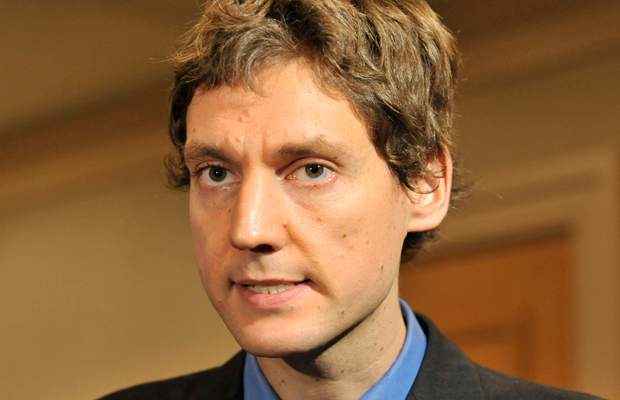
The B.C. Civil Liberties Association may boycott the Missing Women inquiry because it appears to be unfair, the association’s executive director said today during a public forum in Terrace.

David Eby said his organization is concerned about the lack of government funding for a dozen groups granted standing at the Missing Women inquiry, which begins formal hearings in Vancouver on Oct. 11 but is conducting public forums in northern B.C. this week.
He said there are 14 lawyers with unlimited retainers to defend the government and police at the inquiry, and only two lawyers to represent first-nations women and residents of Vancouver’s Downtown Eastside, and another lawyer to represent the families of the victims of serial killer Robert Pickton.
The lack of funding has caused eight groups to boycott the inquiry or withdraw because they could not afford lawyers.
“It’s going to be very, very difficult to hold a fair inquiry,” Eby told the public forum in Terrace.
“It may be that our organization may not participate as well.”
Reached by phone, Eby later confirmed the BCCLA is considering boycotting the inquiry.
“Fairness is our main concern,” he explained, adding the organization is planning to meet to discuss the matter with its coalition partners.
During his presentation in Terrace, Eby suggested there should have been a separate public inquiry on women who disappeared or were found murdered along the so-called Highway of Tears, Highway 16, which runs from Prince Rupert to Prince George.
He also expressed concern about Commissioner Wally Oppal being appointed to head the Missing Women inquiry because “he was a member of government when there were decisions about Mr. Pickton.”
Eby suggested Oppal may have to criticize “people he had worked with for years.”
Oppal took issue with Eby’s comments, saying the law doesn’t allow holding an inquiry into Highway of Tears murders that are still active investigations.
He also pointed out that he headed a commission of inquiry into policing in B.C., which probed many of the same issues the Missing Women inquiry is dealing with today.
“It deals with policing, not any role I had in government,” Oppal said, responding to Eby’s comments. “It’s about tragedies, not politics.”
The commissioner, a former appeal-court judge and B.C.’s attorney-general from 2005 to 2009, also pointed out that Eby has sought public office. Eby ran for the NDP in the byelection that saw Premier Christy Clark win the seat in Vancouver-Point Grey last May.

Get breaking National news
Earlier in the day at the Terrace forum, one speaker suggested an Amber Alert system (used to warn the public when a child has been abducted) should be used to notify northern communities when a woman goes missing along the Highway of Tears.
“Reports should be taken more seriously,” Michelle Angus said.
“I’ve known four or five people who have gone missing,” she recalled.
The commissioner heard from several speakers about the success of finding Kienan Hebert, a three-year-old boy who went missing from his home in Sparwood last week, after an Amber Alert was issued by police.
Robin Austin, NDP MLA for Skeena, said he gave a ride to a young first-nations woman a couple of days ago and there was a news report on the car radio about the Sparwood boy being found.
“The young woman said, ‘I guess that amber alert worked and he’s safe because he’s white,'” the MLA recalled.
Rightly or wrongly, that’s the view of many first nations people, Austin told the inquiry during a morning sitting at Kitsumkalum Hall.
He said the women who have disappeared along Highway 16 were largely marginalized people, similar to those were went missing from Vancouver’s Downtown Eastside.
“Maybe if they were wealthy white women from North Vancouver,” Austin said, “Robert Pickton would have been picked up much sooner.”
The MLA was critical of the Liberal government for not providing full funding to all the groups granted standing at the inquiry.
“I don’t think it’s enough to say money’s tight,” Austin said, pointing out the government spent more than $500 million putting a new roof on BC Place stadium in Vancouver, but a few million can’t be found to do a full and proper inquiry.
Shanelle Alexander suggested having better bus service along Highway 16 so people don’t have to hitchhike home after the last bus leaves at 4:30 p.m.
She also said there is information about the missing women that needs to be brought forward so it can be investigated.
“Many people have information on these missing women but they are being threatened,” Alexander said.
One speaker suggested first-nations drug gangs are using women as “mules” to transport drugs.
Chief Don Roberts of Kitsumkalum said he believes all the girls and women reported missing have been murdered. He suggested more cameras should be installed along the highway to catch the “monster,” who seems to act when people drop their guard.
“We’re having meetings, meetings, meetings – no action,” he said.
The public forums have heard some wild allegations, including from one woman, who complained that she was raped at gunpoint by an RCMP officer, who told her “This is how I get all my Indian woman.” She said the officer was never charged but was dealt with internally.
Another man, who identified himself as Carl, claimed he saw a man chop off a woman’s head with a machete and said he could help police solve 22 murders.
RCMP Chief Supt. Wayne Rideout said Tuesday that an investigator had been in contact with Carl for some time and police will look at the allegation of the woman who claimed she was raped.
“That’s something we’ll take a look at. We have to investigate it and investigate the validity of it,” Rideout said.
If the complaint deserves to be investigated, it would be assigned to an outside agency, he added.
He said the RCMP has assigned 11 people to the inquiry, including a major-crime investigator familiar with Highway of Tears cases and Insp. Gary Shinkaruk, who is familiar with the Missing Women Task Force investigation and Project E-Pana, which is investigating 18 cases of females found murdered or disappeared along Highway 16 and other highways in the interior of B.C.
Rideout, in charge of criminal operations for contract policing in B.C., said the RCMP will make its own submissions during the formal part of the inquiry next month but for now police are listening to the public views about their relationship with the RCMP.
He said one woman who spoke Monday at a forum in Prince Rupert complained that she was turned away from her local detachment because her daughter went missing in Vancouver’s Downtown Eastside and was told had to contact police in North Vancouver, where her daughter had lived when she disappeared.
Rideout said an investigator met with the woman and discussed her daughter’s case, which seemed to close the communications gap.
“There’s a tremendous amount of work being done and a lot of work to be done,” the senior Mountie said.
The inquiry is holding seven forums this week in northern B.C. to probe the systemic problems of police investigating multiple murders in a number of jurisdictions.
Wednesday’s forum will be held in Smithers and another will be held in Hazelton on Thursday.
The Vancouver Sun is featuring live streaming of the forums online at http://bit.ly/po0YAs
Formal hearings in Vancouver begin Oct. 11 to probe why the police didn’t catch Pickton sooner.


Comments
Want to discuss? Please read our Commenting Policy first.