


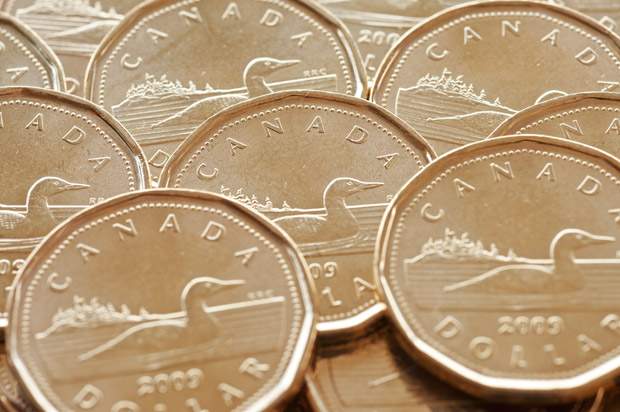

On Thursday, the Canadian dollar surged to it’s highest point since November 2007, climbing as high as as 106.11 cents U.S. before closing at 105.78 cents U.S. We asked Martin Schwerdtfeger, senior economist at TD Bank Financial Group, what this development means for Canada.
What are the benefits of the Canadian dollar surging to a three-and-a-half year high?
For one, it reduces the cost of imports such as food commodities. That reduces inflation, which means Canadians’ disposable income goes further. Also, the strong Canadian dollar could help investors here buy imported capital goods.
A strong loonie is in part a reflection of higher international demand for Canadian bonds. That leads to lower interest rates on the bonds and, eventually, to lower interest rates for consumers and businesses.
What are the drawbacks of this development?
The main drawback is that it hurts our exports [because they become more expensive to consumers abroad.] Also, it means imports become less expensive to us and, therefore, more appealing to consumers here. That makes things tough for Canadian companies that are producing trade-able goods or services. If a company is open to trade, it’s open to increased competition from abroad.
Overall, is a soaring loonie good or bad for the Canadian economy?
In the long run, it’s beneficial to have a strong and stable currency. The fact that we have a stronger debt profile than other countries is a plus. In the short term, it could hurt some businesses [such as those that produce trade-able goods or services]. Ultimately, some business will fail and others will be created.
A hike in interest rates is expected in the fall. Will it be a dramatic hike?
To a large extent, it depends on what happens with inflation and overall economic in the next few months. You have to factor in risk stemming from the debt crises in the United States and Europe. We expect the interest rate to spike 25 basis points – and increase slowly but progressively.
If the u.s. defaults on its public debt, how will it affect us?
If that happens, there will be tremendous repercussions. It would be almost catastrophic for the entire world and for Canada, which counts the U.S. as its biggest training partner. We would venture into unknown territory.
However, our view is that American lawmakers will agree to extend the country’s credit limit. Of course, at some point they will have to introduce a mix of lower spending and higher taxes to address their deficit.


Comments
Want to discuss? Please read our Commenting Policy first.