


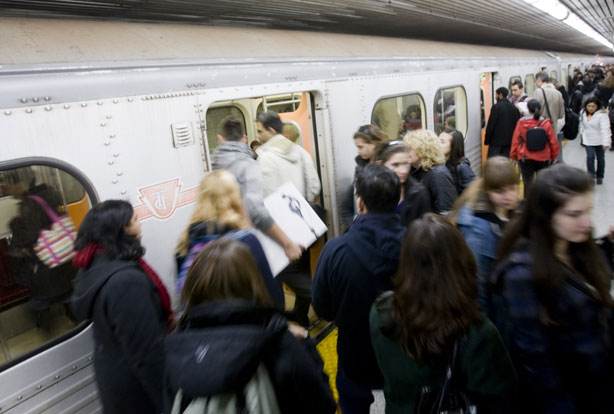
TORONTO — TTC officials have announced an anti-suicide program, dubbed “Crisis Link,” to outfit subway platforms with suicide phones linked to crisis professionals.
The TTC will be the first subway line in North America to carry suicide phones, although the practice is already widespread on North American bridges. San Francisco’s Golden Gate bridge, for instance, features suicide phones bolted beneath signs stating “there is hope, make the call.”
Between 1998 and 2007, approximately 150 people killed themselves by jumping in front of a Toronto subway train, said a 2010 report by the TTC. Suicide attempts reached their peak at 55 in the early 1980s, although they have been in steady decline ever since. In 2009, the TTC experienced 18 “suicide incidents.”
The average suicide attempt holds up subway traffic for 74 minutes, says the report.
The transit commission is traditionally hesitant to publicize suicides, as media coverage of a subway suicide can often lead to copycat attempts. Signs accompanying the crisis phones will mark the first time that the word “˜suicide’ has been allowed in a subway station. In 2009, the transit corporation blocked a series of Virgin Radio bus ads showing a radio poised on a subway platform alongside the tagline “give your radio a reason to live.”
Transit commission employees are currently trained in spotting passengers exhibiting suicidal behaviour. In March, 2010 the TTC announced plans to begin installation of suicide barriers along the Yonge Line.
The barriers, expected to cost $10 million per station, would consist of screen doors triggered to open only when a train was in the station. The barriers are commonplace in Japan, which hosts one of the highest suicide rates in the world.



Comments
Want to discuss? Please read our Commenting Policy first.