


In September 2025, Prime Minister Mark Carney said Canada was officially recognizing the State of Palestine.

He told reporters at the time that recognition was “predicated on the Palestinian Authority’s commitment to much-needed reform.” He said he received that commitment in a letter from Palestinian President Mahmoud Abbas and discussed it with him later in a phone call.
Canada’s Privy Council refuses to publish the letter, citing respect for international diplomatic relations.
Carney framed the reforms, and the Palestinian Authority’s commitment to meeting them, as his government’s reasons for proceeding with statehood recognition — but both supporters and critics of the move interpreted it as Ottawa imposing conditions on that recognition.
Here’s a look at the reforms Carney called for and where they stand today:
1) Governance
Carney said Abbas promised that the Palestinian Authority, or PA, would “fundamentally reform its governance.” He said Canada has made it clear that Hamas can play no role in the future state.
Feda Abdelhady, the Palestinian ambassador to Ottawa, said in an interview in August reforms are underway and are meant to boost democracy for Palestinians. But she said progress can only go so far while Palestinians still face constant violence.
“We could do the most incredible job of implementing reforms from textbooks and curriculum and everything else — but the occupation remains,” she said, pointing to Gazans’ daily struggle to survive without reliable access to food, shelter and water.
Her delegation shared with The Canadian Press a report the Palestinian finance ministry released in July which argues the PA has achieved 30 of 33 promised legal and social-system reforms — such as strengthening the rule of law and investment laws — over an 18-month period.
The report also said it will be impossible for the PA to fund social services or undertake more reforms due to Israeli economic policies such as withholding tax revenue collected on consumption and imports.
Since the October 2023 attacks by Hamas, Israel has cancelled thousands of permits for Palestinian workers, blocked roads used to export goods, and capped financial transfers.
2) Elections
Carney said the PA vowed “to hold general elections in 2026, in which Hamas can play no part.”

Get daily National news
Palestinians last voted in 2006, leaving Abbas’ Fatah party in charge of parts of the West Bank. Hamas seized control of Gaza during a brief civil war in 2007.
Last fall the PA said it could only hold elections a year after the war in Gaza ends completely — and only when ballots can be cast in the West Bank and East Jerusalem without Israel detaining political candidates.
The PA held one election in the Gaza city of Deir al-Balah in April.
3) Demilitarization
Carney said the PA pledged “to demilitarize the Palestinian state.”
Senior Canadian officials, briefing media in September 2025 about the statehood recognition, said that effort must include ending the PA’s payments to families of those imprisoned for killing Israelis.
They said it also must include education reform to ensure Palestinian students aren’t taught antisemitic messages.
In February 2025, Abbas vowed to halt the practice of paying stipends to the families of Palestinians held or killed in Israeli prisons, particularly those accused of violent attacks. That has meant shifting welfare payments to a single system — called Tamkeen — based on family needs, instead of using criteria that prioritize detainees.
Israel brands the previous policy “Pay for Slay” and insists it’s still happening. The PA says an independent audit, set for release later this year, found that the policy has been largely eliminated. The reform has been controversial in the West Bank, where some say the PA is abandoning people seen as freedom fighters.
The PA previously said demilitarization will require some security guarantee — such as foreign peacekeepers — against Israeli incursions.
- Millions in funding put toward Manitoba First Nations Police, safety officers
- A federal IVF program will harmonize ‘patchwork’ approach, experts say
- Cause of fiery Calgary bus crash that killed 3 passengers, injured 16 under investigation
- Nackawic mill workers and union push for government action as shutdown looms


4) Textbooks
An analysis by the Israeli firm Impact-SE of textbooks and teachers’ guides issued last September for schools run by the Palestinian Authority found the texts glorify violence.
The firm’s November 2025 report cites examples from the textbooks — such as one passage framing the 1972 murder of Israeli athletes at the Munich Olympics as legitimate resistance, and another featuring a photo of the dead body of four-month-old baby killed by Israeli shrapnel during the 2001 intifada.
“The Jewish Holocaust is entirely missing from the PA curriculum,” the think tank found.
Israeli textbooks have faced their own criticisms. A Hebrew University study in 2012 found the textbooks promote racism by excluding any portrayal of Arabs as peaceful, non-violent people. Both sides have published maps that ignore the existence of the other side.
What does Israel say?
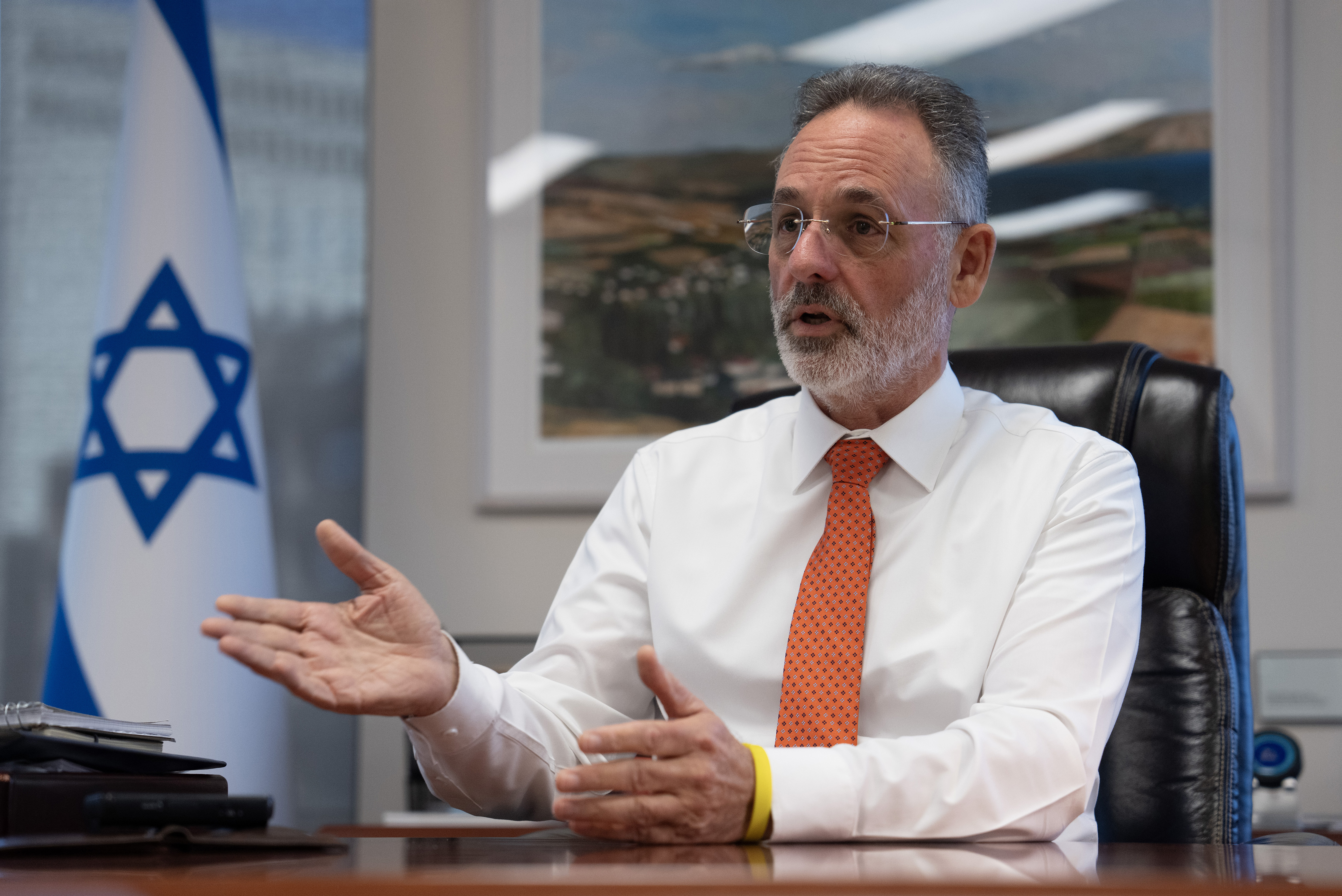
The Israeli government has been loudly critical of Canada’s recognition of Palestine. Israeli Ambassador to Canada Iddo Moed said the PA is corrupt and not serious about living in peace alongside Israel.
“We see regression,” Moed said, noting the lack of concrete dates for elections.
“Palestinians really don’t live up to their commitments. There is no reason whatsoever to say that there is any kind of Israeli involvement. They have all the capability. Actually, they have all support from the international community to move forward with these reforms.”
How much does this matter?
Jeremy Wildeman, a University of Ottawa human rights researcher who has focused on Canadian policies in the Palestinian territories, said statehood recognition seems to be based on perpetually moving goalposts.
He said Canadian politicians should focus on Israel’s disproportionate power over Palestinians — and the historically high level of violence the Israeli military allows settlers to undertake — instead of PA reforms.
“If you really care, the first thing you do is help stabilize the situation so the Palestinian government could govern,” Wildeman said.
Heidi Matthews, a professor at York University’s Osgoode Law School, said Canada’s focus on reforms could be understood as an attempt to create facts on the ground supporting Palestinian self-governance. Carney’s announcement included funding to achieve reforms.
“One way of reading that would be not a demand or a condition, but a concrete recognition that being able to function as a state, as a criteria of statehood, actually requires meaningful support by third states here,” she said.
“That support can look like actively strengthening governmental institutions so that the State of Palestine can fully and effectively perform the activities of a government.”
Matthews said this would be a shift away from decades of “just tinkering with humanitarian assistance” and toward ending Israel’s occupation.
She said Canada has an obligation to make that shift under a July 2024 advisory opinion by the International Court of Justice.
The ruling called on states “to put into effect modalities required to ensure an end to Israel’s illegal presence in the occupied Palestinian territory and the full realization of the right of the Palestinian people to self-determination.”


Can’t wait till an asteroid slams into earth and destroys it completely
You can reference 47 and 48 until your final breath, but those and other borders are not official borders recognized by that government. Here is a clue why; if a government releases its official borders today then that means it is done expanding. That does not happen in this specific case because otherwise all that land in southern Lebanon would be considered occupied by that occupier. Same as the land seized since the fall of Assad. Bibi needs to please extremists in his own government. So he will never discuss an official border. And no, thats not why they are attacked. That’s the conclusion you incorrectly assumed from my comment.
Google is your friend. Use it to research death marches. And clearly you didn’t research Tantura, yet you are fixated to come back here to see responses. Your sealioning is getting predictable.
There was no “evolving situation” since the 19th century. The issues started with the mass arrival of a foreign populace that pushed others off of land they had been on for centuries. Read up on the comments and efforts of Ami Ayalon, former head of Shin Bet who echos all that I said.
You came to a debate armed with urban myths and debunked cliches. Kindly go waste someone else’s time.
Israelis borders are not known?
I have referenced 1947 and 1948 many times in our discussion.
Death marches?
This was an evolving situation since the beginning of the 19th century.
So you are denying Israel being attacked by it’s neighbors since it’s creation ? Are you actually trying to say that these attacks weren’t really attacks but just all the countries around the false country Israel trying to find their borders?
So Israel has never shown it’s borders on a map?
It’s borders are not demarcated on the ground?
On maps the borders are just a blur with a text saying “Here be Dragons”
Seriously, that’s why Israel has been attacked?
Wow man, just wow.
The UN did not create Israel Wayne. Thats your stated misbelief.
And the evictions started in 47 and 48 before the forced creation via violence. Arab countries responded with evictions later. But there is also documented history, by Israelies themselves, where they admit to stoking fear in Mizrahi communities to encourage Aliyah, and to further create a sense of victimhood in comparison to the images from years earlier where Palestinians were put through deathmarches. You and I see things “differently” because I am seeing historical fact, while you are not.
History didn’t start in Oct 2023.
As for the attacks you keep talking about, it would help to know where a nation’s borders are to determine where an attack happened. Guess which is the one nation in that region that never shows its official borders on a map, and then ask why?
I don’t hate anyone. How you reached that conclusion is as puzzling as all the other “facts” you reached.
UN resolution 181 led to the partition of “Palestinian”. This resulted in many Jews being evicted from Arab counties and Arabs being evicted from Israel. You and I see the same events as being completely different.
As I said there are many things that have happened that I do not agree with. Yes the Arab population has, over time, suffered greatly. However by repeatedly attacking Israel they have brought this on themselves. I’m sure you feel the Oct 7 attack was entirely justified and the right thing to do.
I’m sure you may feel Palestine has a “right to exist” while Israel does not.
I do not hate the Palestinians, ( by that term I mean the people living in Gaza and West bank)but it’s quite obvious you hate Israel and it’s citizens. We will never agree on even the same events meaning.
Wayne go read a book. From your opening statement you are wrong. No the UN did not create Israel, but it passed a partition plan that offered international moral support to the Zionist cause. Israel was established through the actions of people on the ground, newly arrived refugees from Europe, and by them changing other factors on the ground such as the forced evictions from hundreds of towns and villages. Tantura was a great example. A leading Israeli filmmaker made a recent documentary with that name, free online. I would recommend you watch it, but I doubt that you will.
As for negotiations, you are wrong again as well of your entirely missed “right to exist” which no nation has. Palestinian leadership has recognized Israel since the days of Camp David.
When Israel was created in 1947 by UN resolution 181 The Arab Higher Committee (representing the local Arab population) and surrounding Arab nations rejected it. After the 1948 attack on Israel Gaza was administered by Egypt. In the 1967 attack on Israel Israel took Gaza as a security buffer There have been negations since then, but each time Representatives of the Arab side still do not recognize Israel’s right to exist.
I am not a fan of many things Israel has done and continues to do now. But a good deal of this history has been Israel’s actions after being attacked.
Think I’m making this up? Don’t go to Palestrina web sites go to the UN web site. They created Israel.
And Wayne, you made this up out of thin air “People of the West bank have declined in a vote to have their own country if Israel is to still exist.”
They had no such vote. As for general elections, they cannot hold a free and fair election because Israel under Bibi will not let them run candidates in East Jerusalem, which FYI is part of the West Bank.
In all of your comment you left out how there was a peace plan and peace talks. All that went under after hard-core Israelis killed their own PM Rabin because he dared to offer peace. The Palestinians were not offered a country under Clinton. That is his myth to rewrite his legacy after Lewinsky. Chief diplomat Brzeziński spoke abiut that many times since the Clinton era.
Wayne,
Gaza is mostly full of people who were kicked out of over 100 towns and villages. It wasn’t some untouched peace of land that was set aside. It was a place that many people were forced into.
Like our immigration policy, also a Liberal derangement, Carney continues to pander to terrorists. How many IRGC members did we pay $2M this week? Canada is broken
The peoples of the Middle East have warred with each other since the beginning of time. The hate runs so deep that they can’t seem to get past it. Only a complete rethinking on the part of the participants will ever solve this problem. Until they are willing to accept that God does not condone their evil actions toward each other will they relent from their hate and embrace each other as equals.
This is great and all but how bout you support them by removing the invasion and occupation first. How stupid are you to depand they govern and change things while actively being attacked by Isreal and illegal occupation. Wake up. This is genocide and freaking out about the holocaust not being in their books while their actively having genocide committed against them is the entitlement of the west.
Blame Isnotreal not Iran.
@Wayne
Truth doesn’t matter to these people.
TRY THIS
Hey Try This, Try This, learn some real history!!!
At the end of WW1 the entire area was no longer an actual country. It was part of the former Ottoman empire. When Israel was created Gaza was given to Egypt. Do you think they want it now?
Gaza is controlled by Hamas which is controlled by Iran. Answer me this: what is Hamas fighting for? To help the People of Gaza?
When Israel was created the west bank was offered to “The Palestinians” as a country for them. They refused to recognize Israel and refused to accept their own country, wanting all the land for themselves and none for Israel. At the time Jordan decided to scoop it up calling it Trans-Jordan. They later decided Jordan would be better off without it and said Here take this land for your own country.
People of the West bank have declined in a vote to have their own country if Israel is to still exist.
Now there are some great partners for the fairy tale 2 state solution.
Don’t get me wrong, I do not agree with the large amounts of land Israel has taken in the West Bank.
Israel has defended itself against attack a lot more than it has attacked. Since taking land from other countries which attacked them they have only been attacked by proxies of Iran, not by their neighbors.
Blame Iran not Israel.
States that support terrorism should NOT be recognized. The reforms should be done first, then the recognition.
How about Canada follow the lead of the US’ FBI and list the JDL as a terror group.
Canada needs to stop aid and interfering altogether. There is no point here.
Israel easily destroying its enemies, EASY PEASY
Nobody’s innocent.
Israel isn’t so innocent
Canada should not limit Palestine military, unless it does the same for Israel. Canada should not press for political reform in Palestine until they are safe from Israeli violence and occupation. How can you have a free vote with an enemy threatening you?
Israel needs to work on repairing the harms it has caused over the years. That is the source for most of the middle-east violence. How much have they paid Arabs for all the land that they acquired when Israel was formed, and stolen since then. How much have they paid for the bulldozed housing and infrastructure? Nothing except more violence.
Canada has got to return to the role of peacekeeper and help end the violence, starting with recognising Palestine with no strings attached.
2026! Find Online Jobs (500$-6000$ Weekly) safe and secure! Easy Acces To Information. Simple in use. All the Answers. Multiple sources combined. Fast and trusted. Discover us now! Easy & Fast, 99% Match.
.
Follow Here ………Www.PayAtHome1.Com