

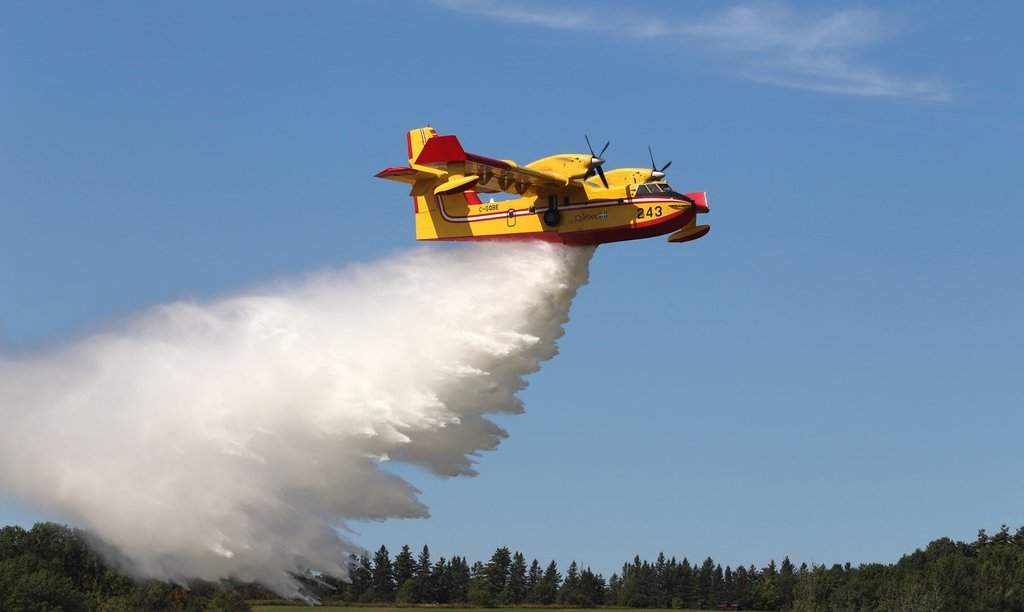
Quebec’s wildfire protection agency reports it saw “above-average” fire activity in the province last month, largely due to lightning strikes.

The agency says the province saw 90 wildfires in July, affecting 1,675 hectares of forest. In recent years, the average in July has been 66 fires, burning 1,115 hectares.
SOPFEU says 41 per cent of the fires were caused by lightning, by far the leading cause.
Improperly extinguished campfires accounted for 16 per cent of wildfires, while the rest were caused by forestry and industrial operations, smoking-related items, electrical wires and waste burning.

Get daily National news
Quebec received assistance from more than 220 wildland firefighters from other provinces, including British Columbia, Alberta, New Brunswick, and Prince Edward Island, as well as from the United States.
In its report published Thursday, the wildfire agency notes that July was marked by temperatures slightly above normal, below-average precipitation in western Quebec and on the North Shore, and sustained winds.


“This atmospheric instability also led to exceptional thunderstorm activity, with 243,363 lightning strikes recorded over the past month across the entire province — nearly three times the average for the past seven years,” the report says.
The July wildfires were concentrated mainly in northern Quebec, Abitibi-Témiscamingue, the North Shore, and the Outaouais.
By the end of July, the situation in Quebec was “under control,” allowing the wildfire agency to send teams to British Columbia, which is grappling with numerous wildfires.


Comments
Want to discuss? Please read our Commenting Policy first.