

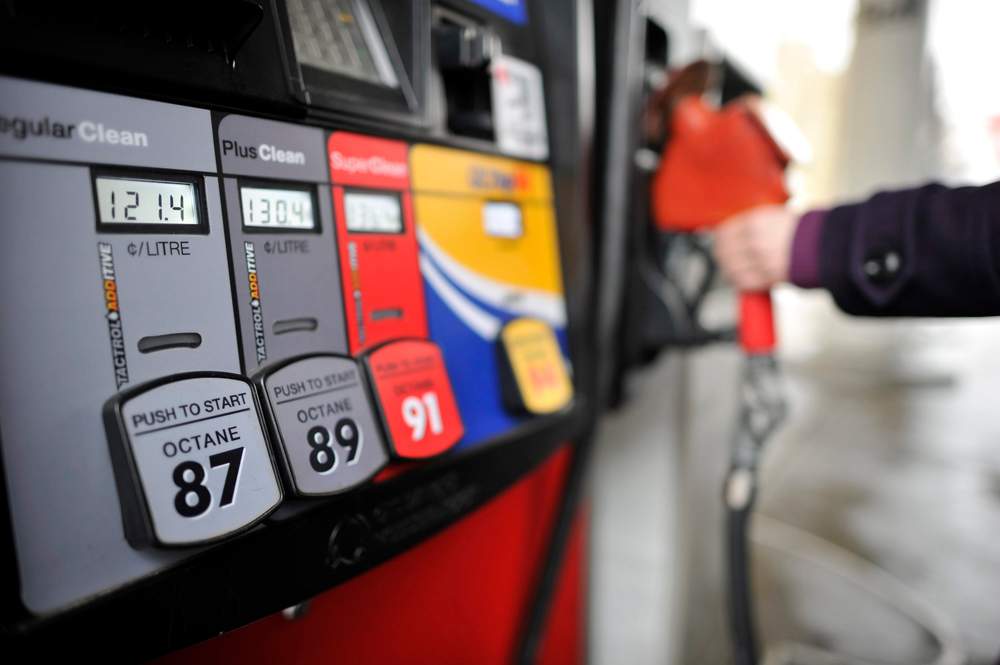
For the first time ever the Nova Scotia Utility and Review Board used something called the interrupter clause to drop the price of gasoline – by eight cents Wednesday at midnight. Global News asks Paul Allen, spokesperson for the Nova Scotia Utility and Review Board about gas pricing in the province and how exactly the interrupter clause works.
Why did prices drop Wednesday, when gas prices change on Fridays?
Really, what we’re talking about is a pricing that occurs off of the routine cycle.
The routine cycle for pricing is, the board on Thursday of each week considers the market information on refined product –that’s gasoline and diesel oil, that’s all grades – from the previous Thursday to the Wednesday (of the current week).
So, we have a week’s worth of market information. That’s used to project a new price in the coming week.
The board will sit down, probably late morning on Thursday, with all that information and it will set the new benchmark price for gas and/or diesel oil.
The new price comes into effect at one minute after midnight on Friday morning. So that’s sort of a normal price cycle.
When does the Utility and Review Board step in to adjust the price of gas?
An interrupter is (used when) something significant and sustained is happening in the markets… the New York Mercantile Exchange (NYMEX).
It should be noted that the NYMEX functions in U.S. dollars and the price at the pumps is calculated in Canadian Dollars, using the noon-rate from the bank of Canada. Both the market price and the exchange rate, Allen says, are what affect the prices consumers pay the most.
Something is happening so that the price wholesalers pay for their gasoline is moving. And it’s not just moving a little, it’s moving a significant amount. And it’s not just for one day: up today and down tomorrow.
When (a significant, prolonged shift) occurs, the board can change the price before the ordinary Thursday price setting.
That does not mean that we will not set the price as usual on Thursday, in fact we still will do that. It’s just that the calculation on Thursday gets a bit more complicated.
The easy way to say that is when we set it we take into account all market changes including interruptions.
We’ve seen crude prices dropping, so why have gas prices continued rising?
Unfortunately the myth is out there that crude oil and gas prices track exactly the same and that in fact is not true.
Gasoline is in a different place in the supply change from crude oil.
If somebody blows up an oil field in the Middle East that is significant in size – something the size of Libya, let’s say – and everybody in the world looks at that and says “the supply of crude oil in the world has just gotten smaller, and I still need crude oil, so I’m willing to pay a little bit more to get my crude oil.”
That affects everything in the supply chain. It may not affect it today, but it will affect everything in the supply chain.
Compare that to gasoline where it is already in the supply chain, you’ve already refined the crude.
Let’s assume for a moment you’ve got flooding in the Mississippi River… and your refineries are located in Louisiana and you’re thinking those refineries are going to get flooded.
You may see the price of crude doesn’t move, but the price of gasoline goes up in anticipation of that curtailment of supply.
That’s an illustration of how crude and refined product may move in different ways at different times.
Back to the interrupter clause, how do you make the decision to use it?
So, something significant has happened. The markets have gone up sharply or down sharply and it’s more than just a one-day flux. When you start getting into the six to eight-cent per litre range you have our very close attention. This is monitored every single day.
If we see something happening that we believe to be a significant shift… the staff will start talking to the board member(s).
And if they feel that change is significant enough, that’s when they will decide to place the interrupter in force. It’s important to know that’s a plus or a minus (fluctuation).
This week it was going down: It could just as easily have been going up and the interrupter test is the same in both cases.
New Brunswick invoked its interrupter clause last Friday. Why did it take until Wednesday to come into play in Nova Scotia?
It’s not a matter of “Oh, gosh! This province did something this week and we have to do something.” It’s independently decided, each and every day.
There are differences between the two. New Brunswick has a mandatory adjustment when the price hits at least, I believe, six cents a litre. The board does not have a choice.
So what you get is a six, seven-cent shift today, where they dropped their price, and tomorrow if the price reverses they would have to interrupt it again.
We (Nova Scotia) have some discretion. We will allow it to smooth itself out over the week.
It’s not that we lose anything in Nova Scotia.
Instead of getting it today, we’re going to average it over the week’s pricing and then we’ll take it in next week’s price.
Again, if you’re talking about comparing New Brunswick to Nova Scotia, they’ve got a mandatory formula; we’ve got one that you can have a little discretion about when you shift your price.
But in either scenario we’re using exactly the same market information coming, from NYMEX, we’re using exactly the same currency conversion.
The only difference will be when.
The other thing that confuses folks is that New Brunswick is on a different timing cycle than we are.
They do theirs on Wednesday, for Thursday. We do ours on Thursday, for Friday.
If you have a shift in a market that occurs on a Wednesday, their number and our number are going to be different.
Although New Brunswick dropped prices last Thursday and Friday(May 12 &13), gas went up this Thursday. Prices in Nova Scotia did not change Friday.



Comments
Want to discuss? Please read our Commenting Policy first.