

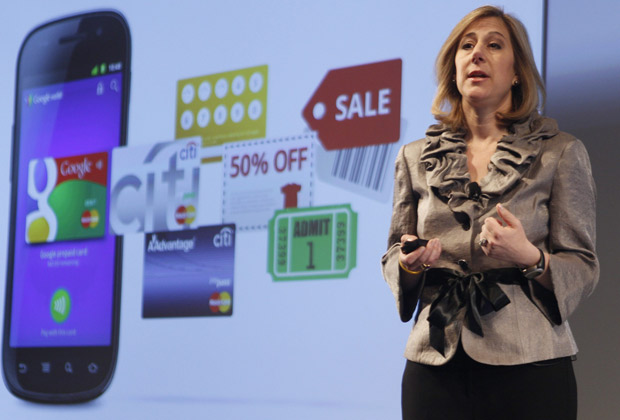
TORONTO – From its New York City offices Friday, Google Inc. unveiled plans to launch a tap-and-pay mobile wallet application for its Android smartphones, a move that brings the promise of day-to-day virtual currency use a step closer to reality.
The internet search giant hopes Google Wallet, a digital transaction system, will one day replace traditional tangible wallets.
The near field communication (NFC) enabled app would combine users’ credit cards, coupons, gift cards and receipts in one handy device, essentially negating the need to carry paper, coins or cards.
“When you tap to pay, your phone will also automatically redeem offers and earn loyalty points for you. Someday, even things like boarding passes, tickets, ID and keys could be stored in Google Wallet,” app founders Rob von Behren and Jonathan Wall wrote on Google’s official blog.
The company says the mobile payment app would give merchants greater opportunity to extend special offers and loyalty programs to consumers, while bridging the gap between online and offline commerce.
The move towards virtual cash is not new to Google. Cell phone companies, Visa, PayPal and others also have plans to develop what essentially will be a digital wallet.
While North Americans are slowly moving toward mobile money apps, consumers in Europe, Asia and parts of Africa are already hooked on their wireless e-wallets.
In Kenya, sophisticated mobile payment networks are widely used. Telecom operator Safaricom continues to see significant revenue and subscription growth thanks to demand for M-PESA, one of the country’s premier electronic wallet mobile apps.
Mobile payment applications, m-payments, are prolific across India, Japan, South Korea and the Philippines.
In February 2010, BOKU, a leader in worldwide m-payments, partnered with Philippines telecom giant Globe to bring the e-wallet app to subscribers.
Quick Tap, Europe’s first commercial contactless mobile payment service, was launched on Wednesday, partnering Orange mobile customers and Britain’s biggest credit card company, Barclaycard.
The Google Wallet app is currently in the field testing phase with an upcoming release date yet to be announced.
Technical details
Google Wallet enforces PIN use. That means the only way to process or authorize a payment is if the user first enters a security PIN code.
Payment credentials are stored in a chip called the Secure Element which is separate from the device’s main operating system and hardware. Google says this enables encrypted protocols to enforce access control.
Near field communication (NFC) enabled devices are typically secure, but sensitive data could be exposed by signal interference from close-proximity antennas.
Google assures consumers that data cannot be read from unauthorized readers in close proximity thanks to the Secure Element PIN-protected feature.
“Only authorized programs like Google Wallet can access the Secure Element to initiate a transaction. There are multiple levels of protection for data stored on the Secure Element and it is protected at the hardware level from snooping or tampering,” Google explains in an FAQ on Google Wallet.
Lost or stolen smartphones could expose a consumer to identity theft or fraud. Google urges consumers to contact their credit card companies immediately in the event their device is stolen.
Smartphone battery life may be comprised at a quicker rate while running mobile payment applications.
Google Wallet will initially only support Citi MasterCard and a Google Prepaid Card. The app can be used wherever MasterCard PayPass is accepted.
Google Offers will automatically sync with Google Wallet. The company will make money by selling coupons and ads that come along for the ride.
—
With files from the Associated Press


Comments