



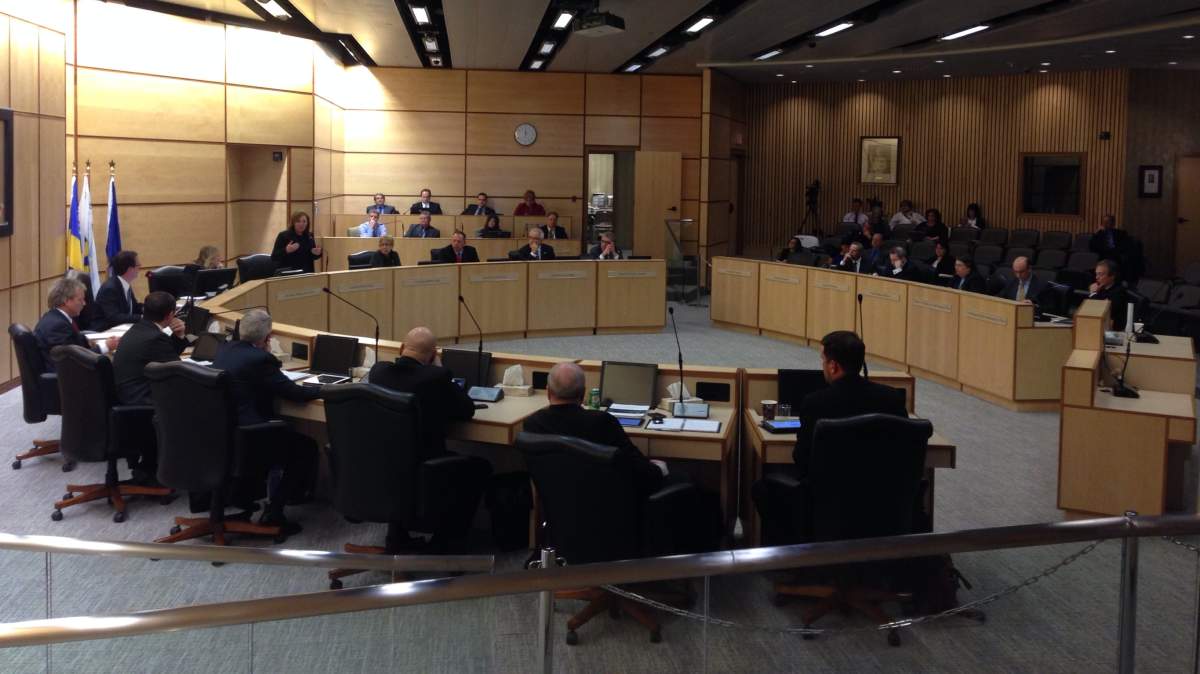
REGINA – It was a lengthy night at City Hall as council debated just how much to raise your taxes.

The 2014 proposed budget called for the average homeowner to pay upwards of $200 more per year to own their home, sparking a lot of controversy among residents who said it was more than they could afford.
Council heard from 16 people on Monday night, many of them opposed to the hike, followed by various submissions as elected officials brainstormed ways they could ease the burden.
After nearly seven hours of discussion, they approved 5.9 per cent property tax hike.
Mayor Michael Fougere said the feedback from residents over the three weeks since the city proposed a 7 per cent tax hike included a lot of “sticker shock.”
“(We heard 7 per cent) was a bit too strong, too quick,” Fougere told reporters after the marathon debate. “(But) they understand the direction, that we’re going for aggressive spending on infrastructure.”

Get breaking National news
Fougure said the city did not deliberately build expenditures into the operating budget that could be removed at a later time.
Council approved the following amendments:
– of a $2-million surplus from the 2013 budget, $1-million will be diverted from reserve funds to offset the 2014 increase
– delay a bylaw review as part of the Official Community Plan to save $400,000
– reduce a proposed increase in external consulting services by $500,000
Ward 3 councillor Shawn Fraser expressed concern about the impact of making budget amendments in the relatively short time of a council meeting compared to the time it takes to draft a budget.
“It’s hard to fully understand what those impacts are when it just happens at a meeting like this,” said Fraser. “We talk about the infrastructure deficit, we talk about things that are under-funded. The reason is, every year we push things forward to the next year.”
The property tax increase includes a special 1 per cent portion dedicated to fixing aging residential streets, worth roughly $1.7-million, which has received support from groups that are typically anti-tax increase.
“This is just the start of the process to get a prioritization of which streets to do first,” Fougere said, adding that the program could be expanded in future budget cycles.
Earlier in the meeting council approved an 8 per cent jump in utility rates. That will cost the average homeowner another $120 more per year.


Comments
Want to discuss? Please read our Commenting Policy first.