


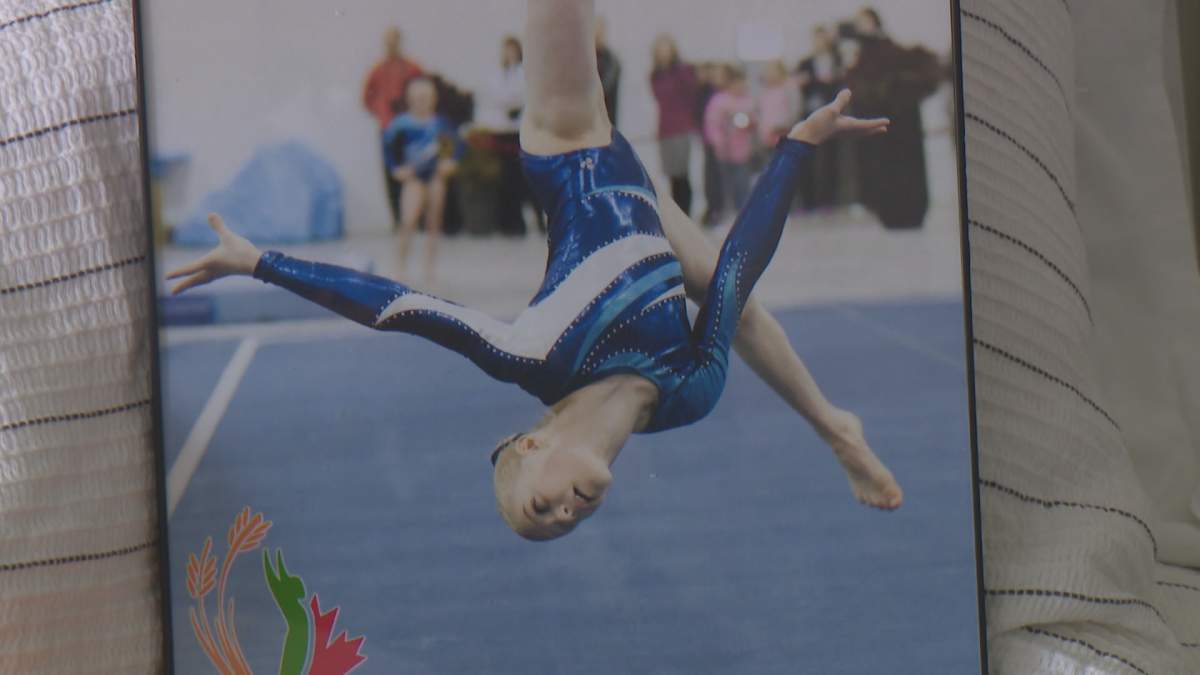
It is among the first organized activities that many young children will get to experience.

Gymnastics is a popular choice, helping to cultivate early co-ordination and flexibility.t
The bright-coloured mats, trampolines and alluring balance beams are enough to intrigue many energetic toddlers. But the fun just doesn’t start at a young age — the option to travel down the competitive stream starts early, too.
“I was probably three or four when I started, but I remember more when I was about six or seven when I started on the competitive aspect of gymnastics,” said 21-year-old Charlotte Innes.
“There were maybe 40 or 50 girls trying out and they only picked maybe four, and she was one of the four,” added Charlotte’s mom, Carrie Mullin Innes.
Being chosen meant the then-young Calgarian had to make some big sacrifices. She said she trained multiple days a week, both before and after school, rising the ranks, winning medals and inching closer to a dream.
“Definitely Olympic-bound, that was the expectation. We were taught that this was more of a job, and we are here to get to the highest level,” said Innes.
But she said she paid a price for reaching that elite level.
“It felt like the military for small children,” said Innes. “On rough days, there would be a lot of degrading comments, like being called worthless. I had a coach say to me, ‘I’ve gone to three Olympics, and you are not going to none.’”
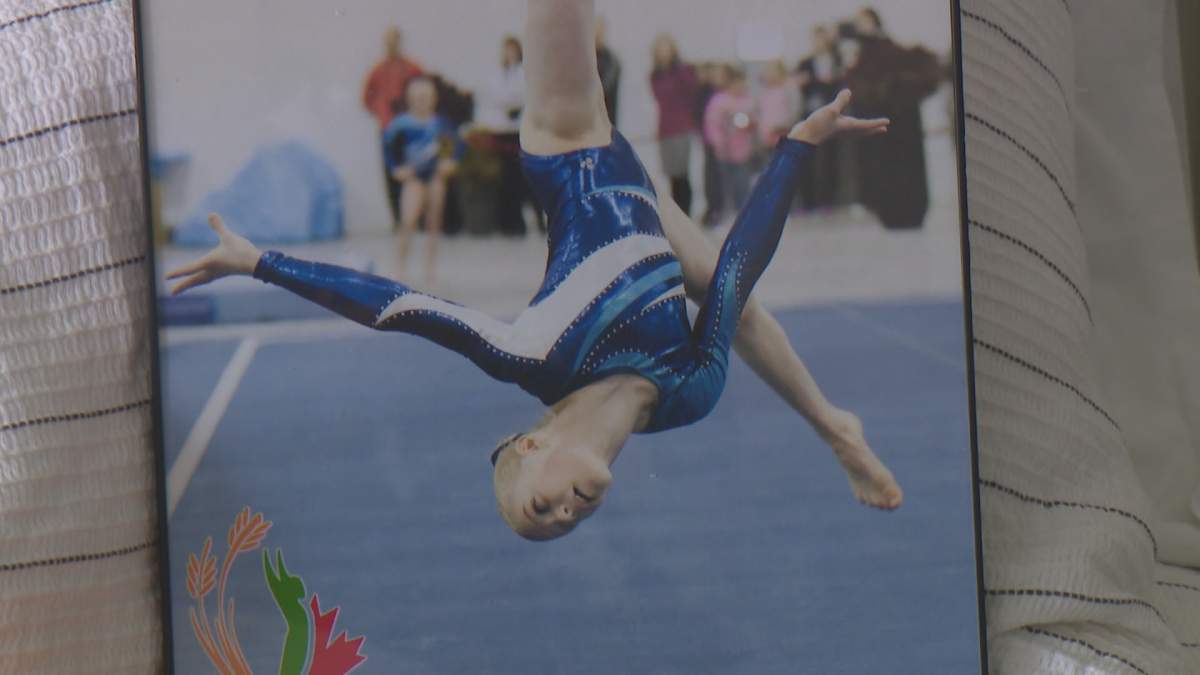
She recalls following a strict diet and said she was expected to show up even if she was hurt. “I was still required to go to the gym, with a concussion, they would ask me to wear sunglasses or sit in a dark hallway and as long as I was there,” said Innes.
“There were several times I almost pulled her from the sport, and it was due to some of this stuff,” said her mom. “I was just like, ‘I can’t believe someone is treating my daughter this way.’ I spoke up regularly and they didn’t like that.”

Get daily National news
Still, the push to succeed for Innes was powerful.
“It felt like gold,” said Innes. “A pot of gold at the end of a rainbow — free college at the biggest colleges you could think of in the U.S., potential (to be) Olympic-bound. There was so many opportunities. There were times I wondered if the trauma was worth where I wanted to be.”

Calgary is hosting the 2026 edition of Artistic Elite Canada this week, which marks the start of this year’s competitive season.
The event, which brings together competitive gymnasts from across the country, is taking place at time when big changes are being made to improve the safety and culture of the sport that has been marred by allegations of abuse and mistreatment of athletes for years.
“The culture of the sport that surrounded us was quite toxic. When I have taken some time to look back and reflect on that, I did see a lot of abuse,” said Innes.
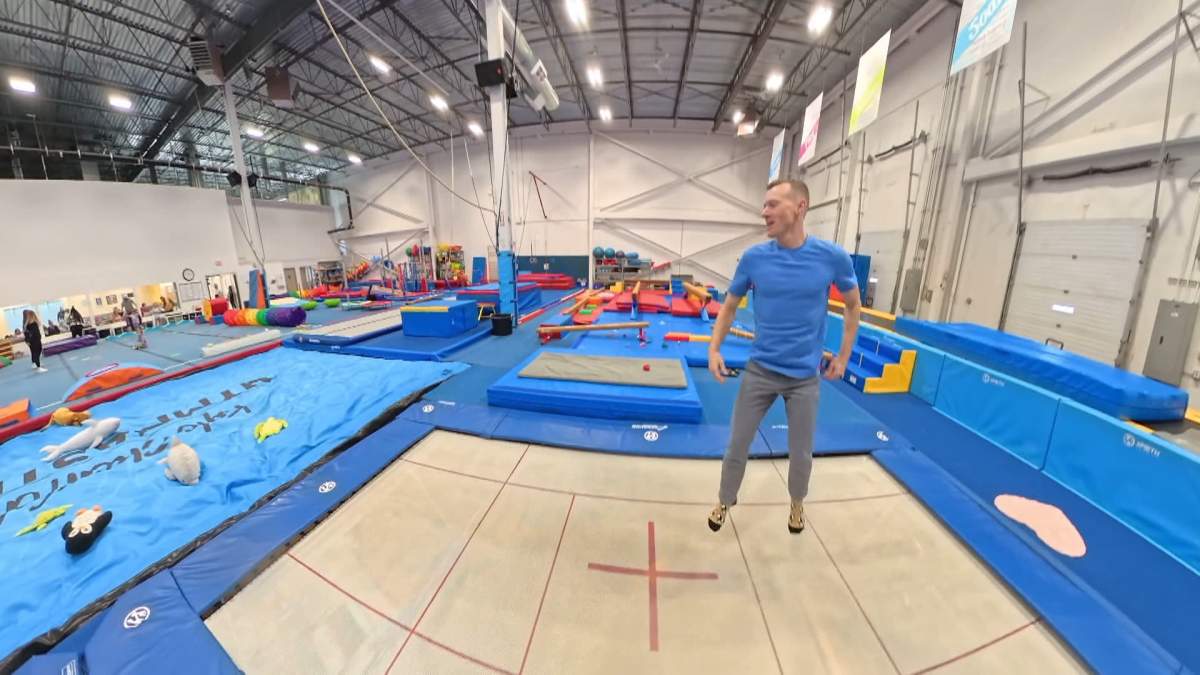
“I saw a lot of physical abuse. I saw a lot of emotional abuse and a lot of mental abuse,” said Kyle Shewfelt, an Olympic gold medalist in the sport who now runs his own gymnastics club in Calgary.
Shewfelt said his experience was very positive, but acknowledged this was not the case for many others.
“It’s taken the hard work of the brave survivors that have come forward to share their stories with so much courage, and I think the community is embracing change that is starting to come,” said Shewfelt.
Gymnastics Canada and provincial affiliations now publicly post the names of sanctioned coaches online.
But Kim Shore, who is a former gymnast, former board member for Gymnastics Canada and longtime advocate for that change, said there is still lots more work to do.


“It is the tip of the iceberg. Also, that is not an exhaustive list,” said Shore. “There are also coaches who are warned about their behavior and then they choose to go to another sport. There is absolutely no tracking from sport to sport or province to province,” said Shore.
But there is currently a push to change that, according to Kacey Neely, the director of Safe Sport for Gymnastics Canada, who said a national database of all sanctioned coaches in all sports in Canada is now being built.
Neely said Gymnastics Canada is also about to launch its robust safe-sport strategy, which will include the same level of screening for coaches across the country, regardless of the level, along with an independent third party to receive complaints, provide enhanced mental and emotional support for athletes and more education for coaches and parents and their children.
Neely emphasized safety is no longer just an add-on.
“It’s integrated at each level, athlete training, the high-performance program, sport development, coaching and judging — it’s there every step of the way.”
When Innes was 14, she decided enough was enough and quit the sport.
However, she did end up earning a scholarship to a school in the United States but in track and field.
But she said she has had to deal with the trauma of her time in gymnastics.
“I had a lot of anxiety and depression growing up due to that, I didn’t feel like I had a childhood. It felt like I was an adult in a child’s body the whole time,” said Innes, who is now attending law school and hopes to be a voice for other athletes so they don’t have to endure what she did.
“I do hope that other little girls that are dealing with this situation have more resources — to go and speak to people and just more measures put in place.”



‘I’ve gone to three Olympics, and you are not going to none.’” This seems more like old school motivation. Probably the way the coach was taught.