



Ontario hospitals are facing a billion-dollar structural deficit and are now preparing for “difficult decisions” unless the Ford government increases health-care funding in its upcoming budget, the finance minister has been told.

In a pre-budget submission to the Ford government, the Ontario Hospital Association (OHA) warned that several provincial hospitals are grappling with “significant challenges” stemming from patient-related pressure.
The association said health-care costs have risen by six per cent a year, largely due to a growing and aging population, along with inflation.
“Many are projecting year-end deficits, have eroded their working capital, and in the absence of certainty about their revenues, cannot properly plan for the future,” OHA president Anthony Dale said in a statement.
Dale added that hospitals are facing a combined $1 billion in structural deficits that “efficiencies cannot resolve,” forcing administrators to make difficult “trade-off” decisions with limited resources in order to prioritize patient care.
The sentiment appears to be acutely felt at the Brockville General Hospital, where executives say the emergency department is under pressure.
When the department was built in 2003, it was designed to handle 19,000 visits per year, an average of 52 people per day. Instead, the hospital reported more than 30,000 people dropping in every year, an average of 82 visits per day.
“That’s 58 per cent more patient volumes than the ED is designed to accommodate with no indication that this is going to slow down,” hospital vice-president Cameron McLennan told a recent pre-budget consultation committee.

Get weekly health news
The hospital said the pressure on the emergency department has meant roughly five to 12 patients are “consistently” stuck on stretchers waiting for an inpatient bed to become available.
The crunch has also led to longer wait times for an initial physician assessment and lengthy ambulance offloads because “there’s nowhere to see patients.”
The hospital is now projecting a $5.6 million deficit for the next fiscal year and flatly stated that it will not be possible to balance the budget “without service reductions or staffing cuts.”

While the government is aware of the warnings from the health-care sector, budget pressures appear to be top of mind at Queen’s Park.
Currently, the Ontario budget stands at $234.6 billion, with $91.5 billion — or 39 per cent — of the province’s finances being spent on the delivery of health care. Ontario’s debt is also projected to balloon to half-a-trillion dollars — $501.7 billion — in 2027.
- Vancouver recovery advocate returning honour to city over mayor, council’s actions
- Ants invade hospital in southern Manitoba for second time, cancelling surgeries
- Family, girlfriend of man presumed drowned near Banff want search to resume
- Carney, Liberals awaiting on committee report to decide on MAID extension


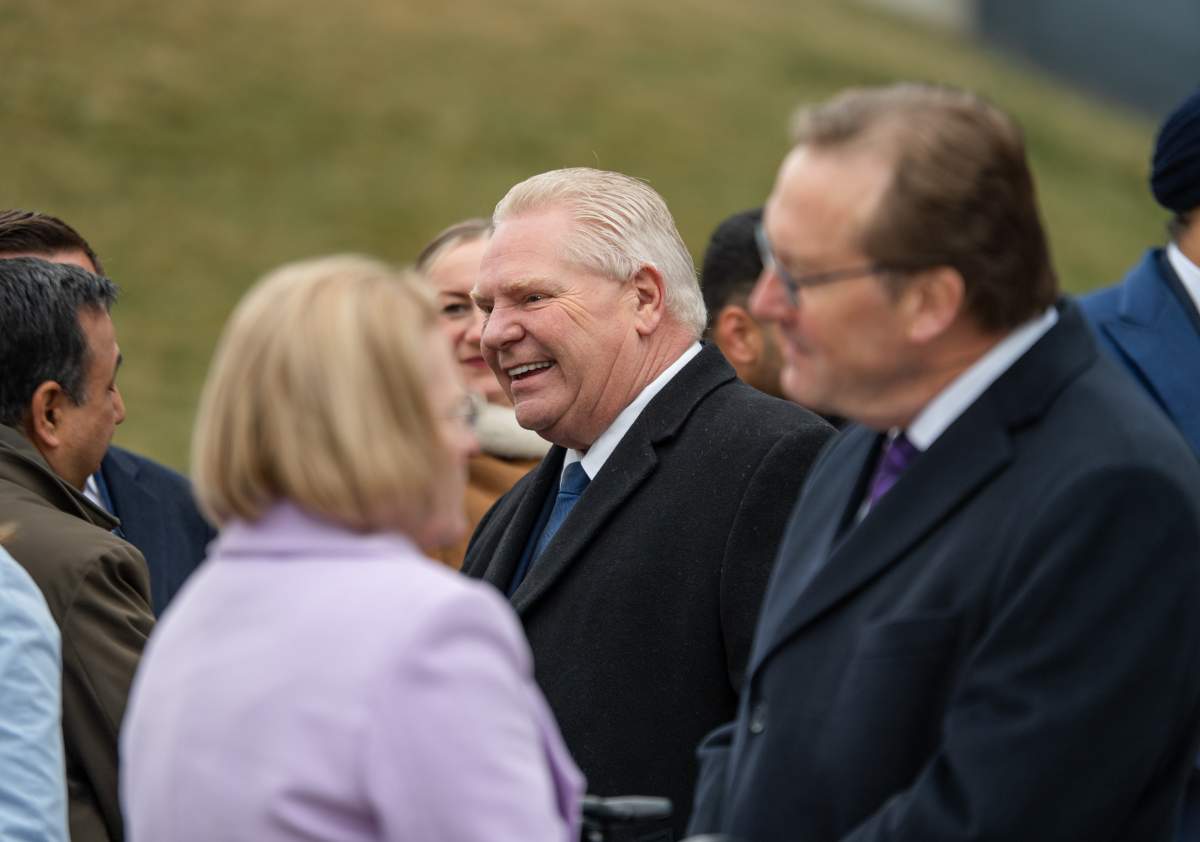
Recently, as Premier Doug Ford celebrated a construction milestone at an upgraded hospital facility in Etobicoke, he suggested Finance Minister Peter Bethlenfalvy is worried about the growing health-care budget.
“Do you know how much we’re spending in health? We’re spending 93 billion dollars, it’s gone up 33 billion dollars,” Ford recalled the finance minister saying to him and the minister of health.
The premier’s comments, while made in jest, appear to be rooted in reality.
The Ministry of Health is telegraphing that resources are already tight, with little room to maneuver, even as hospitals struggle under the weight of rising costs.
Under the current system, hospitals are responsible for funding new and replacement medical equipment, with the exception of cancer care. Locally, hospitals run massive fundraising campaigns and offer high-profile sponsorships to try to cover that cost, another pressure on the system.
At the Rural Ontario Municipalities Association in Toronto this week, Health Minister Sylvia Jones was asked if the government could help ease the pressure of buying new medical equipment on hospitals.
She said doing so would mean the government couldn’t see through its existing hospital expansion and upgrade plans.
“The cold, hard truth is if we looked at changing that formula, it would mean that our ability to fund the $60 billion capital campaigns that we’ve already committed to really would be put in jeopardy,” she told delegates at the event.
“Capital equipment, medical equipment, everything is becoming more expensive, but changing something that literally has been in place for multi-decades would very much change the ability for the Ministry of Health and your government to continue to do the capital expansion.”
Still, without a change in how it approaches health-care funding, Dale said hospitals could begin making impossible decisions.
“There are no easy choices ahead,” he said.


Comments
Want to discuss? Please read our Commenting Policy first.