

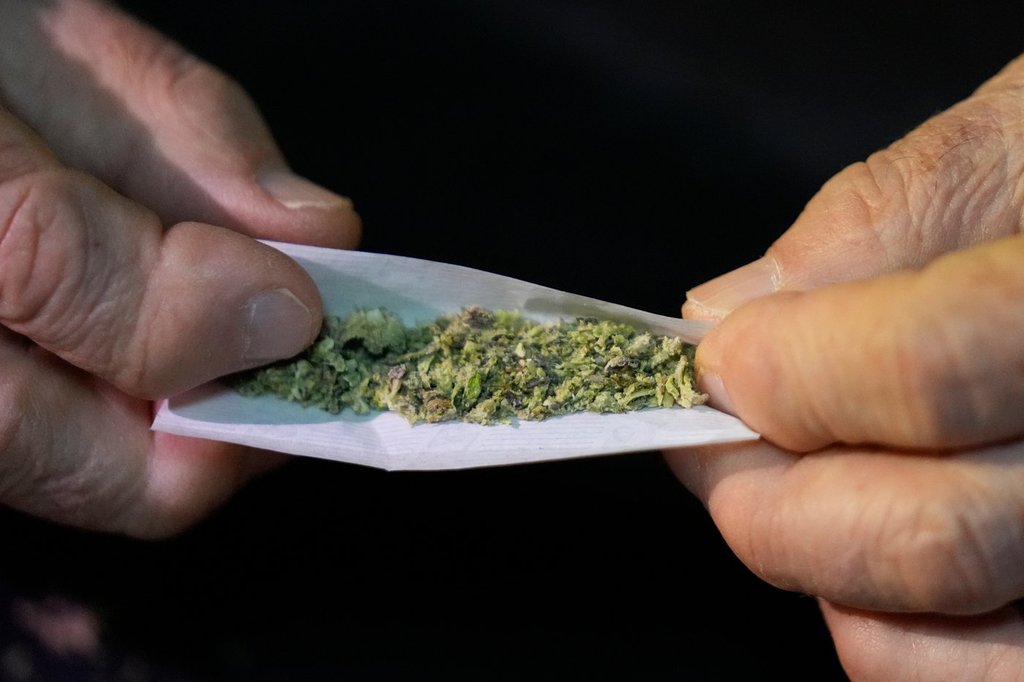
The Nova Scotia RCMP and Halifax police both say no fentanyl has been found in illegal cannabis tested in the province, despite the premier’s claim to the contrary.

Following a cabinet meeting last week, Premier Tim Houston said he had directed police to ramp up unlicensed cannabis enforcement because of its serious public health risk.
“I’ve talked to people in law enforcement who have told me in this province that they’ve taken illegal cannabis from unregulated, illegal dispensaries and tested it and found that it was laced with traces of fentanyl,” Houston said.
“Sometimes I hear, ‘I don’t buy from the government supply because I don’t get the same buzz.’ Well that’s probably why,'” he added.
But the province’s two largest police agencies say they have no record test results indicating seized cannabis had been laced with the opioid.

A Nova Scotia RCMP spokesperson said Wednesday they rely on Health Canada to test cannabis, and they are not aware of any fentanyl having been detected in cannabis taken from illegal storefronts. The Halifax Regional Police also uses Health Canada to test drugs confiscated by officers, and the force said Thursday that no fentanyl had been found in the cannabis they had seized.

Get breaking National news
A spokesperson for Houston’s office said Thursday the premier’s fentanyl claim had referred to “personal conversations” he’s had with a front-line police officer. “Like we’ve said, this is an unregulated sector, so we don’t have data on many aspects at this time,” spokesperson Catherine Klimek said in an email. She did not elaborate.
Justice Minister Scott Armstrong issued a directive to Nova Scotia police agencies on Dec. 4 to prioritize cannabis enforcement by identifying and disrupting illegal operations and distribution networks. On that day the minister also wrote to 13 Mi’kmaq chiefs requesting their co-operation as they direct police to tackle illegal cannabis sales.
Thomas Durfee, a Mi’kmaq cannabis activist, said Houston’s claim is irresponsible, dangerous and further villainizes First Nations members who run cannabis shops.
Durfee said he has a treaty right to sell cannabis at truckhouses — the term used for trading posts in treaties signed by the Mi’kmaq and British Crown in the 1700s. He is currently involved in a legal case moving through the provincial court system resulting from a raid on one of his cannabis outlets, and said he would never risk his customers’ health.
The premier ought to apologize for the “fearmongering propaganda tactics” he is using to defend his widely criticized crackdown directive, Durfee said. “The comments Tim Houston made are simply irresponsible … If the public didn’t trust him then, they certainly do not trust him now,” he said.
A number of critics have raised concerns about the government directive, including the Assembly of Nova Scotia Mi’kmaw Chiefs, the former minister of justice and attorney general, several First Nations members, two legal experts and opposition leaders.
- Feds’ AI bill good ‘first step’ but safety advocates say more work needed
- Civilians behind international police probe into Russian cybercriminals
- Alberta premier criticizes Calgary Stampede noise bylaw: ‘Fun police have struck’
- Firefighters battling wildfire near Lytton, B.C., helped by cooler temperatures


Sipekne’katik First Nation Chief Michelle Glasgow has called the province’s directive appalling, and says the premier, justice minister and minister of L’nu affairs are banned from band territory.
Houston has said Mi’kmaq cannabis operations are not being targeted, and that all unlicensed cannabis is illegal and subject to the crackdown.
Millbrook First Nation Chief Bob Gloade issued a statement Thursday on behalf of his council, saying he is disappointed by the “recent threats to our sovereignty made by Attorney General Scott Armstrong.”
“As a community that has already experienced significant colonial violence at the hands of the justice system, this is an unacceptable threat to our right of self-determination and the safety of our community,” reads the statement.
Gloade also said the directive appear to be an attempt by the province to protect its own profit margins and its private monopoly over the sale of cannabis “rather than to protect public safety.”
Provincial law strictly controls the sale of cannabis, which is done through Nova Scotia Liquor Corp. outlets. There are 51 legal cannabis outlets across the province; one is located on an Indigenous reserve. The province says there are at least 118 illegal outlets in Nova Scotia.
NDP member Lisa Lachance said Thursday that Houston’s fentanyl claim is “very dangerous.”
“We’re talking about the opioid crisis, which is very real, we need to be talking about evidence,” Lachance said.
Liberal member Iain Rankin also expressed concerns with the premier’s comments Thursday.
“I think it’s erroneous to say that (fentanyl) is really at play here. We have an initiative that’s being taken by the government, and we need to find out exactly why, if it’s more revenue or if there’s other things at play here,” Rankin said.
“But spouting out things without evidence to back it up is, I think, unjustified.”


Comments
Want to discuss? Please read our Commenting Policy first.