


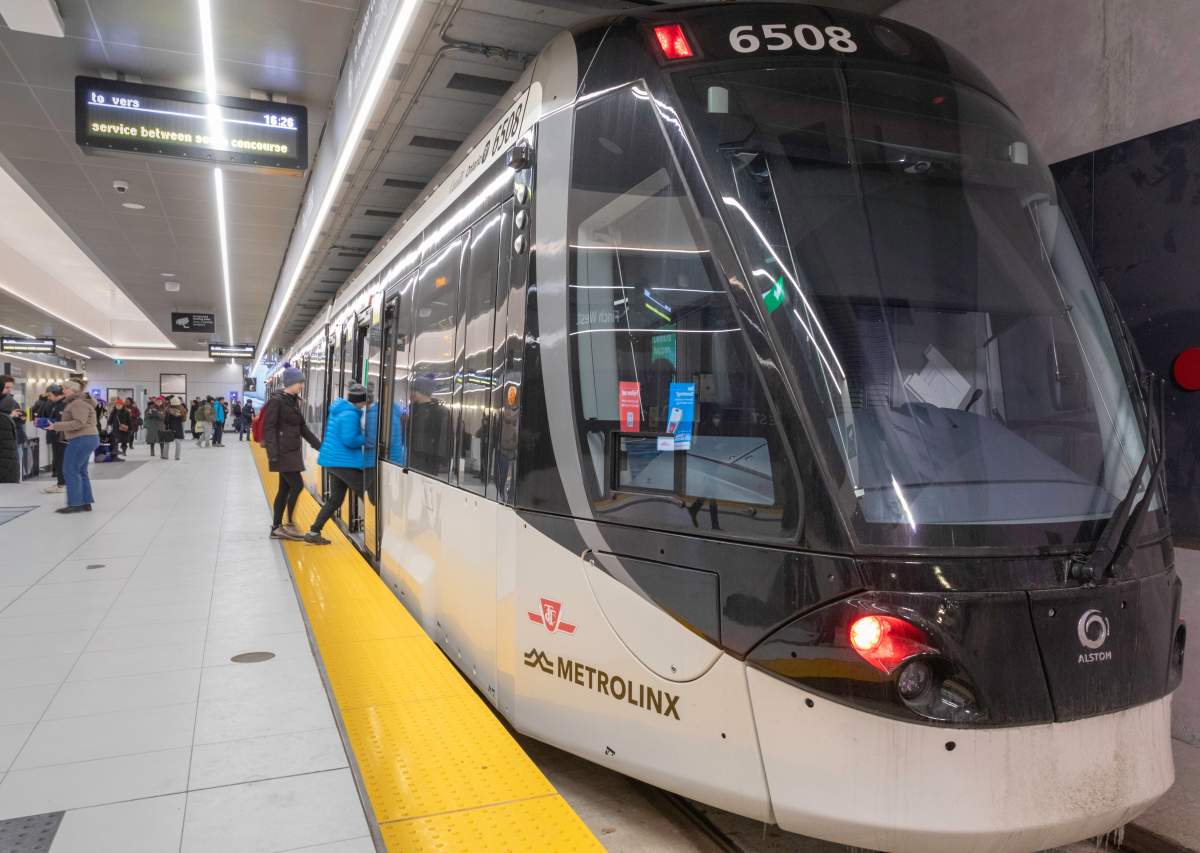
Toronto’s newest transit line was forced to shut down briefly on Thursday morning after switch issues apparently brought on by frigid temperatures along Finch Avenue.

Service across the entire Finch West LRT was briefly paused just after 7:30 a.m. due to “weather-related switch issues” on the new line.
The TTC said service was suspended at 7:36 a.m. from Finch West Station to Humber College Station because of the weather, despite crews working on the line to avoid disruption as temperatures dropped.
Service was restored around 7:44 a.m. It was around -8C when the line shut down.
A spokesperson for the TTC told Global News they had mobilized 40 shuttle buses to ferry customers along the route.

Get breaking National news
The agency said Metrolinx was responsible for administering the line, and shared a statement from the agency.
“Although maintenance teams were out overnight inspecting the line due to weather conditions, the incident will be reviewed to identify ways to better mitigate weather-related impacts on the line in the future,” the Metrolinx statement explained.
“We appreciate our customers’ patience and understanding.”
A spokesperson for Metrolinx declined to comment and said the TTC would answer questions.
The much-maligned Ottawa LRT suffered extensively in winter weather, although its shutdown was substantially longer than the short interruption experienced by the Finch West LRT on Thursday.


The Finch West opened to the public on Sunday, after signing a construction contract in 2018 and completing work on its stops and stations in 2024.
Passengers have complained about speeds on the line, which is restricted by not receiving priority at intersections and speed caps on parts of the route. It currently takes roughly 46 minutes to go the length of the route.
During testing earlier this year, a winter storm buried the Finch West LRT in snow and forced it to stop operating.
Metrolinx has said it learned from that incident and adjusted the City of Toronto’s snow-clearing plan.
Toronto Mayor Olivia Chow has promised to make changes at council to give light rail trains signal priority and allow them to travel at faster speeds.
Comments
Want to discuss? Please read our Commenting Policy first.