


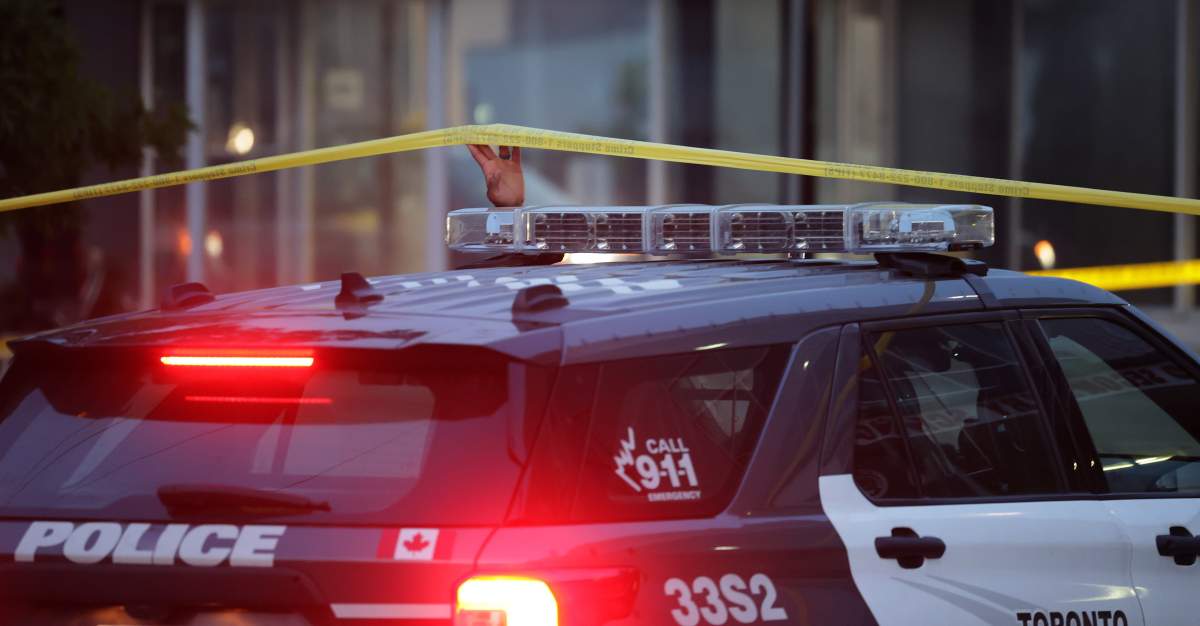
Toronto is seeing its lowest homicide rate in two decades, its data shows, but the figure should not create a sense of complacency, one advocate warns.

The city has recorded 39 homicides so far in 2025, down from 81 during the same period in 2024. In fact, data from Toronto police shows the force’s historical data shows 2025 will be a record low for homicides. In 2004, 64 homicides were recorded; 2011 had the fewest homicides with 51 logged, while 2018 was the worst year in two decades with 98 killings.
The force said year-to-date declines across other major crime indicators, including shootings, stabbings, robberies and break-ins, have also been visible.
Fatal shootings are down 53.7 per cent this year, falling to 20 incidents from 43 in 2024, while fatal stabbings have dropped 43.5 per cent, from 23 last year to 13 so far in 2025.
In a statement to Global News, Toronto police said, “while it’s difficult to attribute the progress to one factor, several efforts are clearly contributing.”
Frontline staffing, investment in community officer programs, and strong collaboration with other partners have helped in changing the trends, it said.
“Collaborative work helps us intervene sooner, before a verbal dispute becomes an assault or even a shooting,” the force added.
Marcell Wilson, founder of an anti-violence organization called the One-by-One Movement, has spoken openly about his past involvement in gangs and his transformation into a community leader.
He said the declining numbers of homicides are something to be proud of but should not lead to complacency.
“I commend all the components involved in bringing those numbers down, but it is fragile progress that comes from community … all working together, not from any single quick fix,” he told Global News.

Get breaking National news
Wilson pointed to the persistent root causes of violence, including poverty, trauma, unstable housing and feelings of being written off by society.
“Root causes still drive the risk. The same root causes that once pushed many into gangs, organized crime … are still very present in many of Toronto’s neighbourhoods,” he said.
He said the focus now has to be on locking in this momentum so that “fewer families ever receive that life-altering phone call.”
Wilson also highlighted the growing role of online conflicts in real-world violence.
“Problems aren’t just face to face, they are also coming from behind screens, social media wars and digital rivalry create tensions that can spill into neighbourhoods,” he added.
“There are cases where guys who’ve never met, don’t know each other at all, have a dispute online and it explodes into multiple murders across the city,” he added.
Police noted that while the decline is encouraging, it is part of a broader, more complex picture that will take effort to see long-term change.
Wilson said evaluation and understanding of best practices are crucial to sustaining the decline.
“Utilize people with lived experiences to help design these evaluation tools and understand them better … and figure out what’s working and what isn’t,” he said.
Reflecting on his own journey, Wilson said he made a lot of mistakes and wishes the resources that are available now were available then.
- Victoria police officer facing sexual assault charges for off-duty incident
- ‘Call his bluff’: Chilliwack cashier challenges attempted armed robber
- Attack after Friday prayers at St. Albert mosque leads to aggravated assault charge
- Lethbridge police charge man with sexual assault, say there may be more victims


“I was young, I was stupid, and I’m remorseful.”

He said many of his peers never had the chance to grow older or experience what he calls the “internal realization and transformation process.”
“I’m lucky I’m still here. I’m alive. I’m not in prison,” he added.
“It’s sad to see a lot of these guys die so young and not be able to have that. I have lost many that I considered friends, brothers to that lifestyle.”
Wilson said his motivation now is accountability and repair.
“I just want to pay my debt back to society beyond the walls of confinement,” he said.
Efforts to curb gun violence have also played a role in the decline of major crimes, particularly shootings, which in turn impacts homicide numbers, Toronto police said.
Ontario Provincial Police (OPP) said a significant focus has been placed on removing illegal firearms from circulation, some of which came in from the United States.
“Firearms originating in the United States are being taken off the streets, highlighting the importance of partnerships with law enforcement agencies across borders,” said OPP Chief Supt. Mike Stoddart.
Despite the decline, Wilson warned that lower numbers should not lead to complacency.
“Low numbers can never be an excuse for complacency. Each homicide still represents a whole community traumatized,” Wilson said.
“We need to keep pushing, keep investing in community prevention, and ensure that we address both the root causes and the new forms of digital conflict.”


Comments
Comments closed.
Due to the sensitive and/or legal subject matter of some of the content on globalnews.ca, we reserve the ability to disable comments from time to time.
Please see our Commenting Policy for more.