


The head of the Alberta Teachers’ Association says the province’s repeated use of the notwithstanding clause is an attempt to skirt accountability and “endangers the rights and freedoms of all Albertans.”

“Albertans may hold a different view on these policies, but in a healthy democracy, policies that affect fundamental Charter rights must remain open to challenge,” Jason Schilling said at a news conference Wednesday.
“What this government is doing … undermines the balance of power that is meant to protect every one of us.”
His remarks came one day after the Alberta government introduced a bill in the house that, if passed, invokes the notwithstanding clause, overriding Charter rights, to protect a trio of laws affecting transgender youth and adults from court challenge.
It will mean Premier Danielle Smith’s government has used the notwithstanding clause four times in recent weeks to override Charter rights.
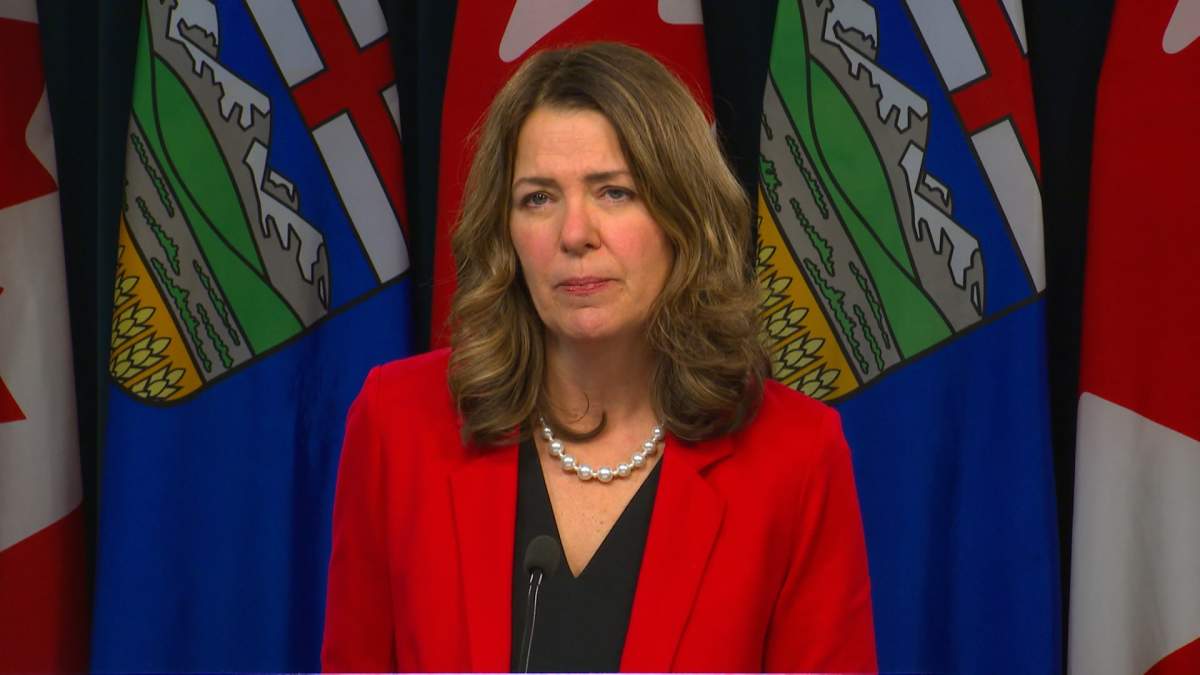
About three weeks ago, her United Conservative Party government used the clause to force the 51,000 members of Schilling’s association back to work, ending a provincewide strike.
Smith said students had been out of school for weeks and that the government believed this was too much of a social, emotional and educational hardship for them to bear.
The transgender laws affect gender-diverse Albertans in schools, health facilities and on sports playing fields.
The health law prohibits doctors from providing treatment such as puberty blockers and hormone therapy to those under 16 for purposes of gender reassignment.

Get daily National news
LGBTQ+ advocacy groups have challenged that in court, calling it unconstitutional and a threat to the health of gender-diverse youth. This summer, a judge agreed and put that part of the law on hold pending a full airing of the issues.

The Canadian Medical Association is also challenging the law, and says using the notwithstanding clause is intolerable interference in the doctor-patient relationship.
Smith has said the notwithstanding clause had to be used to ensure the health of young people is not jeopardized while the challenges work their way through the courts.
Another law requires parental consent for children under 16 to change their name or pronouns at school, and requires provincial approval on teaching resources around gender identity, sexual orientation or human sexuality.
That law remains in force pending a court challenge, and Schilling said it puts teachers in a bind and threatens to jeopardize their students’ trust.
Schilling said members worry they will be reprimanded for not reporting when children talk to them about their gender identity or sexuality.
“Instead of creating safety, it can place vulnerable students at risk of rejection, punishment or emotional harm,” Schilling said. “It takes what should be a moment of trust and turns it into a mandatory disclosure.”
The third law compels schools, colleges and other governing bodies of amateur sport to adopt policies to ensure only those born female play in female-only leagues and divisions.
Schilling says the government’s use of the notwithstanding clause has a demoralizing effect on people.
“It makes them second-class citizens in their province. I’m not sure if government actually thinks about the emotional or the psychological impact that the use of these bills have on people,” added Schilling.
“We’re seeing in other areas and jurisdictions where these bills have come into place that trans students are withdrawing themselves from school life. They’re not participating in sports. They’re not participating in the drama club — they’re shrinking themselves and that is a tragedy. Schools should be safe spaces for every student to go.”
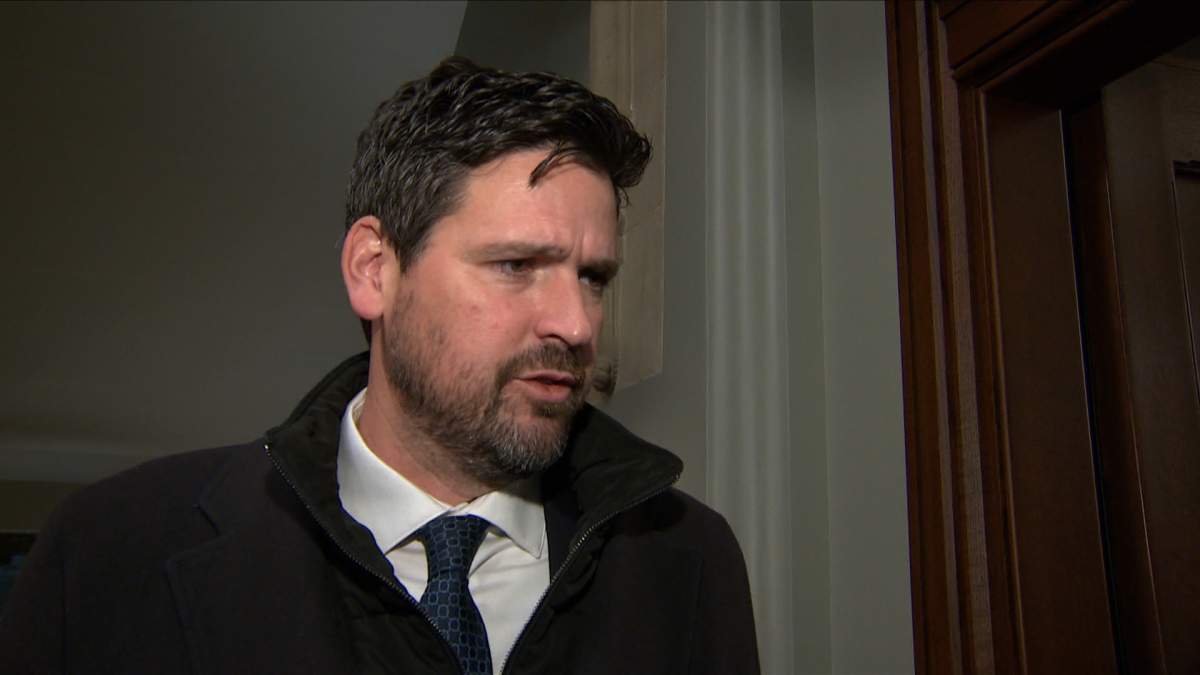
In Ottawa Wednesday, federal Justice Minister Sean Fraser weighed in on the debate.
Asked what he thought of Alberta’s use of the clause, he told reporters he’s concerned about the frequency of it being used to address “very complex social issues.”
Fraser said the Constitution already allows for policies that run counter to people’s rights to be adopted — provided the policy can be reasonably justified.
“When you are reaching for the notwithstanding clause, what you’re essentially doing is saying we’re going to adopt a law without regard as to whether that law is reasonable in a free and democratic society,” he said.
— With files from Global News




Comments
Want to discuss? Please read our Commenting Policy first.