


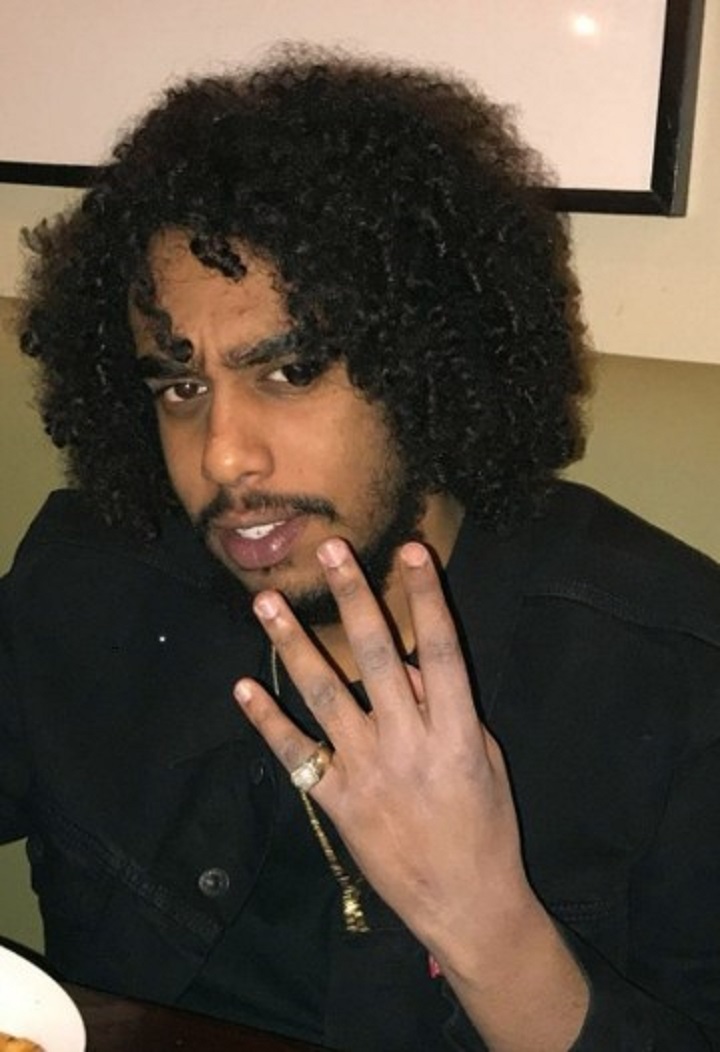
Jared Shokoff was actively psychotic when he stabbed his friend Nathan Samuel 22 times two years ago, an Ontario judge has ruled.

In a downtown courtroom Friday, Superior Court Justice Jane Kelly ruled that Shokoff is not criminally responsible (NCR) for second-degree murder due to schizophrenia after Crown prosecutors Mark Friedman and Christine Jenkins and defence lawyer Andrew Stastny jointly agreed Shokoff should be found NCR.
The then 18-year-old man believed he was acting in self-defence at the time of the killing and due to his major mental illness, Shokoff did not realize that his conduct was morally wrong.
According to the facts admitted in court, Samuel and Shokoff lived in the same building at 93 Edgewood Ave. near Woodbine Avenue and Kingston Road. On Nov. 13, 2023, Shokoff turned 18 and his family and friends noticed a change in his behaviour.
Shokoff complained to them of feeling afraid and nervous and felt like people were following him. He quit his part-time job at McDonald’s and said it was due to fears about being killed at work.
He accused his older brother and girlfriend of having an affair with one another at a birthday party. Shokoff also began to fixate on a sexual assault that he believed he committed when he was 11 or 12 with a six-year-old girl at the time.
In the days leading up to the stabbing of his friend, Shokoff attended his family doctor and the emergency department at Michael Garron Hospital. He reported feeling paranoid and said he had attempted suicide within the last week.
Two doctors who assessed him agreed he was presenting with “what appeared to be psychosis” and “paranoid psychosis.”
Shokoff was prescribed anti-psychotic medication to address his symptoms on Dec. 7, at Michael Garron Hospital and returned home with his mother. He was to follow-up with a psychiatrist and return to the emergency department if required.
On Dec. 9, Shokoff walked into Toronto Police 55 Division and reported himself for the sexual assault he believed he had committed. He was interviewed by police but no charges were laid.

Get daily National news
On Dec. 11, Shokoff went back to the emergency department at Michael Garron Hospital with his mother. Shokoff indicated to triage staff that he believed somebody was following him, that things “seem louder” and that he was not sleeping or eating.
He also told medical staff he “threw away” the medication he was prescribed on his previous visit. He never saw a doctor. Shokoff’s mother reported they went to get a drink and he “ran off.”
At approximately 2:15 a.m. Dec. 12, Samuel left the building on Edgewood Avenue with Shokoff where they both lived. Samuel was riding his scooter and Shokoff was the passenger, behind him.
According to the facts read out in court, “as they approached 34 Lockwood Road, around 2:19 a.m., Mr. Shokoff without provocation stabbed Mr. Samuel 22 times.” A man out walking his dog found Samuel lying on the street at 6:45 a.m. and called 911.
After stabbing 24-year-old Samuel, Shokoff walked from 34 Lockwood Rd. to the Woodbine Bridge at Woodbine Avenue and O’Connor Drive where he attempted suicide by jumping off the bridge.
He was unsuccessful. He then walked to 55 Division and at approximately 8:45 a.m., reported to a police constable at reception that he had stabbed someone. He also told police he had thrown the knife away. The knife was never recovered.
Police later connected his confession to the man found dead on Lockwood Road. Shokoff was charged with murder. Shokoff told a homicide investigator that he and Samuel went on a scooter ride and he thought Samuel was going to kill him.
Shokoff was taken to Sunnybrook Hospital by police where he was treated for injuries stemming from his suicide attempt. After being placed in a four-point restraint because he was agitated, Shokoff told the nurses, “I just killed someone, put me in a jail cell.”


He was eventually placed on a Form 1 under the Mental Health Act following a psychiatric assessment.
Two forensic psychiatrists who assessed Shokoff agreed he was a candidate for the NRC defence.
One of those psychiatrists, Dr. Philip Klassen, testified Friday he met with Shokoff on three occasions to assess his criminal responsibility. Klassen said in the month leading up to the vicious attack, his paranoid thinking had progressed due to his psychotic symptoms.
“Mr. Samuel was trying to help him and counsel him in relation to his distress. They decided to go for an outing on Mr. Samuel’s e-bike and Mr. Shokoff made inferences about things that happened, that made his think Mr. Samuel was going to kill him,” Klassen explained.
“He reported taking a little bit of marijuana, which may have led to this paranoia,” said Klassen, who said Shokoff reported Samuel had a weapon in his backpack and thought he was going to kill him. After stabbing Samuel 22 times, Shokoff said he searched Samuel’s backpack and did not find a weapon.
“It shook his delusion. He became very upset and thought he had made a mistake,” said Klassen, who explained stabbing Samuel 22 time was a phenomenon called “overkill.”
“He reported being in a state of high arousal. He was paranoid and unable to access the moral and legal wrongfulness of his behavior,” said Klassen.
After the offence, Klassen said that Shokoff was distressed.
“He sent some texts, threw himself off a bridge, was not seriously injured, went to police and reported what he had done. This gentleman does not have a deviant moral code,” Klassen added.
Klassen told court that since January or February 2024, Shokoff has been in a non-psychotic state because he’s been taking anti-psychotic medication, and is in the position the drugs help him because the symptoms have gone down.
The psychiatrist was asked during cross-examination if it’s possible Shokoff was suffering with substance abuse disorder given he reported being a daily user of cannabis since the age of 16.
“Cannabis may have had a role between 16 and 18 in terms of contributing to the development of schizophrenia. There is a causal link,” said Klassen, but said there was evidence pointing to the fact Shokoff reduced or stopped his cannabis use in the months leading up to the offence.
Klassen concluded there was no animus between the two friends and the only motive is that Shokoff was having delusions that his friend wanted to harm him.


Comments
Comments closed.
Due to the sensitive and/or legal subject matter of some of the content on globalnews.ca, we reserve the ability to disable comments from time to time.
Please see our Commenting Policy for more.