


This is the latest instalment of a Global News series called Unheard. Unserved. Maritime Women’s Health In Crisis.
In our previous stories, we introduced you to a woman who struggled for years to get a PCOS diagnosis and a woman denied breast cancer surgery due to BMI.
It’s a feeling of helplessness that Cherise Basque will never forget: bleeding out in a hospital surrounded by health-care professionals, who she says wouldn’t intervene.
“It was heartbreaking because it felt like a nightmare,” she said. “You’re in a crowded room with all these professionals crying, begging for help, and nobody’s helping you.”
When the mother of five found out she was pregnant with her sixth child, she was told by her family doctor it wouldn’t be safe to carry to term because her previous pregnancies had complications with bleeding and required medical intervention.
About a month ago, Basque was provided with a medical abortion — a total of five pills that she would be able to take at home.
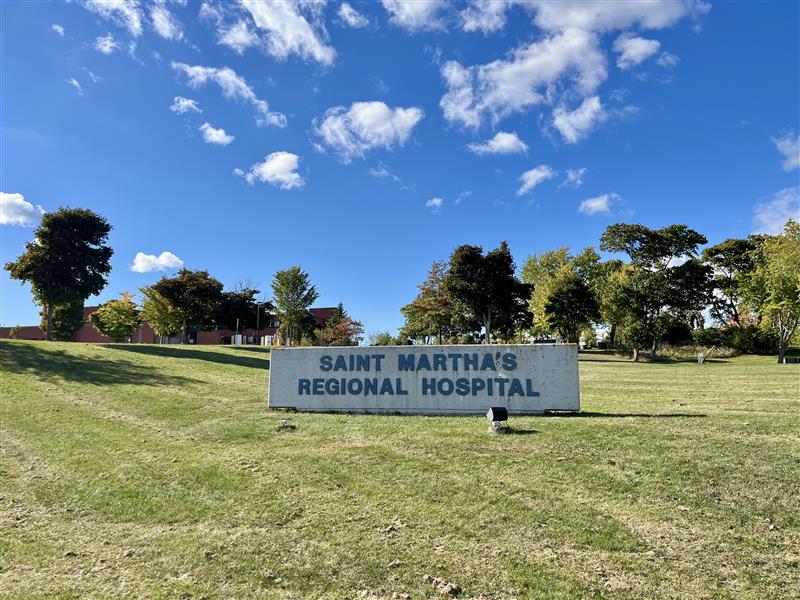
But when she began bleeding excessively, she travelled from her home in Paqtnkek Mi’kmaw Nation to the emergency department at St. Martha’s Hospital in Antigonish, N.S.
She recalls how she was bleeding through her pants and onto the ER floor, but when she told a nurse why she was bleeding, Basque alleges the tone changed.
“All she heard was ‘abortion pill,’ and after that, she rolled her eyes at me. And she started treating me differently,” said Basque.
“She was, like, ‘No, well, you know what? It’s just the pill doing its job.’ She was like, ‘All this trouble, all this pain, and you can’t even bring home a precious little baby.'”
Basque says she was bleeding profusely but felt she was ignored and dismissed.
“I was begging for help, crying, pleading. I’m like looking down (at the blood), traumatized. I’m screaming at the top of my lungs, and nobody’s listening to me,” she said.
She went home, only to faint on her front step. She ended up being transported back to St. Martha’s in an ambulance, where she was eventually sent in for emergency surgery.
A piece of fetal tissue was stuck in her womb, and she says doctors told her if she hadn’t called 911, she could have died.
Martha Paynter, a nurse practitioner who has worked to advance abortion access for more than 20 years, has no connection to Basque’s case or St. Martha’s Hospital but says ER personnel need more education around self-administered medication abortion.
“We’re seeing improvements in that, but that’s an area that needs further development to be able to recognize the difference between what is normal, what’s OK, versus what needs intervention — immediate intervention,” said Paynter, an associate professor at the University of New Brunswick.
She says medication abortion is safe and heavy bleeding is typically normal, but if a patient is saturating more than two pads an hour for more than two hours, emergency care is required.
Paynter adds she’s not surprised St. Martha’s is under scrutiny for abortion stigma, due to its religious affiliation.
The hospital has a mission assurance agreement, which Nova Scotia Health, the Department of Health and Wellness and the Sisters of St. Martha established in 1996.
The agreement outlines and protects the philosophy, mission and values of the Catholic doctrine. It’s the only publicly-funded hospital in the province to have this agreement.
“In this day and age, having such an agreement is incredibly outdated and causes real harm,” said Paynter.
According to the health authority in Nova Scotia, which speaks on behalf of all hospitals in the province, all physicians and staff are required to provide quality care.
“All Nova Scotia Health physicians and staff are required to provide a safe, competent, ethical, and compassionate response when interacting with Nova Scotians who are requesting information about, or who have had, an abortion,” Nova Scotia Health spokesperson Jennifer Lewandowski wrote in an email.
“Clinicians at St. Martha’s, as in all Nova Scotia Health facilities, are expected to operate within their scope of practice when prescribing medications, performing services and/or referring a patient to an appropriate provider for further care.”
Basque also alleges her race contributed to the stigma she experienced at the hospital.
“When I was in the hospital, and they refused me, I was staring at my skin — just looking at it because I felt different, because they’re treating me different,” she alleges.
Nova Scotia Health says in its statement it was “very sorry to hear about this patient’s experience” and while it cannot comment on individual cases, adds “we want to emphasize that patient care and safety are our top priorities regardless of a patient’s ethnicity, background or personal health history.”
The health authority invites Basque and any other patient with concerns about their care to contact Patient Relations.
Basque says she chose to speak out about her experience because she wants to raise awareness and bring about change for other women.
“When I go into the hospital for help, I expect them to help me,” she said. “I just want them to help me and help my pain so I can live another day to take care of my kids.”







Comments
Want to discuss? Please read our Commenting Policy first.