

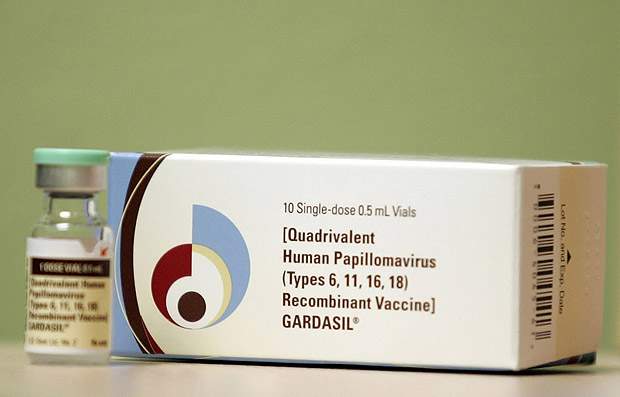
Nearly two-thirds of eligible school-aged girls in Saskatchewan are being vaccinated against the human papillomavirus (HPV) in an effort to lower rates of cervical cancer.
Since the vaccination program was launched in schools at the start of the 2008-09 school year, approximately 61 per cent of girls in Grade 6 and Grade 7 have received the vaccine.
While the goal for vaccination rates is always higher, Dr. Moira McKinnon, chief medical health officer for the provincial Ministry of Health, said health officials expected to be around the 60 per cent mark for the initial years and anticipate an increase in the numbers very soon.
"It takes a couple of years for people to accept it and be reassured that it is having an effect," said McKinnon. "The community is becoming more aware of the importance of cervical cancer prevention — and health workers as well. Sometimes it takes a while for doctors and nurses to really take it up."
McKinnon noted 60 per cent is typical for new immunization programs during the first two years.
In Manitoba, 61 per cent of girls received the vaccine during the 2009-10 school year. In Edmonton and Calgary in the 2008-09 year, the rates were 66 and 57 per cent, respectively.
HPV is group of viruses that can be transmitted through sexual contact, and types 16 and 18 of the virus are responsible for 70 per cent of cervical cancers. The vaccine, Gardasil, is administered in three doses (an initial dose with followups at one and six months).
According to the Canadian Cancer Society website, new cases of cervical cancer in Canada are down 12.5 per cent this year compared to last and deaths caused by cervical cancer are down 33 per cent.
McKinnon said the impact of the vaccinations being given to school-aged children will not be known for another 10 years or so, but she said the additional awareness of cervical cancer prevention is driving the current statistics.
With an increase in the number of girls receiving the vaccine in schools expected during the next year, McKinnon said there are no plans for awareness campaigns to try to bring the rate up to a higher benchmark.
Girls and women outside of the age range for the in-school program who wish to receive the vaccine can do so at a public health office.



Comments
Want to discuss? Please read our Commenting Policy first.