


Within five years Union Station’s cramped central subway platform for the Yonge-University-Spadina line will be separated in two and doubled in size to create more space for waiting passengers, widen stairwells, and a seamless connection to the Queens Quay streetcar loop.
The $137.5-million project has been years in the planning, but heads to Wenesday’s Toronto Transit Commission meeting for final approval so work can get under way early next year.
The subway platform overhaul is in addition to a $640-million restoration of Union Station that will create new GO Transit concourses, Via passenger lounges, retail zones and links to the underground PATH system.
But Adam Giambrone, chair of the TTC, said the subway-level upgrade is perhaps the most crucial component of bringing Canada’s largest transportation hub into the 21st century.
“The problem here is that both the platform and the upper concourse level cannot safely and functionally accommodate the volumes today, first of all, but more importantly the increased volumes that that new [East Queens Quay streetcar] line and all the people who will be living in the waterfront and using Union Station as their primary subway station,” he said. “When there’s a problem on the line or in some cases after a situation, we have to run trains slower into the stations. There’s a real risk of people accidentally being pushed.”
Mr. Giambrone said Union Station’s central platform was built smaller than just about any other on Toronto’s subway system due to the size constraints of adding the modern service to a Beaux Arts building.
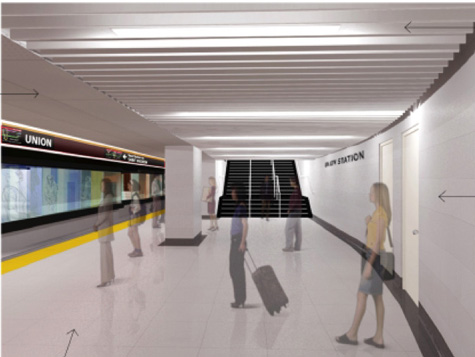
The plan calls for a brand new platform (pictured above) to be built south of the existing one. Right now a single central platform serves both the Yonge and University-Spadina lines. But the renovation calls for a one dedicated waiting area for each, doubling the amount of space but requiring passengers switching lines to go upstairs and over as they must in most other stations.
However the big challenge will be conducting the disruptive work on the subway platform at the same time as Union Station becomes one giant construction site between 2010 and 2015.
“The fastest way to do this work would be to close the station, but obviously that’s not a practical option. The station itself will remain open,” Mr. Giambrone said. “People will face some inconveniences, but that’s how we’re going to go about doing it.”
The redesign of the subway deck, to be completed by 2014, also calls for a much sleeker look and the introduction of public art. Wider stairwells will be trimmed with glass and stainless steel rails and feature bicycle channels. Pillars will be clad in brushed steel. Orange and brown tiles will be replaced with cool white and grey porcelain. The concourse above the platform, including the ticket booths, is slated for remodeling in the same colour scheme.
Another important feature of the platform renovation is an improved connection to a reconstructed Queen’s Quay streetcar loop, which is still in the planning as the TTC and Waterfront Toronto seek to figure out how to reconfigure it for both the existing lines to the west and an intended new route in the east.
“Union Station from a waterfront transportation standpoint will be a critical piece in terms of getting people down to the waterfront,” said Michelle Noble, communications director for Waterfront Toronto. “Most people arrive by subway, so it’s one of the critical links in the overall transportation pie.”
It will be a key access point to the rest of the city for existing residents of the waterfront, she said, as well as those who will live and work in new zones that are slated for massive development in the next decades, including Queen’s Quay East, the East Bayfront and West Donlands.
“It’s all a big jigsaw puzzle,” said Ms. Noble.


Comments
Want to discuss? Please read our Commenting Policy first.