


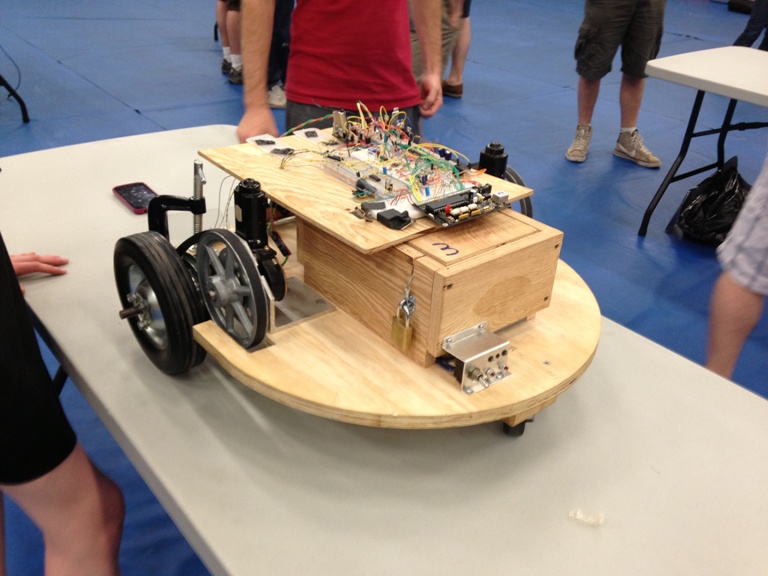
HALIFAX – Would you be able to make a robot that could put out a fire?

It’s a difficult task given to 50 electrical engineering students at Dalhousie University for the 22nd annual design competition. This year specifically looked at robotic firefighting.
The student created electrical units for the robots, which then maneuvered a course completely on their own to put out fake, cardboard fires.
The units were supposed to help the robots sense walls and corners throughout the course. They were sensitive and attracted to light; light bulbs were placed in front of cardboard fire cut-outs and robots had to press a tennis ball button on the front to extinguish the fake flames.
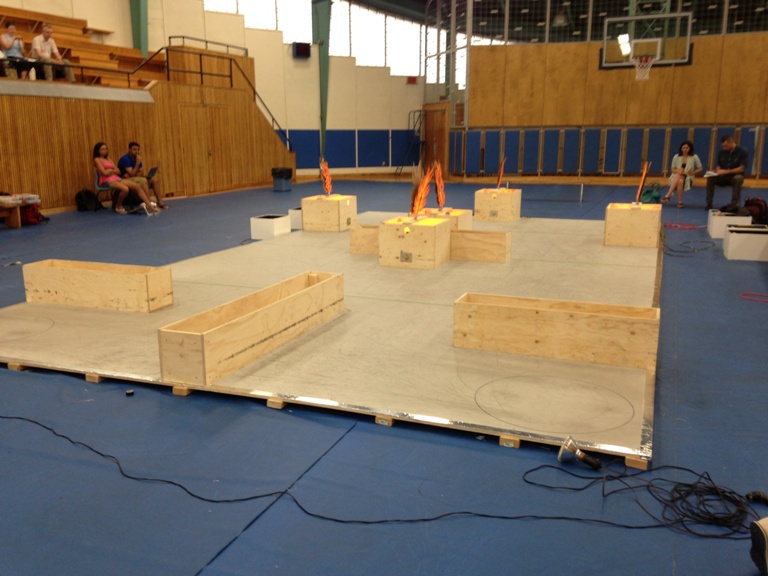
“This surface is supposed to be a building on fire and the stuff that’s on fire is too dangerous to put humans in so they’re sending in robot firefighters to do the work,” said professor of engineering Sara Stout-Grandy, who also taught the course.
Third year engineering student Lorne Marsman says the task was not an easy one.

Get daily National news
“It was like taking all of the material I learned so far in all my courses and masking it together in one robot,” he said.


While it did help him fine-tune his engineering skills, it also became an opportunity to hone his life skills.
- Minister ‘disappointed’ in OpenAI, but why is AI regulation taking years?
- OpenAI’s handling of Tumbler Ridge shooter info opens regulation questions
- OpenAI reps summoned to Ottawa to discuss concerns following Tumbler Ridge shooting
- Blizzard slams into northeastern U.S., with intense snow and travel bans


“It definitely taught me a lot about how to approach a problem, specifically what is important when looking at a project’s requirements and what’s less important. What you should spent a lot of time on and what you shouldn’t,” he said.
His classmates agreed that the project was invaluable in that respect.
“I learned a lot about building a project in general: stuff doesn’t necessarily go the way you expect it, not every day is a step forward and some days you might take two steps back,” said student Ryan Haley.
“It helps with teamwork. It helps with the design process to know what steps to take and if a problem occurs, what you can do to fix that,” said student Rosalind Dickinson.
Stout-Grandy says the task will help prepare her students for their industry.
“They’re learning how to take an idea and build it through various design phases: prototyping, building, testing and integrating all these systems together,” she said.
Students started working on the projects in May.
Comments
Want to discuss? Please read our Commenting Policy first.
2 comments