

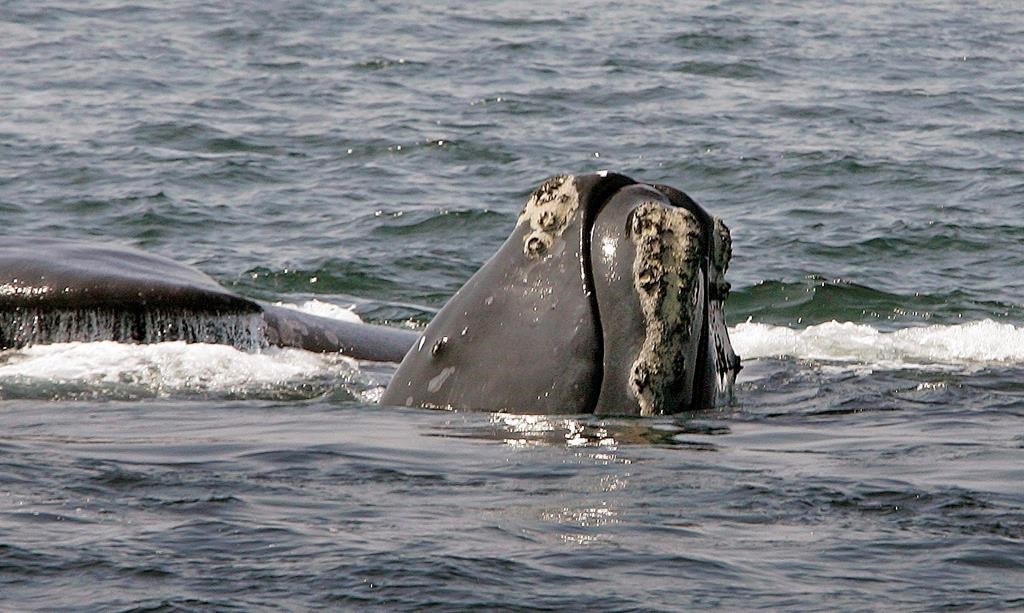
Early analysis of vessel speeds in the Cabot Strait shows that almost two-thirds are not complying with a voluntary slowdown meant to protect endangered right whales that migrate through the area.

Advocacy group Oceana Canada has released one week of results from its ongoing study, which is assessing data from vessels with Automatic Identification Systems travelling inside speed restriction zones.
READ MORE: 2 North Atlantic right whales spotted in Gulf of St. Lawrence

Get daily National news
Between May 19 and May 25, 72 per cent of vessels recorded passing through the Cabot Strait were observed travelling at speeds above the requested 10 knots, with the highest observed at 21.1 knots.
The Cabot Strait, which runs between Cape North, N.S. and Cape Ray, N.L., is an essential corridor for North Atlantic right whales migrating to the Gulf of St. Lawrence, where they feed on small crustaceans.
READ MORE: Nova Scotia coast chosen as potential home for retired whales raised in captivity


Transport Canada introduced the voluntary slowdown this year as one of several measures aimed at protecting the critically endangered species, of which there are only about 400 living members.
Kim Elmslie, director of the right whale campaign, says her organization is asking Ottawa to make the slowdown measure in the Cabot Strait mandatory as of October 1.
This report by The Canadian Press was first published June 11, 2020.


Comments
Want to discuss? Please read our Commenting Policy first.