

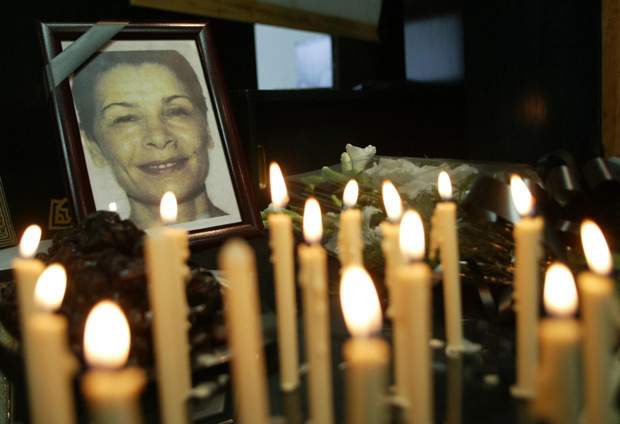
Iranian-Canadian photojournalist Zahra Kazemi was taken into Iranian custody in late June, 2003, for taking pictures of a student protest outside of a prison. Less than three weeks later, she was dead.
Kazemi was born in Shiraz, Iran, but left the country in 1974 and studied film in France before settling in Montreal in 1993. She began working as s journalist, and covered stories in the West Bank, Cote d’Ivoire, Libya and Jordan.
Kazemi visited Afghanistan in 2002, and toured refugee camps, schools and prisons while taking photographs and publishing articles for various publications.
She returned to Iraq in 2003 to document the American invasion of the country and its effect on civilians. Her last trip would be to her native Iran.
She crossed the border into Iran, taking photographs for a Montreal-based publication called Recto-Verso while awaiting visas for Turkmentistan and Uzbekistan. On June 23, 2003, she travelled to Evin prison in Tehran to take pictures of a student protest.
What happened next is still unclear. But Shirin Ebadi, the Iranian lawyer and Nobel laureate who represented Kazemi’s family in court, said a guard from the prison asked for her camera, and informed her that photography outside the prison was prohibited.
Kazemi reportedly refused and was arrested. Three weeks later, Iranian media reported that Kazemi had died in hospital after having a stroke during an interrogation.
But the story changed when Iranian vice president Mohammad Ali Abtahi admitted that the journalist had died as a result of a fractured skull from a blow to the head.
Iran tried and acquitted a security guard of her murder, and in 2004, blamed her fatal head injuries on an accident. In March of the following year, a former defence ministry physician came forward with shocking allegations.
Shahram Azam said he examined Kazemi four days after her arrest and saw evidence that the 54-year-old had been brutally raped. He said she had a skull fracture, broken fingers, missing fingernails, a crushed big toe and a broken nose.
Azam contacted Kazemi’s son, Stephan Hachemi, from Sweden after leaving Iran in 2004. Azam then came to Canada as a refugee.
Iran refused the request of Hachemi to bring her body to Canada for burial.
Hachemi has launched a $17-million civil suit against the Iranian government for "intentionally wrongful acts" and negligence in his mother’s arrest, detention, and alleged sexual assault, torture and death in Iranian custody.



Comments
Want to discuss? Please read our Commenting Policy first.