

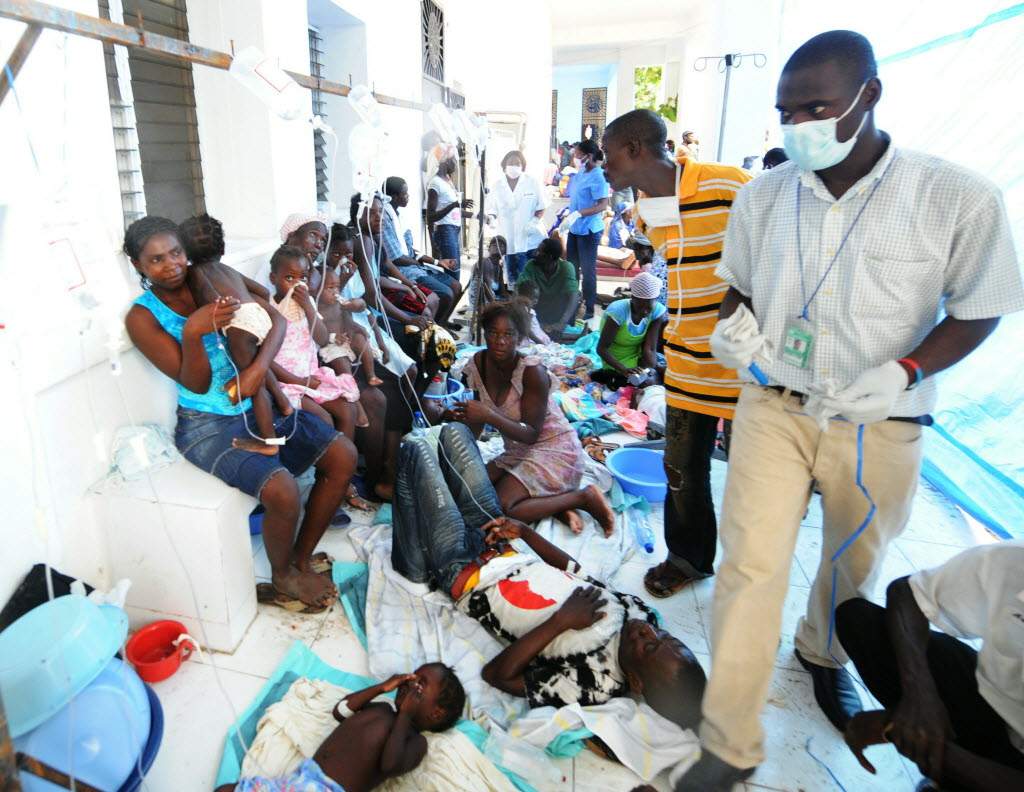
After claiming more than 3,700 lives, the outbreak of cholera in Haiti appears to be slowing down finally. The outbreak began in mid-October 2010, and as of January 13, the government says fewer people are dying of the disease.
About 181,000 Haitians have been infected with cholera, and 101,000 have been treated in hospital. Health officials are breathing a sigh of relief while taking steps to ensure the epidemic doesn’t spread. Their concern is understandable; cholera is a serious illness.
History of a Global Threat
The first recorded cholera pandemic dates back to the early 1800s. Tens of thousands of British troops stationed in India died during the outbreak, which spread from Bengal to China, Indonesia and the Caspian Sea. During the first outbreak, an estimated 15 million people died of cholera. The disease hit the European continent in the mid 1830s, affecting Russia, Hungary, Germany, England and France. By 1834, the disease had reached North America in Ontario, Quebec and New York.
Cholera outbreaks can occur sporadically in any country. During the 1990s, a new strain of cholera (serogroup O139 Bengal) caused an epidemic from India to Bangladesh. The epidemic spread throughout Asia but did not affect countries outside that region.
Recent outbreaks in Canada include just four diagnosed cases in 2002 and five reported cases in 2003. All of those cases were related to travel or immigration. Cholera remains prevalent in the world’s poorest nations, where safe drinking water and hygienic sanitation systems are scarce. Residents of overpopulated communities are most frequently affected.
Diagnosis and Treatment
Cholera is an intestinal infection caused by ingestion of contaminated food or drinking water tainted by the bacterium Vibrio cholerae. Common symptoms include profuse watery diarrhea, vomiting and abdominal pain. The disease is difficult to distinguish from other types of intestinal illnesses, and less than 20 per cent of infected persons becoming seriously ill, according to the World Health Organization (WHO). If left untreated, cholera can quickly lead to severe dehydration and death.
If you believe you may be infected, seek medical attention immediately. The most important treatment of cholera is rehydration. Begin by drinking clean water or other non-sweetened fluids, such as soup. A solution of oral rehydration salts (ORS) will also help replace salts depleted by severe diarrhea.
Avoiding Cholera
There are vaccinations available to help protect against exposure to cholera:
“¢ The CVD 103-HgR (Mutacol®) vaccine was approved for use in Canada in 2002 for use in adults and children older than 2-years-old.
“¢ DukoralTM was approved for use in 2003 for adults and children aged 2 years and older.
The WHO does not recommend vaccination as it may lend a false sense of security to those vaccinated. Instead, the WHO recommends following these measures to avoid infection:
“¢ Drink only water that has been boiled or disinfected with chlorine, iodine or other suitable products.
“¢ Avoid ice, especially when travelling to parts of the Caribbean, Africa, India, Asia and South America.
“¢ Avoid raw seafood and only eat thoroughly cooked food. Remember: cook it, peel it, or leave it.



Comments
Want to discuss? Please read our Commenting Policy first.