

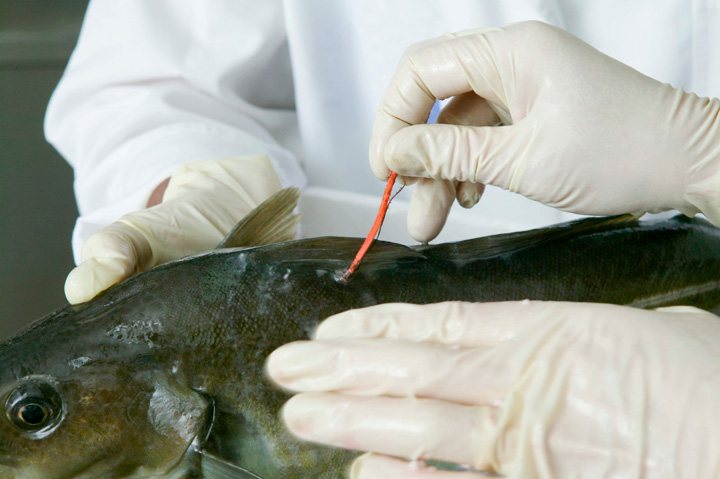
REGINA – The Saskatchewan government says despite large amounts of phosphorus being found flowing into Lake Diefenbaker, there have not been any adverse effects found in fish.

The province surveys lakes in Saskatchewan on a rotating basis, and last looked at Lake Diefenbaker in 2011.
Jennifer Merkowsky, fisheries biologist for the Saskatoon area, says Lake Diefenbaker is a fairly unique body of water, where the levels fluctuate as the province makes room for spring-melt waters coming in from Alberta.
A recent study found that the Alberta water contained an alarming amount of phosphorous, which could potentially lead to the development of toxic algae.

Get breaking National news
Merkowsky says there were 16 different large-bodied fish species captured during their latest survey, and that was similar to the number of species captured in previous ones.
She says the survey also found a variety of ages of walleye, in particular, showing that the population is fairly stable.
“There was a very large age class of five-year-old fish which suggests that environmental conditions during the year that the spawn took place were very successful. So I think in a few years, we’re going to see large populations of walleye coming on.”
Novice anglers may find themselves frustrated fishing in that lake because the size and depth of the water gives fish a lot of hiding places, she said.
There might be some obstacles for fishing this year, Merkowsky added, due to a large amount of winter kill.
The severe winter meant a long period of ice and snow cover, leading to winter kill situations in border waters. However, Merkowsky said it doesn’t look like that has happened in the more popular fishing lakes.


Comments
Want to discuss? Please read our Commenting Policy first.