


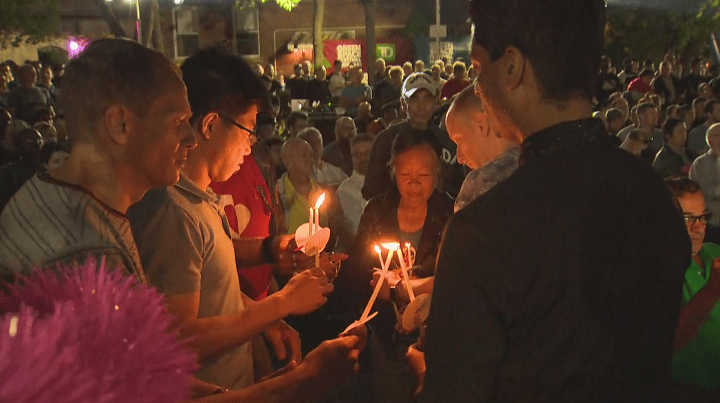
Hundreds of community members are gathering at Barbara Hall Park for the 35th annual Toronto AIDS Candlelight Vigil.

People of the LGBTQ2 community met around 9 p.m. Tuesday evening at 519 Church Street to honour the lives of those who have died from AIDS-related illnesses.
“The theme is yesterday, today and tomorrow,” said Kerolos Saleib, a co-host at the vigil. “Remembering 35 years of work in the HIV and AIDS community and those who we lost that allowed us to be where we are today.”
READ MORE: Neighbours support display of pride
Seleib told Global News that he sees a particular AIDS-related issue with newcomers and the refugee community.

Get breaking National news
“For a specialist, it could take up to three months to five months before finding a doctor, and getting all the blood work,” said Saleib. “It puts stress on newcomers.”
WATCH: (June 20, 2017) Toronto marks the 33rd annual AIDS Candlelight Vigil


In a release detailing the vigil, it states that thousands of candles are lit every year to remember those who have died, and to support those still living with the disease.
The vigil was organized by The 519, an organization that describes itse;f as “committed to the health, happiness and full participation of the LGBTQ2S communities…an agency with an innovative model of Service, Space and Leadership.”
“The work is not done,” said Saleib. “The stigma is still very there, and the discrimination and decriminalization of people with HIV and AIDS.”


Comments
Want to discuss? Please read our Commenting Policy first.