

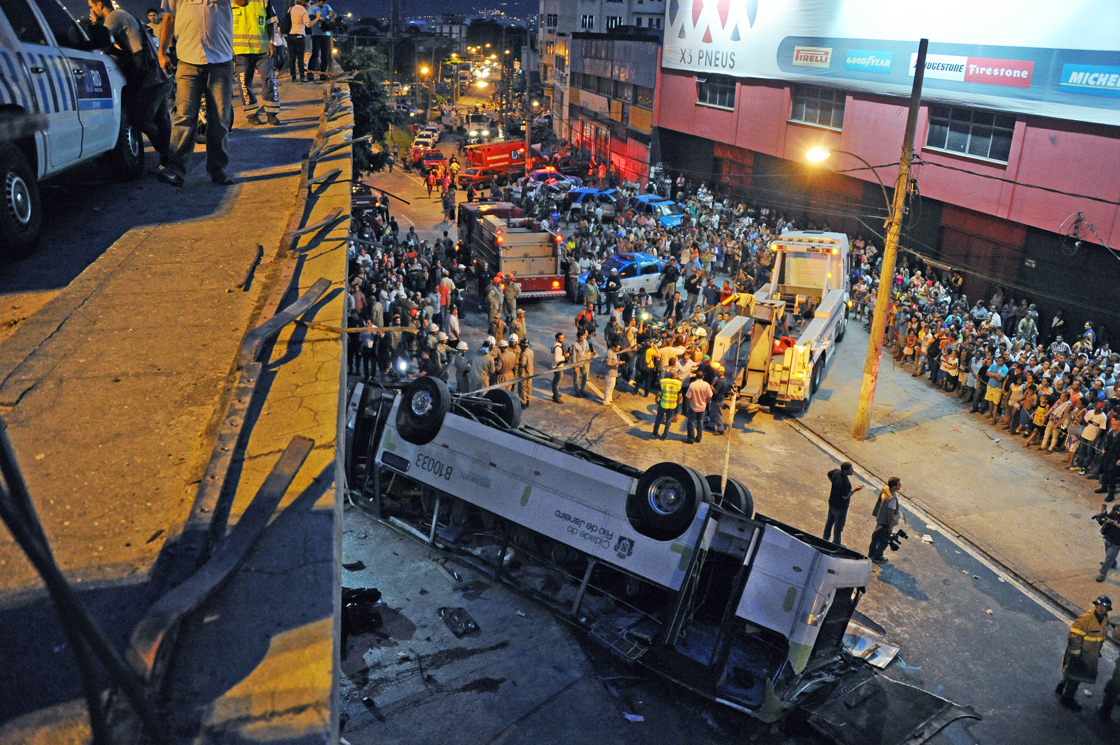
RIO DE JANEIRO, Brazil – A passenger bus plunged from a 10-metre-high viaduct in central Rio de Janeiro on Tuesday, killing at least seven people and closing the major thoroughfare where it landed.

At least six more people were injured in the accident, said Sergio Simoes, who heads Rio state’s Civil Defence department, adding that number of injured was likely to rise. Simoes said the dead were five men and two women.
He said it was unclear how many were aboard and whether any of the passengers were children.

Get daily National news
Helicopter footage aired by Globo television network showed emergency response teams evacuating the injured from the overturned bus as rush-hour traffic stood at a standstill on Avenida Brasil, the highway that serves as the main entrance to Rio. Some of the injured were evacuated by helicopter.
The cause of the accident was not immediately known, but Globo cited eyewitness as saying that a dispute between a passenger and the driver might have helped spark the crash.


Buses are the main form of public transit in this city of 6 million, despite their sometimes questionable safety records and often uncomfortable overcrowding levels. Rio’s buses, operated by private companies, don’t have seat belts, and it’s not unusual for up to several dozen people at a time to travel standing up. Rio’s buses are also known for driving at high speeds, even in residential neighbourhoods.
With two key metro stations closed pending the extension of Rio’s subway, buses have taken on an even more crucial role in recent months and are the sole public transit option in poor neighbourhoods ringing the city.


Comments
Want to discuss? Please read our Commenting Policy first.