

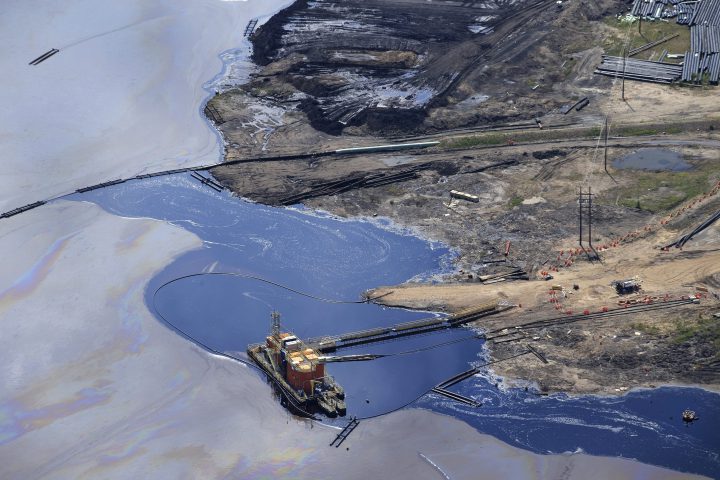
The Alberta Energy Regulator has approved a tailings pond management plan for oilsands miner Syncrude Canada despite its reliance on a remediation method that isn’t endorsed by the agency.

The regulator requires that all oilsands mine producers outline how they will deal with the toxic storage ponds that together cover more than 220 square kilometres and contain almost 1.2 trillion litres of water contaminated with oil, chemicals and fine clay particles.
The AER says Syncrude’s plan to use fresh water to create lakes by “capping” its remaining tailings at the end of mine life isn’t allowed under current government policy and it therefore must present an alternative plan by the end of this year.

Get daily National news
Syncrude’s water-capping technology has been tested on site since 2012 and will be ready for a 10-year assessment in 2023.
READ MORE: Alberta oilsands tailings showdown is looming: report
Watch below: On March 13, 2015, Fletcher Kent filed this report after the Alberta government developed a new way to ensure toxic tailings ponds get cleaned up.


The AER says that will give Syncrude enough time to deploy an alternative end-of-mine-life treatment if water-capping fails the test or is still restricted by government policy.
Environmentalists have criticized the AER for approving tailings reduction plans for several oilsands mines though all have been found to have deficiencies.
The regulator says it agrees with Syncrude’s use of “composite tailings” technology to create a solid coarse sand product by mixing gypsum with some of its liquid tailings.


Comments
Want to discuss? Please read our Commenting Policy first.