


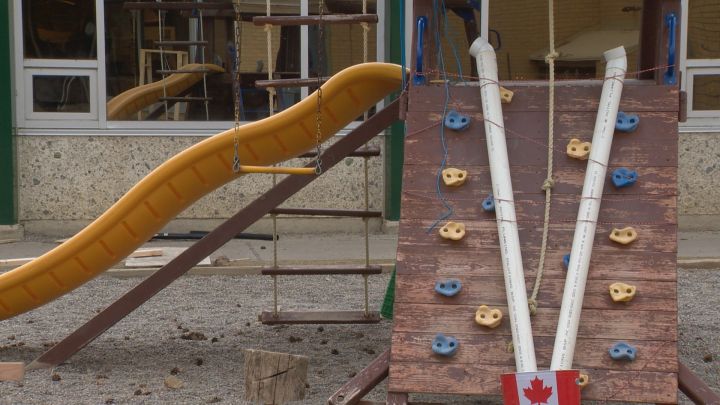
A discussion was held at Lethbridge College on Tuesday about the importance of unstructured outdoor play for childhood development.

One of the topics discussed at the all-day symposium had to do with the importance of removing static, plastic playgrounds and replacing them with flexible, nature-based structures that have tactile, loose pieces.
“When children are engaged in natural materials and natural items during outdoor play, they’re able to use their imagination skills, critical-thinking skills and creativity,” said Bora Kim, an Early Childhood Education faculty member at Lethbridge College.

Get weekly health news
The college is taking steps to implement the outdoor play recommendations at its on-campus daycare: removing plastic toys from the outdoor play area and replacing them with tactile, loose parts – such as pieces of wood and pipe – to enrich children’s learning opportunities and to promote children’s health and well-being.


READ MORE: Alberta directs $20M over 4 years for new school playgrounds
“If you can imagine a set of monkey bars, you can do a couple of things on there,” said Peter McCracken, a regional manager at Recreation Nova Scotia. “But when you have things like a mud kitchen or hay or loose parts in a natural environment, there’s a lot more creativity, there’s a lot more risk-taking and basically, it helps the brain develop.”


Comments
Want to discuss? Please read our Commenting Policy first.