


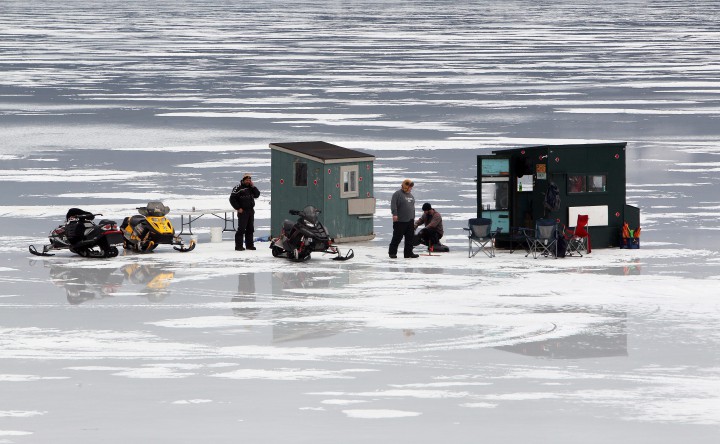
People are being urged to take caution before venturing out on ice-covered lakes and rivers.

Recent cold temperatures in Saskatchewan have created ice on bodies of water, but it still might not be thick enough to venture out on for ice fishing or other winter activities.
Ice doesn’t freeze uniformly and its strength can vary considerably from one area to another.
It also depends on the body of water and surrounding conditions.

Get daily National news
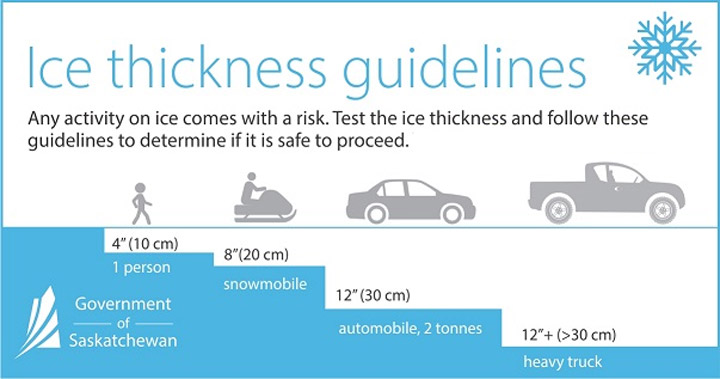
Government officials said ice should be at least four inches thick for walking on, eight inches for snowmobiles and ATVs, 12 inches for cars and light trucks and over 12 inches for heavy trucks.


They added ice thickness is just one factor to consider.
Ice that is slushy in appearance, has thawed and frozen again, is near moving water, is layered due to sudden temperature changes and/or has structures such as pressure ridges on it should be avoided.
They recommend only venturing out on clear, hard ice.
The Saskatchewan Water Security said there will be a delay on ice developing on the Souris River near Estevan and Oxbow and Moose Mountain Creek below Alameda Dam.
The agency is drawing down the reservoirs at both the Rafferty and Alameda dams to bring them to its normal Feb. 1 target levels.


Comments
Want to discuss? Please read our Commenting Policy first.