


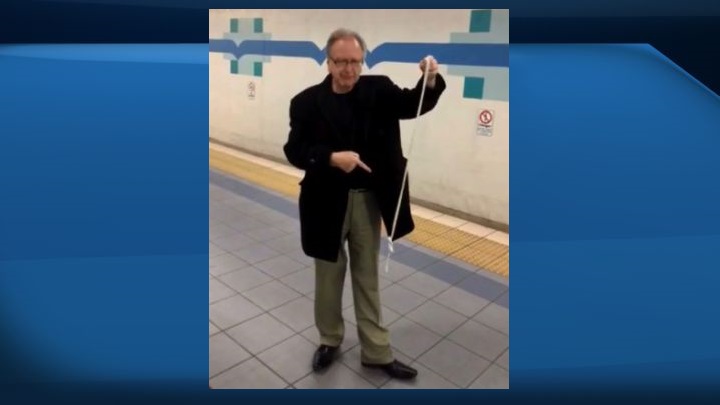
There is not enough evidence to lay charges after a man threatened two Muslim women with a noose, according to Edmonton police.

Officers said the man approached the women wearing hijabs at the University LRT platform in Edmonton last November, held up a noose, and said, “This is for you.”
READ MORE: Suspect in custody after women wearing hijabs threatened with noose at Edmonton LRT station: police
Watch below: On Dec. 5, 2016, Sarah Kraus filed this report after two women wearing hijabs were allegedly threatened with a noose in Edmonton.

Police asked for the public’s help in identifying the man and were able to do so. However, in a statement, police said “it has been determined there is insufficient evidence with which to proceed with any criminal charges.”
Irfan Chaudhry with the Alberta Hates Crimes Committee said hate crimes are hard to prove.



Get daily National news
“(It’s) because the threshold is so high,” said Chaudhry, adding there is a difference between a hate crime and a hate incident. “If there’s no criminal element involved, that’s where police oftentimes have a limited ability to further get involved, and I think that oftentimes is what gets missed in the public perception of things. If that criminal element didn’t happen, police no longer have a role because they’re in the business of crimes.”
Chaudhry believes the noose threat was motivated by hate.
“Location, the person’s temperament, his use of language…all of that is definitely fuelled by bias,” Chaudhry said. “It is definitely a hate incident and it’s unfortunate that there wasn’t enough that police could do to show that a criminal element was involved.”
Chaudhry said he thinks Canadian laws still have some catching up to do, but he believes police did their best in this case.


Comments