


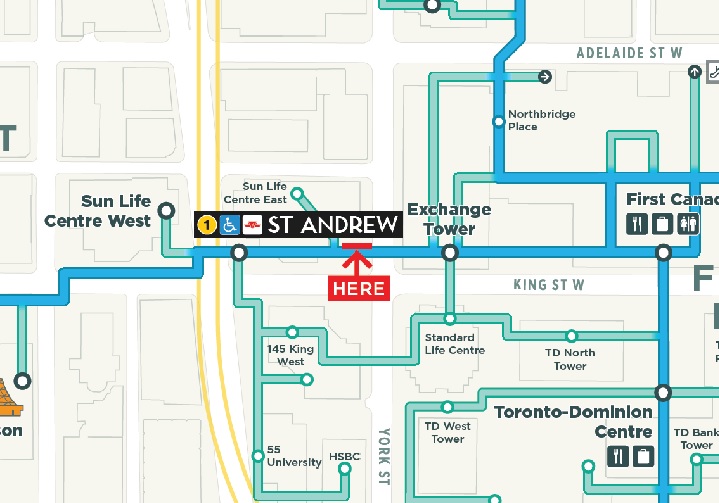
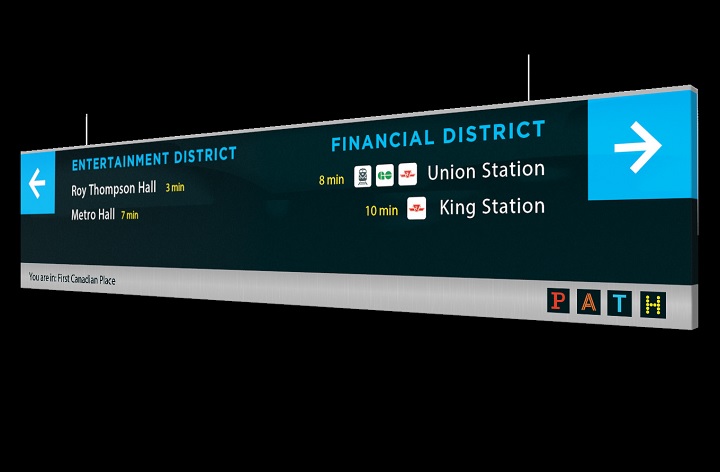
Downtown Toronto’s PATH underground wayfinding signage is scheduled to undergo a major facelift in 2018.

A new report on the economic impacts of the pedestrian network reveals the current system is an “underused asset” because residents and tourists who use them often find getting around cumbersome and confusing.
A concept strategy was released Tuesday which would make maps easier to read and signage clearer to understand.
The study released by the Toronto Financial District BIA found the current signage system “confusing, inflexible, unpredictable, inconsistent and outdated.”

Get breaking National news
“A wayfinding system should be none of these things,” the report read.
A survey conducted for the report found 81 per cent of PATH users don’t find the current map and signage helpful.
The economic impact study found an improved PATH user base can create new jobs and increase the city tax revenue.


It goes on to say the improved wayfinding system can bring in $17 million in sales revenue and $285,000 in property taxes annually for every one per cent increase in users.
A pilot project is expected to be launched this summer to further develop the mapping concept.
The new system is scheduled to be rolled out in the first half of 2018.





Comments
Want to discuss? Please read our Commenting Policy first.