

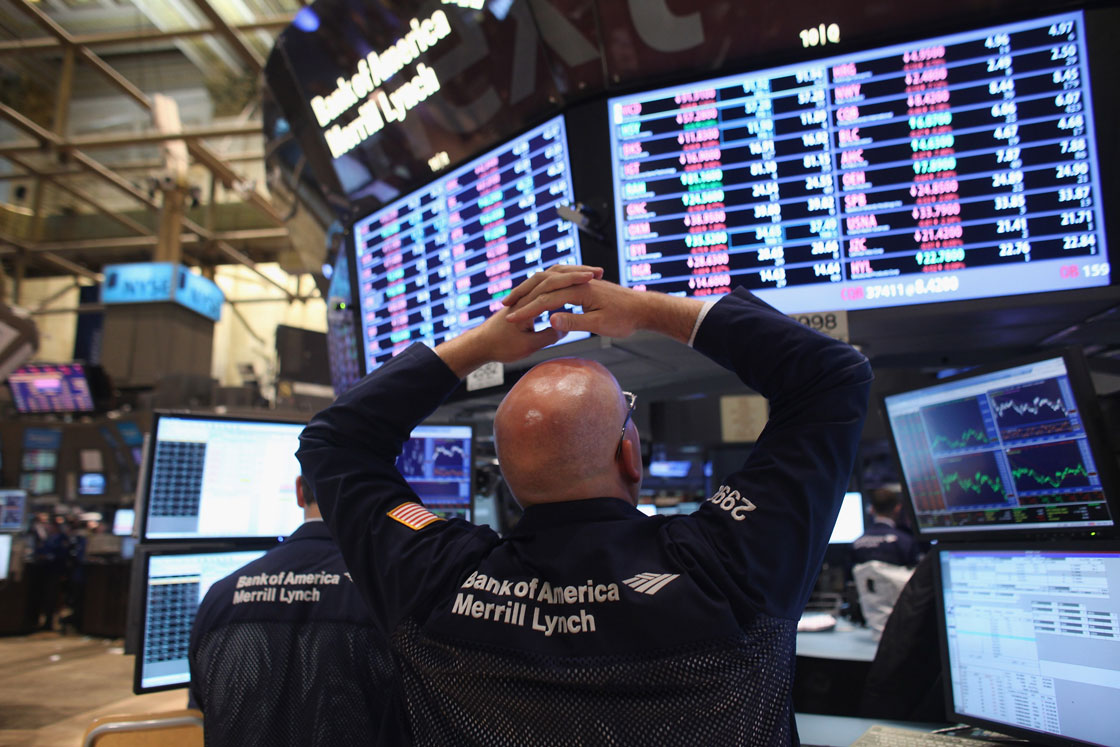
A dismal start for the stock market this year has pushed its major indexes into what is known as a “correction,” or decline of 10 per cent or more from a recent peak. Here are some common questions asked about corrections and what they mean to investors:

___
WHAT IS A STOCK MARKET CORRECTION?
A “correction” is a Bay and Wall Street term for when an index like the TSX Composite or S&P 500 or the Nasdaq — or an individual stock — falls 10 per cent from its most-recent high. The S&P 500, the index that investors pay most attention to, fell 48 points Wednesday to 1,890, which is 10.4 per cent below a recent high of 2,109 set on November 3 and 11.3 per cent from its record high of 2,130 set on May 21.
A correction is not the same as a bear market, which is defined as when a stock index or individual stock falls 20 per cent from its most-recent peak.
___
IS THE ENTIRE STOCK MARKET IN A CORRECTION?

Get weekly money news
Not every individual stock is in a correction, but the TSX is well within correction territory — and in fact may already be a bear market. The three major indexes in the United States are in correction now.
The Dow Jones industrial average, comprised of 30 stocks, fell 364 points on Wednesday to 16,151, that’s 9.9 per cent below its November 3 peak and 11.8 per cent below its record high of 18,312 set on May 19. The Nasdaq is 12.2 per cent below its recent peak on December 2 and 13.3 per cent below its record high of 5,218 set on July 20.
___
WHEN WAS THE LAST TIME WE HAD A CORRECTION?
North American stock markets entered into its last correction in August. That correction, much like this one, was sparked by financial turmoil in China.
Chinese stock markets have been extremely volatile in recent months, rising to record highs and then plummeting on worries about policy changes, slowing economic growth and a weaker currency. While U.S. investors are not exposed to those stock markets directly, China has been the engine of global economic growth since the financial crisis and weakness there concerns investors everywhere.


Those concerns have had an outsized effect on prices of oil and other commodities because China is such a big consumer, and energy companies have led markets lower in recent weeks.
___
ARE CORRECTIONS A NORMAL THING FOR THE MARKET?
Stock market corrections have historically happened every 18 months. The August correction was the first in nearly 4 years, an unusually long gap. Even the most bullish of market strategists say a correction is ultimately healthy for a market because it removes some of the froth and speculation, and allows investors to buy stocks at more reasonable prices.
WATCH: Financial expert Preet Banerjee explains the volatility in the world stock markets and what it means to you.



Comments
Want to discuss? Please read our Commenting Policy first.