


TORONTO – NASA has confirmed that the Dawn spacecraft has safely arrived at its destination, around the dwarf planet, Ceres.

“Since its discovery in 1801, Ceres was known as a planet, then an asteroid and later a dwarf planet,” said Marc Rayman, Dawn chief engineer and mission director at JPL. “Now, after a journey of 4.9 billion kilometers and 7.5 years, Dawn calls Ceres, home.”
Dawn is visiting the 950-km-wide dwarf planet in an effort to learn more about the origins of our solar system.

Get daily National news
Ceres is Dawn’s second target in the asteroid belt, a region of leftover debris from the formation of our solar system. The spacecraft visited the asteroid Vesta in 2011.
READ MORE: NASA’s Dawn spacecraft to reach dwarf planet Friday
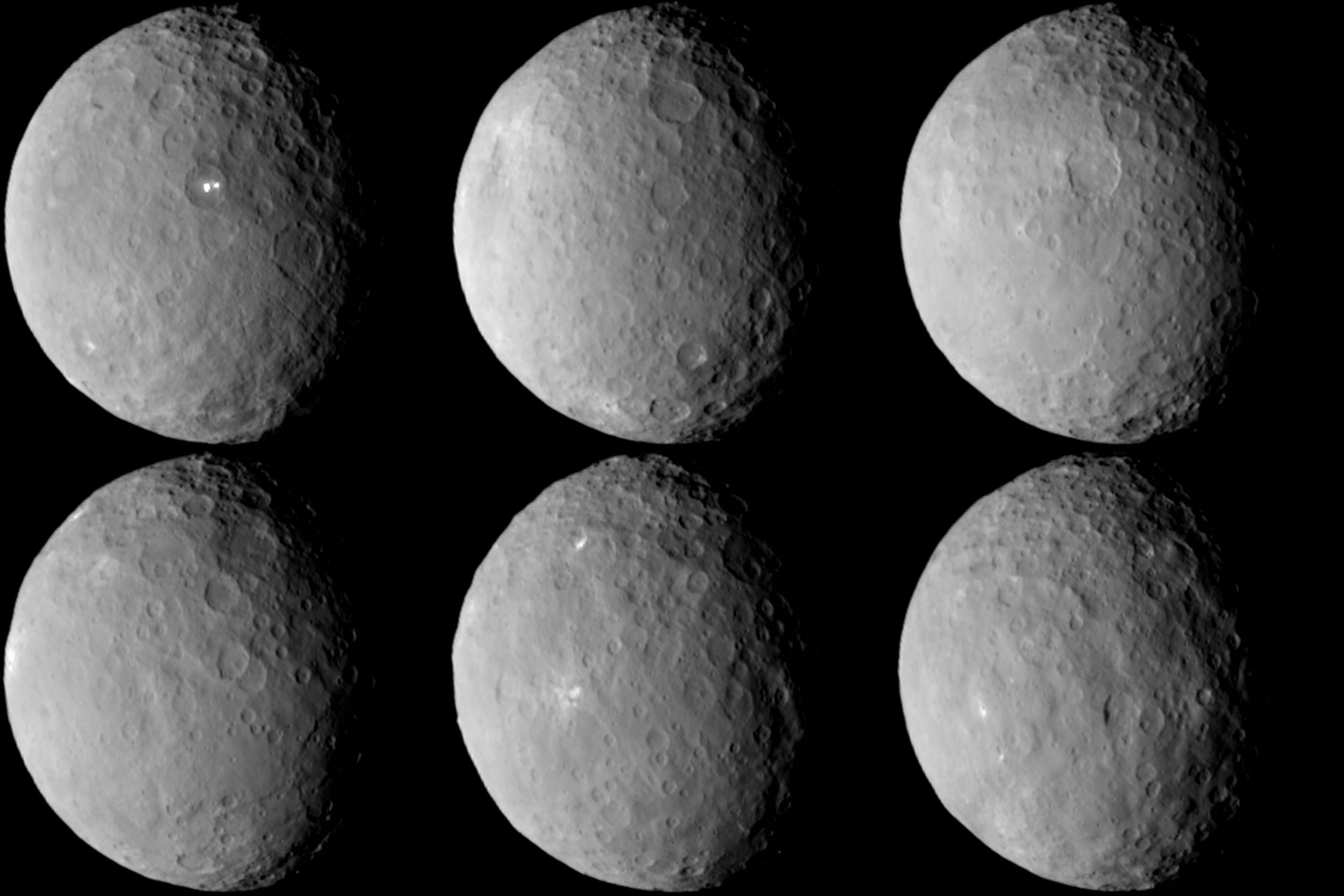
Already, the spacecraft has returned some of the best photos of the rocky world that astronomers have ever seen.


“We feel exhilarated,” said Chris Russell, principal investigator of the Dawn mission at the University of California. “We have much to do over the next year and a half, but we are now on station with ample reserves, and a robust plan to obtain our science objectives.”
The photos have revealed bright spots on the surface, something that, as of yet, scientists can’t explain. With Dawn’s insertion into orbit, they eagerly anticipate collecting more data to reveal Ceres’ geological structure.


Comments
Want to discuss? Please read our Commenting Policy first.