


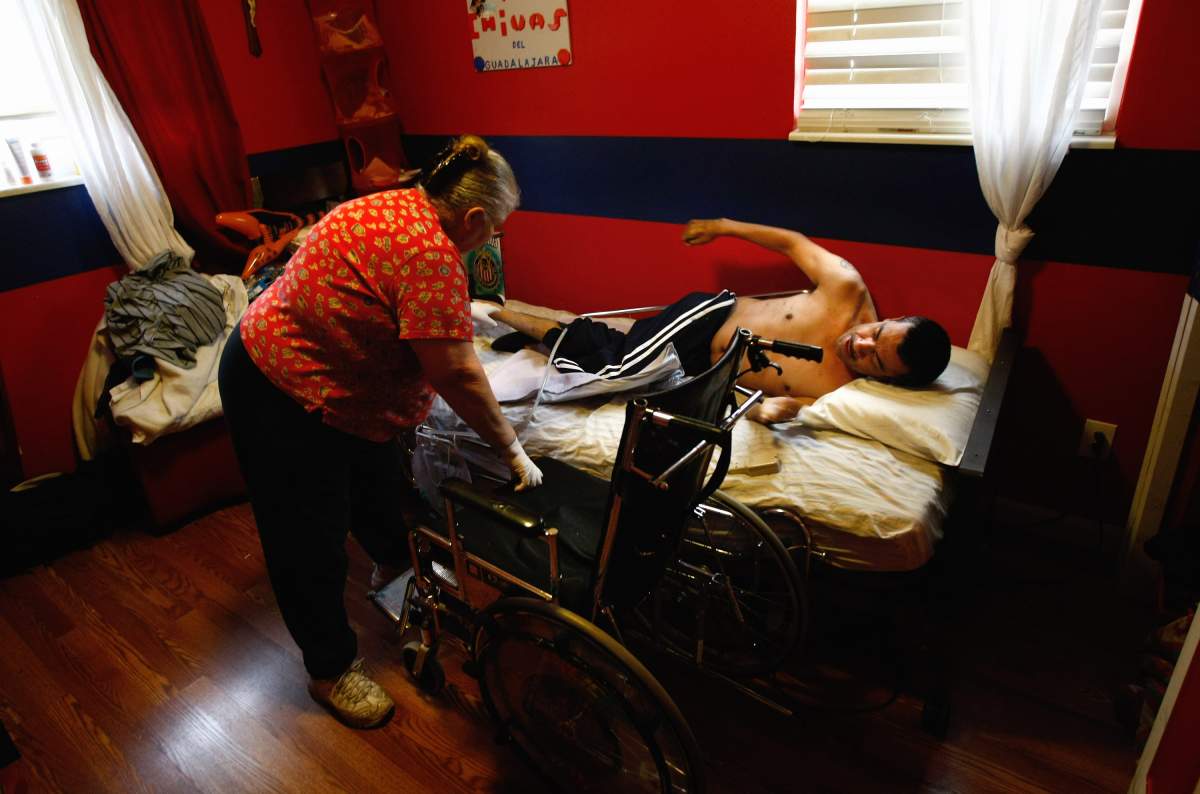
WINNIPEG – They are the front line workers in Canada’s crowded nursing homes and one study found health care aides suffer a “worrisome” level of burnout.

Health care aides provide the bulk of care to residents who have increasingly challenging needs in the latter part of their lives.
A new study found the workers have limited training, no regulation, “worrisome” levels of burnout and in many cities, speak English as a second language (just under 50 per cent). It also found more than 60 per cent of the care aides were born outside of Canada.

Get weekly health news
The study Who is Looking After Mom and Dad? Unregulated Workers in Canadian Long-term Care Homes is believed to be the first of its kind to take an in-depth look at the health care aide workforce in Canada, a workforce estimated to be made up of 250,000 people.
The report was done by the University of Alberta and funded by the Canadian Institutes of Health Research.


It looked specifically at three prairie provinces: Alberta, Saskatchewan and Manitoba.
Most provinces in Canada require some kind of education and certification to work in the field. However, the standards differ widely depending on location.
Alberta, British Columbia, Quebec, Ontario and Nova Scotia have aide registries; Manitoba and the other provinces and territories in Canada do not.
The health care aide profession is not a regulated field in Manitoba.
There are no standards of practice, no codes of conduct and education standards vary widely, the study found.


Comments
Want to discuss? Please read our Commenting Policy first.