


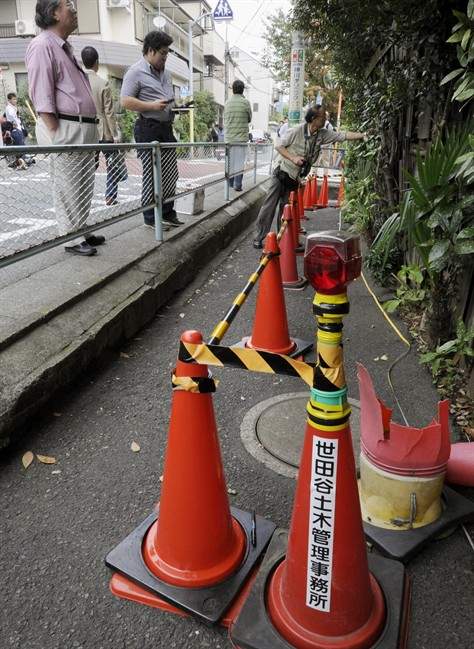
TOKYO – Japanese officials investigating a small radiation hotspot in Tokyo say it was caused by old bottles stored in the basement of an empty house, not the country’s leaking nuclear power plant.

Tokyo’s Setagaya city council had detected levels of radioactivity higher than those in the evacuation zone around the damaged Fukushima Dai-ichi nuclear plant after concerned parents checking the neighbourhood for radiation sought further tests. The plant is about 150 miles (240 kilometres) northeast of Tokyo,

Get daily National news
Mayor Nobuto Hosaka said Thursday the hotspot was most likely caused by a radioactive material in several old bottles in the house. He said radioactivity from the bottles exceeded the measurable limit on a low-dose radiation counter.
Science and education ministry inspectors believe the bottles contain radium, a radioactive material used in the past as self-luminous paint for watches, Kyodo News agency reported. It said the inspectors concluded that the radiation was not related to the Fukushima disaster because no cesium was detected in the bottles. Cesium is one of the main isotopes that leaked from the tsunami-damaged nuclear plant.
-
![]() Canada to become EU’s 1st ‘associate member’; why are some EU nations rejecting it?
-
![]() Protests in Madrid sparked by Spain’s 2nd fatal high-speed train crash this year
-
![]() Israel’s election results in political deadlock between Netanyahu, Eisenkot
-
![]() Defeated Brazil presidential hopeful Bolsonaro flees country, arrives in U.S. with Trump’s blessing


Police are investigating whether the bottles violated laws regulating possession of radioactive materials.
Officials say the radiation level at the hotspot did not present a health risk.


Comments
Want to discuss? Please read our Commenting Policy first.